About Luliconazole 1% Cream — Composition & Mechanism of Action
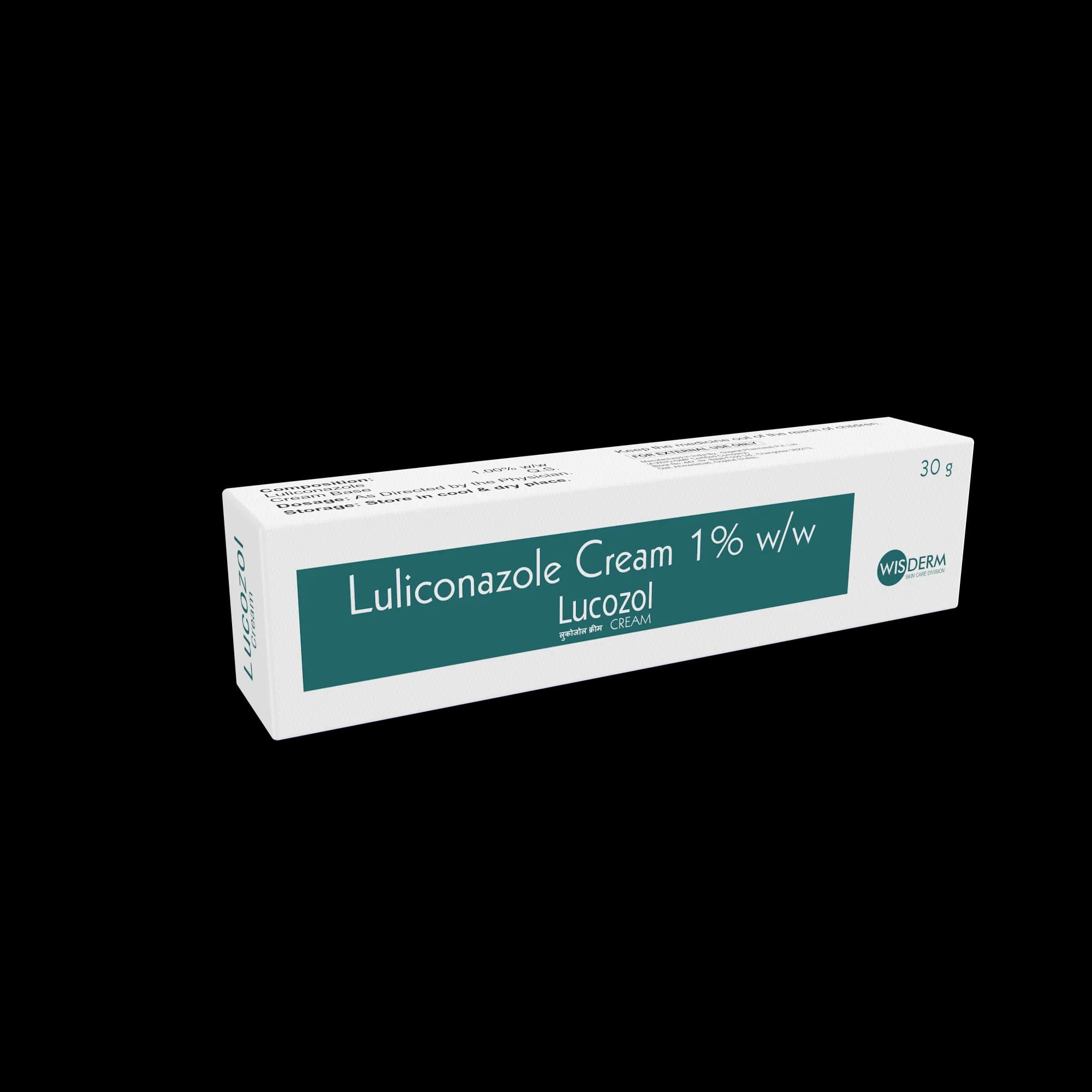
Luliconazole 1% w/w Cream is a topical antifungal agent belonging to the imidazole class — widely regarded as one of the most potent and fast-acting antifungals available for the treatment of superficial fungal skin infections caused by dermatophytes and yeasts.
This formulation is also searched and sourced simply as luliconazole cream, alongside its full IP designation — luliconazole cream IP 1% w/w — both referring to the same antifungal cream manufactured by Delwis Healthcare.
How Luliconazole Works
Luliconazole exerts its antifungal activity by selectively inhibiting the lanosterol 14α-demethylase enzyme — a critical fungal cytochrome P450 enzyme responsible for converting lanosterol to ergosterol in the fungal cell membrane. Ergosterol is an essential structural component of fungal cell membranes; its depletion leads to membrane disruption, increased permeability, leakage of cellular contents, and ultimately, fungal cell death.
Unlike older imidazoles, luliconazole demonstrates significantly higher binding affinity for the target enzyme, resulting in potent antifungal action at low concentrations and shorter treatment durations — making luliconazole cream a preferred modern choice for dermatologists managing tinea infections and resistant fungal skin conditions.
For pharmaceutical brands and dermatology companies seeking a luliconazole cream manufacturer in India, Delwis Healthcare delivers a stable, smooth-textured, non-greasy cream formulation with optimised drug release characteristics, validated stability, and full GMP manufacturing compliance.
At a Glance
Attribute | Details |
|---|---|
Product | Luliconazole Cream IP 1% w/w |
Composition | Luliconazole I.P. 1% w/w |
Category | Dermatology — Antifungal (Imidazole Class) |
Packaging | Laminated Tube — 10g, 15g, 30g; Aluminium Tube (export) |
Shelf Life | 24 months |
Certifications | WHO-GMP, ISO 9001, ISO 14001; USP/BP/IP compliant |
Manufacturing Services | Third Party Manufacturing, Contract Manufacturing (CDMO), Private Label, Custom Formulation, Bulk Supply |
MOQ | Flexible — contact for quote |
Manufacturer | Delwis Healthcare, Ahmedabad, Gujarat, India |
Luliconazole Cream Uses — Indications & Dermatological Applications
The clinical scope of luliconazole cream uses spans a broad range of superficial fungal skin infections driven by dermatophytes, Candida species, and other susceptible fungi. Below are the primary therapeutic indications relevant to prescribers, dermatology brands, and third party manufacturing buyers evaluating this formulation for their product portfolio.
Tinea Corporis (Ringworm)
Ringworm treatment cream is among the most widely recognised applications of luliconazole 1% cream. Tinea corporis — a dermatophytic infection presenting as ring-shaped, scaly, itchy patches on the body surface — responds effectively to once-daily luliconazole application, with visible clearing observed within a few days and complete resolution typically achieved in 1–2 weeks of consistent use.
Tinea Pedis (Athlete's Foot)
Athlete's foot cream applications represent a high-volume indication for luliconazole. Tinea pedis — a fungal infection of the feet characterised by scaling, maceration, fissuring, and intense itching between the toes and on the soles — is effectively managed with luliconazole cream for athlete's foot, even in cases that have shown reduced response to clotrimazole or other older antifungals.
Tinea Cruris (Jock Itch)
Jock itch antifungal cream formulations containing luliconazole are widely prescribed for tinea cruris — a dermatophytic groin infection causing erythematous, pruritic, and sometimes painful lesions in the inguinal region. Luliconazole's potent fungicidal activity and once-daily dosing regimen make it a clinically preferred option for this indication.
Tinea Unguium (Onychomycosis — Nail Fungal Infection)
Luliconazole's ability to penetrate nail plate structures makes it a relevant option for nail fungal infection treatment in certain sub-ungual and superficial white onychomycosis presentations — particularly where topical-only management is clinically appropriate.
Cutaneous Candidiasis
Beyond dermatophytic infections, luliconazole cream also demonstrates activity against Candida albicans and other Candida species responsible for cutaneous candidiasis — including intertriginous infections in skin folds, particularly in diabetic and immunocompromised patients.
Tinea Versicolor (Pityriasis Versicolor)
Hyperpigmented or hypopigmented skin patches caused by Malassezia overgrowth — known as tinea versicolor — are a recognised indication for luliconazole 1% cream application, particularly in warm and humid climatic conditions prevalent across India.
Luliconazole vs Clotrimazole & Other Antifungals
As a newer-generation imidazole, luliconazole vs clotrimazole comparisons consistently demonstrate luliconazole's superiority in binding affinity, minimum inhibitory concentration (MIC) values against common dermatophytes, and clinical cure rates — particularly in tinea corporis and tinea pedis. Similarly, luliconazole vs ketoconazole evaluations highlight luliconazole's more targeted mechanism with a reduced systemic absorption profile. These comparative advantages make it a high-value addition to any dermatology brand's antifungal product line.
GMP-Certified Cream Manufacturing Facility — Topical Dermatology Production
Delwis Healthcare's topical manufacturing facility is purpose-built for producing luliconazole cream and other dermatological semi-solid formulations at commercial scale — with dedicated cream manufacturing suites, temperature-controlled processing environments, and validated filling and packaging lines.
Our derma cream manufacturer infrastructure includes:
- Dedicated Semi-Solid Manufacturing Suites — Separate production areas for antifungal, steroid-containing, and cosmeceutical creams to prevent cross-contamination
- High-Shear Homogenisers & Planetary Mixers — Precision emulsification and blending equipment for uniform API dispersion and consistent cream texture
- Temperature-Controlled Processing — Critical for maintaining emulsion stability and preventing API degradation during manufacture
- Automated Tube Filling & Sealing Lines — High-speed, contamination-controlled filling for 10g, 15g, and 30g tube formats
- In-Process Viscosity, pH & Appearance Monitoring — Real-time critical quality parameter checks during cream production
- Validated Cleaning Procedures — Fully documented equipment cleaning validation between different product campaigns
Third Party Manufacturing & Contract Manufacturing — Luliconazole Cream
Delwis Healthcare is a WHO-GMP certified third party pharmaceutical manufacturer and CMO partner for luliconazole 1% cream — providing complete outsourced manufacturing services to dermatology brands, pharmaceutical companies, and export-focused distributors seeking a quality-compliant, scalable antifungal cream manufacturing partner in India.
Our Derma Cream Manufacturing Services
Third Party Manufacturing
Manufacture luliconazole 1% w/w cream under your registered brand name with full GMP-compliant cream production, quality-tested formulation, and professional packaging — with no capital investment in manufacturing infrastructure required from your side.
Contract Manufacturing (CMO)
End-to-end contract development and manufacturing covering formulation optimisation, raw material qualification, manufacturing scale-up, stability studies, and commercial batch production — tailored to your dermatology brand's specific requirements.
Private Label Manufacturing
Launch your own branded antifungal cream with custom tube design, carton artwork, labeling format, and pack size options for retail pharmacy, institutional, and export market distribution.
Custom Formulation Development
Modifications to cream base, preservative system, fragrance profile, tube size (10g/15g/30g), or combination formulations — available on client request through our formulation development team.
Bulk Supply
High-volume, consistent commercial batch supply for institutional procurement, hospital formularies, government tenders, and export distribution — backed by documented batch quality and supply chain reliability.
Whether you are building a comprehensive dermatology product range, launching a standalone antifungal cream line, or sourcing a luliconazole cream contract manufacturer in Gujarat — Delwis Healthcare provides a production-ready, fully compliant manufacturing solution.
Packaging Options — Luliconazole 1% Cream Tube Manufacturer
Luliconazole 1% Cream is available in the following standard packaging formats:
- Laminated Tube — 10g, 15g, and 30g options with flip-top or screw cap closure
- Aluminium Tube — Available for export markets requiring premium barrier packaging
- Branded Unit Carton — With printed composition, direction for use, storage instructions, and regulatory text
Packaging is optimised for retail pharmacy shelves, hospital formulary supply, and export shipment — with tamper-evidence, moisture resistance, and child-safety closure options available on request.
Custom tube designs, carton artwork, and labeling formats are fully supported for all third party manufacturing buyers. Validated shelf life: 24 months under storage conditions below 30°C, away from direct sunlight and moisture.
Quality Control Standards — WHO-GMP Antifungal Cream Manufacturer India
Every batch of luliconazole 1% w/w cream manufactured at Delwis Healthcare undergoes a rigorous multi-stage quality control protocol:
- HPLC Analysis — Precise quantification of luliconazole API content per batch against reference standard
- Viscosity Testing — Rheological consistency verification to ensure uniform cream texture and spreadability
- pH Testing — Skin-compatible pH range confirmation for every batch
- Appearance & Homogeneity — Visual and microscopic inspection for uniform dispersion, absence of particles, and consistent colour
- Microbial Limit Testing — Microbiological safety verification for topical formulations
- Preservative Efficacy Testing — Antimicrobial effectiveness validation per BP/USP pharmacopoeial requirements
- Stability Studies — Real-time and accelerated ICH-compliant stability data available for regulatory submissions
- Packaging Integrity Testing — Tube sealing, closure torque, and leak testing to ensure product protection throughout shelf lifestyle
Why Choose Delwis Healthcare as Your Luliconazole Cream Manufacturer
Dermatology brands and pharmaceutical distributors partner with Delwis Healthcare for luliconazole cream third party manufacturing because:
- WHO-GMP & ISO Certified Facility — Globally accepted compliance credentials for domestic and export market entry
- Dedicated Derma Manufacturing Suites — Separate semi-solid production areas for antifungal and other topical formulations
- Imidazole Antifungal Expertise — Specialist formulation and manufacturing experience in the azole antifungal topical category
- Flexible Pack Sizes — 10g, 15g, and 30g tube formats with custom artwork and labeling
- End-to-End CMO Support — From formulation development to stability testing to commercial batch supply
- Export-Ready Documentation — COA, stability data, manufacturing licence, and FSC available for international regulatory submissions
- Scalable Production — From pilot batches to large commercial volumes without compromising quality consistency
- Competitive Manufacturing Cost — Cost-efficient derma cream production from Gujarat, India
Frequently Asked Questions — Luliconazole 1% Cream
Q1: What is luliconazole cream used for?
Luliconazole cream uses include the topical treatment of fungal skin infections caused by dermatophytes and yeasts — specifically tinea corporis (ringworm), tinea pedis (athlete's foot), tinea cruris (jock itch), tinea versicolor, and cutaneous candidiasis. It is applied once daily to the affected skin area and is indicated for both acute and recurrent superficial fungal infections in adults.
Q2: How does luliconazole cream work?
Luliconazole works by inhibiting lanosterol 14α-demethylase — a fungal enzyme essential for ergosterol biosynthesis in the fungal cell membrane. Depleting ergosterol disrupts membrane structural integrity, causing fungal cell death. Its high binding affinity for this enzyme produces potent antifungal action at low concentrations, distinguishing it from older imidazole antifungals.
Q3: How long does luliconazole cream take to work?
Most patients experience noticeable symptom relief — reduced itching, redness, and scaling — within 3–5 days of consistent once-daily application. Complete clinical cure for tinea corporis and tinea cruris is typically achieved within 1–2 weeks, and tinea pedis within 2 weeks. The full prescribed course should always be completed even if symptoms improve earlier, to prevent recurrence.
Q4: Is luliconazole cream better than clotrimazole?
In clinical comparisons of luliconazole vs clotrimazole, luliconazole consistently demonstrates superior minimum inhibitory concentrations (MICs) against common dermatophyte species, faster clinical response, and higher cure rates in tinea infections. Its newer-generation imidazole mechanism gives it an advantage particularly in cases where older antifungals like clotrimazole or miconazole have shown sub-optimal results.
Q5: Can luliconazole cream be used on the face?
Luliconazole cream is generally not recommended for use on facial skin unless specifically prescribed by a dermatologist for a confirmed fungal condition. The face has a thinner skin barrier and greater systemic absorption potential — making dermatologist guidance essential before application on facial areas.
Q6: What are the side effects of luliconazole cream?
Luliconazole cream is generally well tolerated. Reported adverse effects are mild and localised, including transient application-site burning or stinging, mild erythema, contact dermatitis, and occasional skin dryness. Systemic side effects are uncommon given the low percutaneous absorption of the 1% topical formulation. Discontinue use and consult a dermatologist if significant irritation or allergic reaction occurs.
Q7: How should luliconazole cream be applied?
Clean and thoroughly dry the affected skin area before application. Apply a thin, even layer of luliconazole 1% cream to cover the entire infected area and approximately 1–2 cm of the surrounding healthy skin — once daily, at the same time each day. Wash hands after application unless the hands themselves are being treated. Do not cover with an occlusive dressing unless directed by a physician.
Q8: Do you offer third party manufacturing for luliconazole cream?
Yes. Delwis Healthcare is a WHO-GMP certified antifungal cream manufacturer in India offering complete third party and contract manufacturing of luliconazole 1% w/w cream under client brand names — including cream formulation, tube filling, carton packaging, private labeling, and full regulatory documentation support for Indian and export markets.
Q9: What certifications does your cream manufacturing facility hold?
Our facility holds WHO-GMP, ISO 9001, and ISO 14001 certifications. All topical cream manufacturing is conducted in compliance with USP, BP, and IP pharmacopoeial standards, with complete batch documentation, stability data, and quality records maintained for domestic and international regulatory submissions.
Q10: Can luliconazole cream formulation be customised?
Yes. As a full-service CMO and contract manufacturer, Delwis Healthcare supports formulation customisation including cream base modifications, preservative system adjustments, fragrance addition or removal, combination with other active ingredients, and tube size variations — all developed and validated in alignment with regulatory requirements.