The Dual-Action Mechanism of Pregabalin and Nortriptyline for Neuropathic Pain
Pregabalin and nortriptyline operate through completely different yet highly complementary pathways to manage chronic nerve pain. Pregabalin belongs to the gabapentinoid class and primarily acts on the central nervous system by binding to the $\alpha_2$-$\delta$ subunit of voltage-gated calcium channels. This binding effectively reduces calcium influx into hyperexcited neurons, which in turn diminishes the release of excitatory neurotransmitters such as glutamate and substance P. By curbing this initial chemical surge, it dials down the volume of overactive pain signals right where they originate in the spinal cord and brain.
Nortriptyline, on the other hand, approaches pain modulation by reinforcing the body's natural defenses against pain. Used here at a low, pain-modulating dose rather than its traditional antidepressant range, it inhibits the reuptake of both serotonin and norepinephrine in the synaptic cleft. This increases the availability of these neurotransmitters, which directly stimulates and strengthens the body's descending inhibitory pain pathways. When paired together, this fixed-dose combination offers enhanced therapeutic benefits at lower individual doses, significantly minimizing the risk of common side effects like severe drowsiness or dry mouth while providing superior relief.
How Pregabalin and Nortriptyline Approach Nerve Pain From Opposite Directions
To understand why this particular pairing has become a mainstay in neuropathic pain prescribing, it helps to look at where each molecule acts within the nervous system — because they don't simply add to each other's effects; they intervene at two separate stages of how pain signals are generated and processed.
Pregabalin belongs to the gabapentinoid class and exerts its effect by binding to the alpha-2-delta subunit of voltage-gated calcium channels, which are densely expressed on the presynaptic terminals of neurons involved in pain transmission. When a nerve has been injured — whether through prolonged high blood sugar exposure in diabetes, viral damage following shingles, or compression from a herniated disc — these calcium channels become abnormally active, allowing excessive calcium influx that triggers the release of excitatory neurotransmitters such as glutamate, substance P, and noradrenaline. Pregabalin's binding to the alpha-2-delta subunit reduces this calcium influx, which in turn dampens the release of these pain-amplifying chemical messengers. The practical result is a reduction in the abnormal, spontaneous firing that damaged nerves produce — the firing that patients experience as burning, shooting, or electric-shock-like sensations even without any external stimulus.
Nortriptyline, a tricyclic antidepressant, works through an entirely different route when used in this combination. At the 10mg dose included here — substantially lower than doses used for depression — its primary contribution isn't mood-related. Instead, nortriptyline inhibits the reuptake of serotonin and noradrenaline at nerve synapses within the descending pain-modulating pathways that run from the brainstem down through the spinal cord. These pathways act as the body's natural pain-suppression system, releasing serotonin and noradrenaline at spinal cord synapses to reduce the strength of incoming pain signals before they reach conscious awareness. In chronic neuropathic pain, this descending inhibitory system often becomes underactive. By prolonging the availability of serotonin and noradrenaline at these synapses, low-dose nortriptyline effectively turns up the volume on the body's own pain-dampening mechanism.
The combined effect is therefore not redundant — pregabalin reduces the abnormal signal being generated at the site of nerve injury, while nortriptyline strengthens the brain's natural ability to filter and suppress that signal once it travels upward. For pharma brands evaluating pregabalin nortriptyline tablets for their portfolio, this dual-mechanism rationale is the foundation of why neurologists frequently prescribe the combination rather than either drug alone, particularly in patients whose pain has not responded adequately to monotherapy.
Clinical Scenarios Where Pregabalin and Nortriptyline Tablets Are Commonly Prescribed
Diabetic Peripheral Neuropathy — Among the most common indications, particularly given India's large and growing diabetic population. Sustained high blood glucose damages small sensory nerve fibres in the feet and hands, producing the characteristic burning, tingling, and numbness that worsens at night and disrupts sleep. The calcium channel modulation from pregabalin directly addresses the hyperexcitable nerve endings responsible for these sensations, while nortriptyline's effect on descending pathways helps manage the often-coexisting sleep disturbance and mood impact of chronic nerve pain.
Post-Herpetic Neuralgia — Following an episode of shingles, some patients develop persistent nerve pain in the affected dermatome that can last months or years after the rash has healed. This pain arises from lasting damage to sensory nerves caused by the varicella-zoster virus, and pregabalin-based combinations are frequently positioned as a first-line option for managing this often-debilitating residual pain.
Fibromyalgia — A condition characterised by widespread musculoskeletal pain, fatigue, and heightened pain sensitivity, fibromyalgia is thought to involve central sensitisation — an amplification of pain signal processing within the central nervous system itself. Pregabalin's calming effect on excitatory neurotransmitter release, combined with nortriptyline's support of descending inhibitory pathways, addresses this central component directly rather than targeting a peripheral injury site.
Sciatica and Lumbar Radiculopathy — When a compressed or irritated spinal nerve root produces shooting pain down the leg, this neuropathic component often coexists with mechanical back pain. Standard anti-inflammatory painkillers address the mechanical element but typically provide limited relief for the nerve-related shooting and burning component — which is where this combination's mechanism becomes relevant.
Pain with an Anxiety or Mood Component — Chronic nerve pain and low mood frequently reinforce each other, with persistent pain contributing to sleep disruption and anxiety, which in turn can heighten pain perception. Nortriptyline's action on serotonin and noradrenaline pathways provides a secondary benefit here, addressing this overlap without requiring a separate antidepressant prescription at a dose that would carry more pronounced side effects.
General Chronic Neuropathic Pain — Beyond these specific diagnoses, the combination is used broadly wherever a patient describes the characteristic descriptors of nerve pain — burning, electric, shooting, or pins-and-needles sensations — that distinguish it from the aching or throbbing quality typical of musculoskeletal or inflammatory pain.
Manufacturing Considerations for a Pregabalin-Nortriptyline Fixed-Dose Tablet
Producing a stable, consistent fixed-dose tablet containing both pregabalin and nortriptyline hydrochloride involves accounting for the distinct physicochemical behaviour of each compound. Pregabalin is a highly water-soluble, hygroscopic amino acid derivative — meaning it readily absorbs atmospheric moisture, which can affect tablet hardness, disintegration time, and long-term stability if not properly controlled during blending and storage. Nortriptyline hydrochloride, by contrast, is light-sensitive and can undergo degradation when exposed to UV light over extended periods, making packaging choice an important stability consideration for this combination.
At Delwis Healthcare's tablet manufacturing facility, several process controls are applied specifically for this type of dual-API formulation:
Humidity-controlled granulation and blending environments minimise moisture uptake by pregabalin during processing, protecting both the physical integrity of the tablet and the chemical stability of the active ingredient. Compatibility studies between pregabalin and nortriptyline hydrochloride, along with the selected excipients, are conducted prior to scale-up to confirm there is no adverse interaction that could affect dissolution or shelf-life performance. Film coating is applied not only for ease of swallowing but also to provide an additional barrier against both moisture ingress and light exposure — addressing the separate sensitivities of each API within a single coating step. In-process testing during compression monitors tablet hardness, friability, and weight variation to ensure that the relatively small nortriptyline dose (10mg) is distributed with the same uniformity as the larger pregabalin dose (75mg) across every tablet in the batch — a particular focus area given the potency difference between the two actives at these strengths.
This level of formulation discipline matters because inconsistent API distribution in a low-dose component like nortriptyline can lead to batch-to-batch variability in therapeutic effect — something that matters considerably more in a drug class where individualised dose titration is already a standard part of clinical practice.
Third Party and Contract Manufacturing Services for Pregabalin Nortriptyline Tablets
Delwis Healthcare operates as a WHO-GMP certified third party pharmaceutical manufacturer and CDMO partner, offering several pathways for pharma brands looking to bring this combination to market without establishing in-house production capability.
Third Party Manufacturing covers complete production under your own brand identity — from API procurement and humidity-controlled blending through film coating, Alu-Alu blister packing, and finished carton labelling — allowing you to add this product to your range with no capital investment in manufacturing infrastructure.
Contract Development and Manufacturing (CDMO) services extend further into formulation work — including excipient compatibility testing specific to the pregabalin-nortriptyline combination, dissolution profile development and validation, batch scale-up from laboratory to commercial volumes, stability study execution under ICH conditions, and preparation of the regulatory documentation packages needed for product registration in domestic and export markets.
Private Label Manufacturing provides full customisation of blister foil printing, carton artwork, and batch coding to align with your existing brand identity, available for both Indian domestic distribution and international export shipments.
Bulk Supply Arrangements support institutional buyers, hospital procurement programmes, and export distributors requiring consistent, high-volume production runs accompanied by complete batch documentation and certificates of analysis.
Pharma companies evaluating a pregabalin and nortriptyline tablet manufacturer in India, or seeking a third party neuropathic pain tablet manufacturing partner with the technical depth to manage a dual-sensitivity formulation like this one, will find our Ahmedabad facility equipped and ready to discuss specific requirements.
Batch Testing Standards for Pregabalin and Nortriptyline Hydrochloride Tablets
Every production batch undergoes a structured testing sequence before release.
High-performance liquid chromatography (HPLC) quantifies both pregabalin and nortriptyline content individually against pharmacopoeial reference standards, confirming that each tablet meets its labelled strength for both the higher-dose and lower-dose components.
Dissolution testing is performed under validated conditions to confirm that both actives release from the tablet matrix at rates consistent with their intended absorption profiles.
Content uniformity testing specifically examines the distribution consistency of the 10mg nortriptyline component across the batch — a parameter that receives particular attention given the smaller dose size relative to pregabalin.
Moisture content testing verifies that pregabalin's hygroscopic tendency has been adequately controlled during manufacturing and that the finished tablet falls within its validated moisture specification.
Tablet hardness and friability testing confirm mechanical robustness for packaging, transport, and handling.
Microbial limit testing ensures the finished product meets pharmacopoeial microbiological standards.
And stability studies, run under both real-time and accelerated ICH conditions, generate the data required to support shelf-life claims and regulatory submissions for both domestic DCGI filings and export market dossiers.
This testing programme is conducted within a quality management system aligned to WHO-GMP, USP, BP, and IP standards, with full batch documentation and traceability maintained throughout.
Alu-Alu Blister Packaging — Protecting a Moisture- and Light-Sensitive Combination
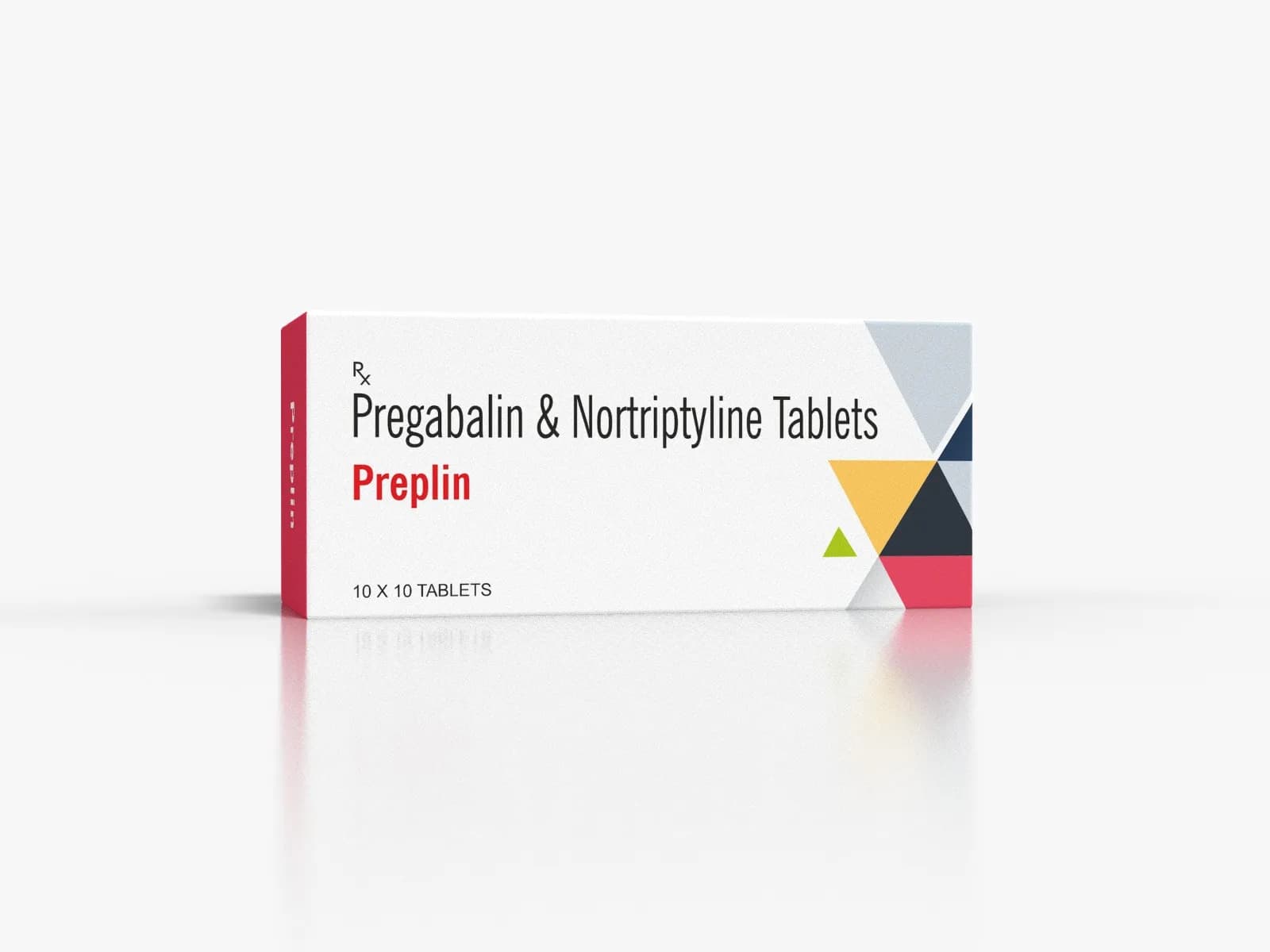
This tablet is supplied in 10×10 Alu-Alu blister packaging — a format chosen specifically because it addresses both of the stability concerns relevant to this combination simultaneously. The aluminium-aluminium construction provides a near-complete barrier against atmospheric moisture, which is particularly important given pregabalin's hygroscopic nature, while also blocking light exposure that could otherwise contribute to gradual degradation of the nortriptyline component over the product's shelf life.
The blister format is tamper-evident, suitable for both domestic pharmacy distribution and export shipment, and carries a validated shelf life of 24 months when stored below 30°C in a dry environment away from direct sunlight. For third party manufacturing clients with specific export packaging requirements, alternative pack configurations and carton specifications can be discussed during the order specification process.
What Sets Delwis Apart for Pregabalin Nortriptyline Tablet Production
Several factors make this facility a suitable partner specifically for this combination, rather than for tablet manufacturing generally. The humidity-controlled processing environment directly addresses pregabalin's hygroscopic behaviour — a detail that affects long-term stability but is sometimes overlooked by manufacturers without specific experience in gabapentinoid formulations. Content uniformity protocols are calibrated for low-dose actives like the 10mg nortriptyline component, ensuring that the smaller-dose API receives the same distribution scrutiny as the larger pregabalin dose.
The facility holds WHO-GMP, ISO 9001, and ISO 14001 certifications, supporting both domestic market compliance and the documentation requirements of export regulatory authorities. Production scheduling accommodates everything from initial development batches for stability testing through to full commercial-scale runs, and complete regulatory documentation — including stability data, batch records, and certificates of analysis — is maintained and made available to support product registration filings.
FAQs — Pregabalin 75mg and Nortriptyline 10mg Tablet
Q1: What is pregabalin and nortriptyline tablet used for?It is prescribed for neuropathic pain conditions — including diabetic peripheral neuropathy, post-herpetic neuralgia following shingles, fibromyalgia, and the nerve-related component of sciatica — where damaged or hyperactive nerve fibres produce burning, shooting, or tingling sensations that don't respond well to conventional painkillers.
Q2: How do pregabalin and nortriptyline work together for nerve pain?Pregabalin binds to calcium channels on damaged nerve endings, reducing the release of pain-amplifying chemical messengers at the site of nerve injury. Nortriptyline, at this low dose, enhances the brain and spinal cord's natural pain-suppression pathways by prolonging the activity of serotonin and noradrenaline at relevant synapses. Together, they address both the source of the abnormal signal and the body's ability to dampen it.
Q3: Why is nortriptyline included at only 10mg when it's an antidepressant?At 10mg, nortriptyline's contribution in this combination is primarily its effect on descending pain-modulating pathways rather than its mood-altering properties, which typically require higher doses. This lower dose targets the pain-pathway benefit while reducing the likelihood of the more pronounced side effects associated with antidepressant-range dosing.
Q4: What is the difference between using pregabalin alone versus this combination?Pregabalin alone addresses the abnormal nerve signalling at its source. Adding low-dose nortriptyline provides a complementary mechanism by strengthening the body's own descending pain-inhibition system — which can offer additional benefit in patients whose pain has not been adequately controlled by pregabalin monotherapy, particularly when sleep disturbance or low mood accompany the pain.
Q5: Can this tablet cause drowsiness?Both components can contribute to drowsiness, particularly during the initial days of treatment as the body adjusts. This effect often diminishes with continued use, but patients are typically advised to be cautious with activities requiring alertness until they understand how the medication affects them individually.
Q6: How is this tablet packaged, and why does packaging matter for this combination?It is supplied in 10×10 Alu-Alu blister packs, chosen specifically because the aluminium-aluminium format protects against both moisture — relevant to pregabalin's hygroscopic nature — and light exposure, which can affect nortriptyline stability over time. This packaging supports the product's 24-month shelf life.
Q7: Do you provide third party manufacturing for this combination?Yes. Delwis Healthcare offers complete third party and contract manufacturing for pregabalin and nortriptyline hydrochloride tablets, including formulation, humidity-controlled processing, Alu-Alu packaging, private label branding, and regulatory documentation support for domestic and export markets. Reach out via info@delwishealthcare.com to discuss specifications.
Q8: What certifications does your manufacturing facility hold?The facility is certified under WHO-GMP, ISO 9001, and ISO 14001, with manufacturing and testing processes validated against USP, BP, and IP pharmacopoeial standards, supported by complete batch documentation for regulatory submissions.