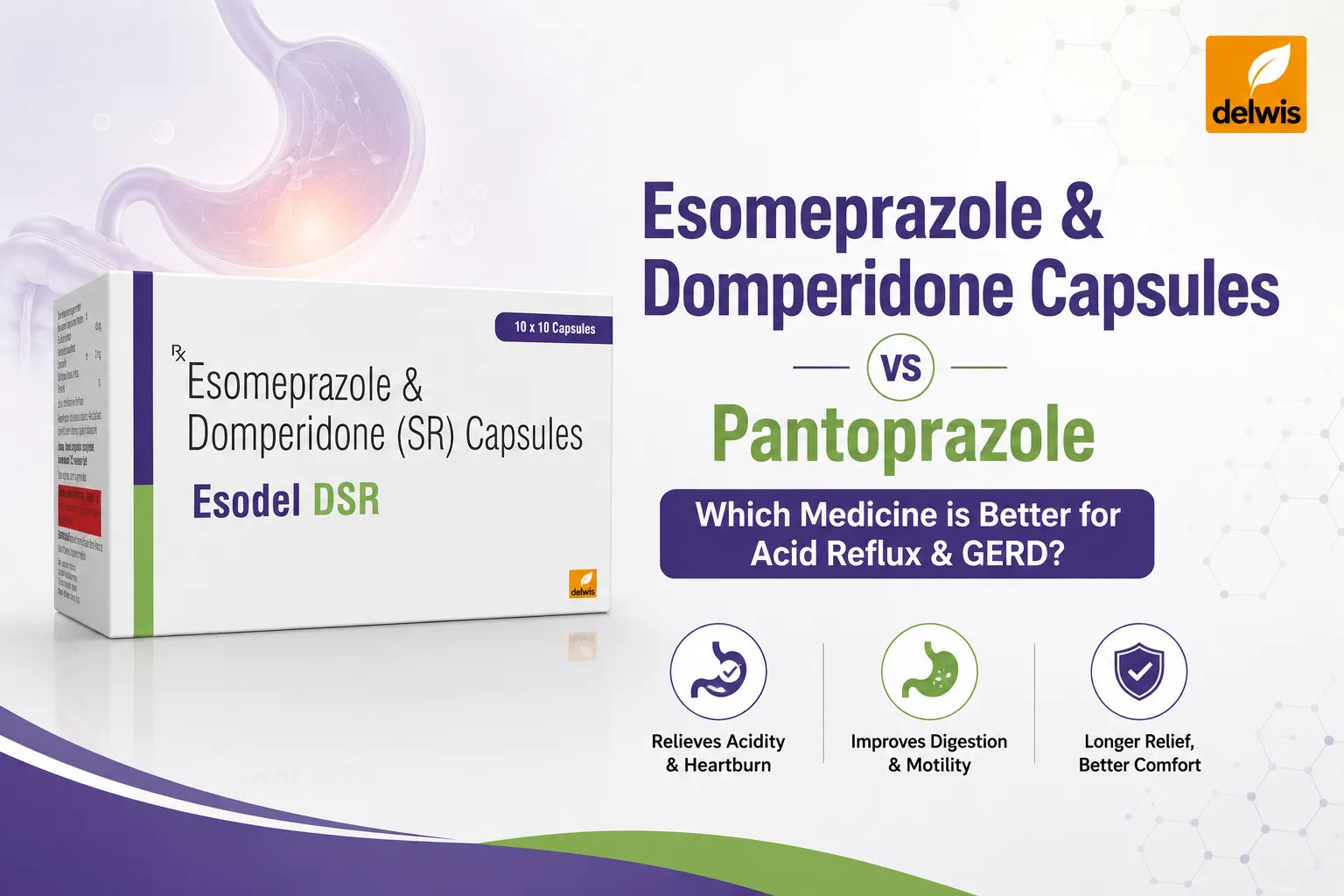
If you've been prescribed medication for acid reflux, GERD (Gastroesophageal Reflux Disease), or persistent heartburn, you've probably come across Esomeprazole and Domperidone Capsules or Pantoprazole. While both medicines reduce stomach acid, they work differently and are prescribed for different clinical situations.
So, which medicine is better—Esomeprazole and Domperidone Capsules or Pantoprazole?
The answer depends on your symptoms, underlying condition, and your doctor's recommendation.
In this guide, we'll compare both medications based on how they work, effectiveness, uses, dosage, side effects, safety, and ideal patient profiles to help you understand which treatment may be more suitable.
Quick Answer
Esomeprazole and Domperidone Capsules are generally preferred for patients who experience acid reflux along with nausea, vomiting, bloating, or delayed gastric emptying.
Pantoprazole is often prescribed for uncomplicated acid reflux, gastric ulcers, and long-term acid suppression where improved stomach motility isn't required.
What Is Esomeprazole and Domperidone?
Esomeprazole and Domperidone is a combination medicine consisting of:
- Esomeprazole – a Proton Pump Inhibitor (PPI) that significantly reduces stomach acid production.
- Domperidone – a prokinetic agent that improves stomach emptying and reduces nausea, vomiting, and bloating.
Because it addresses both acid production and gastric motility, this combination is commonly prescribed for patients experiencing multiple upper gastrointestinal symptoms.
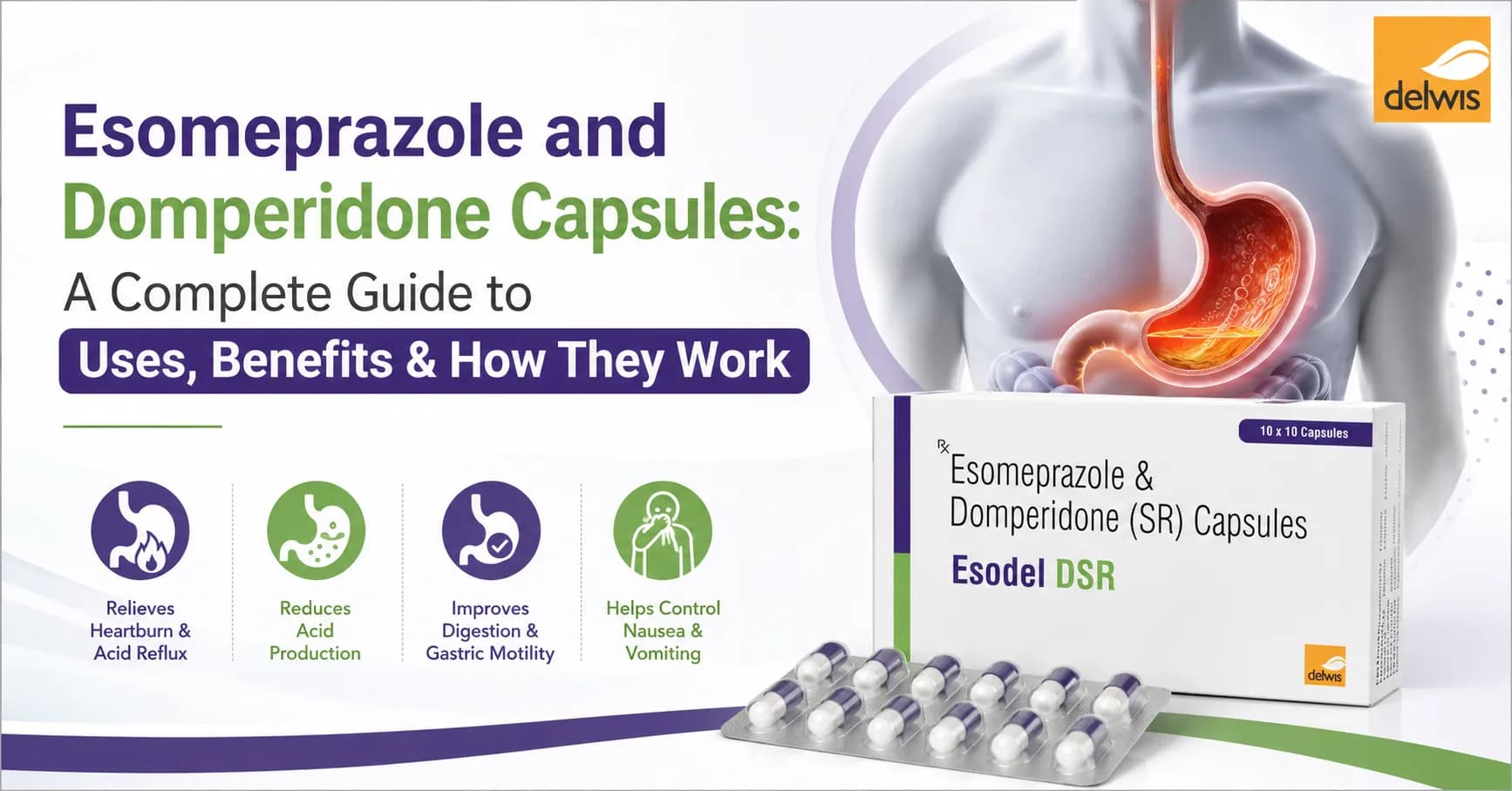
For a detailed explanation of its mechanism, benefits, and clinical uses, read our guide: Esomeprazole and Domperidone Capsules: A Complete Guide to Uses, Benefits & How They Work
What Is Pantoprazole?
Pantoprazole is also a Proton Pump Inhibitor (PPI) that blocks acid production in the stomach.
Unlike Esomeprazole and Domperidone Capsules, Pantoprazole contains only one active ingredient and focuses solely on reducing gastric acid secretion.
It is widely prescribed for:
- GERD
- Acid reflux
- Gastric ulcer
- Duodenal ulcer
- Zollinger-Ellison Syndrome
- Gastritis
Esomeprazole and Domperidone Capsules vs Pantoprazole: Key Differences
Feature | Esomeprazole + Domperidone | Pantoprazole |
Drug Type | PPI + Prokinetic | PPI |
Reduces Acid | Yes | Yes |
Improves Gastric Emptying | Yes | No |
Controls Nausea | Yes | No |
Controls Vomiting | Yes | No |
Reduces Bloating | Yes | Limited |
GERD Treatment | Excellent | Excellent |
Functional Dyspepsia | Better Choice | Moderate |
Delayed Gastric Emptying | Effective | Not Recommended |
How Do They Work?
Esomeprazole + Domperidone
The medicine provides dual action.
Esomeprazole blocks the proton pumps responsible for acid secretion.
Domperidone increases gastrointestinal movement, helping food move from the stomach to the intestine more efficiently while reducing nausea and regurgitation.
This combination is especially beneficial for patients with GERD accompanied by bloating, fullness, or vomiting.
Pantoprazole
Pantoprazole suppresses gastric acid production by inhibiting the H+/K+ ATPase enzyme.
Although highly effective for acid suppression, it does not improve stomach motility.
Which Medicine Works Better for Acid Reflux?
For simple acid reflux, both medicines are effective.
However, if acid reflux is associated with:
- nausea
- vomiting
- burping
- bloating
- heaviness after meals
- delayed digestion
then Esomeprazole and Domperidone Capsules often provide better symptom relief because they address two problems simultaneously.
Which Is Better for GERD?
GERD symptoms vary significantly among patients.
Pantoprazole may be suitable when:
- heartburn is the primary complaint
- long-term acid suppression is needed
- no gastric motility disorder exists
Esomeprazole and Domperidone Capsules may be preferred when patients experience:
- severe reflux
- regurgitation
- post-meal fullness
- nausea
- delayed gastric emptying
- functional dyspepsia
Effectiveness Comparison
Clinical practice suggests that combining a PPI with a prokinetic agent may improve symptom control in selected GERD patients who have persistent symptoms despite acid suppression alone. The additional benefit comes from improved gastric emptying and reduced reflux episodes, although treatment should always be individualized by a healthcare professional.
Side Effects Comparison
Esomeprazole + Domperidone
Possible side effects include:
- headache
- dry mouth
- constipation
- diarrhea
- dizziness
- abdominal discomfort
Rarely, Domperidone may affect heart rhythm in susceptible individuals, so it should be used under medical supervision.
Pantoprazole
Common side effects include:
- headache
- diarrhea
- nausea
- abdominal pain
- dizziness
Long-term PPI therapy may be associated with vitamin B12 deficiency, magnesium deficiency, and increased fracture risk in some patients.
Which Medicine Starts Working Faster?
Both medicines begin reducing acid within a few hours.
However,
- symptom improvement may start within 1–3 days
- maximum therapeutic benefit usually occurs after 3–5 days
Patients with nausea or delayed gastric emptying may notice quicker relief with the Esomeprazole and Domperidone combination due to Domperidone's prokinetic effect.
Can They Be Taken Long-Term?
Long-term use should only be under medical guidance.
Doctors periodically review therapy because prolonged acid suppression may require monitoring for nutrient deficiencies and other potential risks.
Who Should Avoid These Medicines?
Consult your healthcare provider before using either medicine if you have:
- liver disease
- kidney disease
- osteoporosis
- pregnancy or breastfeeding
- prolonged QT syndrome
- cardiac rhythm disorders
- allergy to PPIs
Choosing the Right Medicine
The best treatment depends on your symptoms.
Choose Pantoprazole when acid suppression alone is needed for uncomplicated GERD or peptic ulcer disease.
Consider Esomeprazole and Domperidone Capsules when acid reflux is accompanied by nausea, vomiting, bloating, early satiety, or delayed gastric emptying. A healthcare professional will determine the most appropriate therapy based on your condition.
Final Thoughts
Both Esomeprazole and Domperidone Capsules and Pantoprazole are highly effective treatments for acid-related disorders, but they serve different patient needs.
If your symptoms include only heartburn and acid reflux, Pantoprazole may be sufficient. However, if you also experience nausea, bloating, regurgitation, or delayed stomach emptying, the dual-action combination of Esomeprazole and Domperidone may provide more comprehensive relief.
Always consult a qualified healthcare professional before starting, stopping, or switching medications to ensure safe and effective treatment tailored to your specific condition.
Frequently Asked Questions (AEO-Friendly)
Which is better: Esomeprazole and Domperidone or Pantoprazole?
Esomeprazole and Domperidone may be more effective for acid reflux accompanied by nausea, bloating, or delayed gastric emptying, while Pantoprazole is often sufficient for uncomplicated acid reflux and ulcer management.
Is Pantoprazole stronger than Esomeprazole?
Both are effective PPIs. Some studies suggest Esomeprazole may provide slightly stronger acid suppression in certain patients, but the best choice depends on the individual's condition and medical advice.
Can I switch from Pantoprazole to Esomeprazole?
Do not switch medications without consulting your doctor. Treatment decisions depend on symptoms, diagnosis, and overall health.
Which medicine is better for bloating?
Esomeprazole and Domperidone Capsules may help more because Domperidone improves stomach motility, which can reduce bloating and fullness.
Which medicine is better for nausea?
Esomeprazole and Domperidone Capsules are generally preferred because Domperidone has anti-nausea and prokinetic properties.
Should these medicines be taken before meals?
Both are typically taken 30–60 minutes before meals, but follow your doctor's instructions or the prescribing information.
Looking for a Reliable Esomeprazole and Domperidone Capsules Manufacturer?
If you're a pharmaceutical company, distributor, or healthcare brand seeking high-quality manufacturing solutions, partnering with an experienced esomeprazole and domperidone capsules manufacturer is essential. Delwis Healthcare offers WHO-GMP compliant manufacturing, stringent quality control, customized formulations, and dependable third-party manufacturing services.
Explore our complete Capsule Manufacturing capabilities to discover a broad portfolio of pharmaceutical capsules manufactured to international quality standards.
This article is written for informational and educational purposes only. It does not constitute prescribing advice, a clinical recommendation, or a substitute for professional medical assessment. All antibiotic prescribing decisions should be made by qualified physicians or infectious disease specialists based on individual patient evaluation, microbiological data, local resistance patterns, and current clinical guidelines.