Introduction: When Doctors Choose a Third-Generation Cephalosporin Over Standard Antibiotics
There is a clinical moment that every physician working in India recognises. A patient comes in with a persistent respiratory infection, a recurring UTI, or a sinus infection that has not cleared after a first course of standard antibiotics. The cultures, or the clinical pattern, suggest a beta-lactamase-producing organism — a bacterial strain that has armed itself against the antibiotics most commonly prescribed. The prescription changes. And increasingly, it changes to a third-generation cephalosporin paired with a beta-lactamase inhibitor.
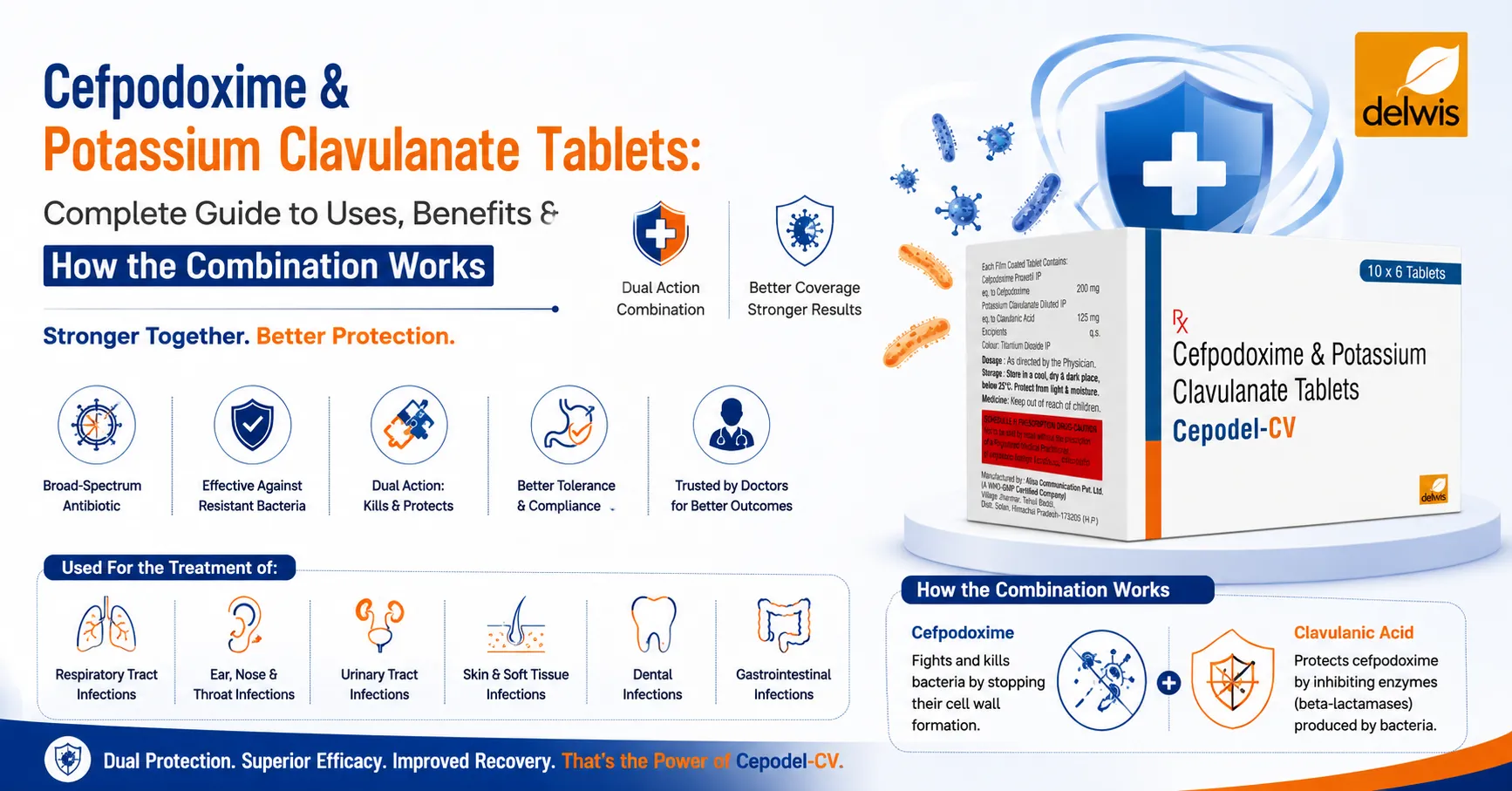
Cefpodoxime and potassium clavulanate tablets represent precisely this combination — bringing together the broad-spectrum bactericidal power of a third-generation oral cephalosporin with the enzyme-blocking protection of a potent beta-lactamase inhibitor. The result is a single oral tablet that reaches bacterial targets that neither drug could cover effectively alone.
This guide is the complete clinical and patient reference for this combination — covering what each ingredient does, why the pairing matters clinically, every infection it is used for, how and when to take it correctly, what side effects to expect, and what makes it different from other antibiotic combinations commonly prescribed in India.
For the full product composition, packaging, and manufacturing details, visit the cefpodoxime potassium clavulanate tablets product page at Delwis Healthcare.
What Are Cefpodoxime and Potassium Clavulanate Tablets?
Cefpodoxime and potassium clavulanate tablets are a fixed-dose combination (FDC) oral antibiotic formulation containing two pharmacologically complementary active ingredients:
- Cefpodoxime Proxetil 200mg — a third-generation cephalosporin antibiotic prescribed as an oral prodrug that converts to active cefpodoxime after intestinal absorption, delivering broad-spectrum bactericidal activity across a wide range of gram-positive and gram-negative bacteria
- Potassium Clavulanate 125mg — a beta-lactamase inhibitor that has no direct antibacterial action but permanently disables the beta-lactamase enzymes that many resistant bacteria use to destroy cefpodoxime before it can reach its target
The tablets are film-coated to protect both moisture-sensitive active ingredients during storage and passage through the stomach, and are packaged in 10×6 Alu-Alu blister strips — a full moisture and light barrier format that is specifically required for the hygroscopic clavulanate component.
This is an adult oral antibiotic combination available across India for the treatment of bacterial infections involving beta-lactamase-producing organisms in the respiratory tract, ENT system, urinary tract, skin, and other sites.
Understanding the Two Ingredients: What Each One Does
Cefpodoxime Proxetil — A Third-Generation Oral Cephalosporin
The term "third-generation" is not simply a marketing label — it reflects a genuine and clinically important advancement in antibacterial spectrum compared to earlier cephalosporin classes.
Why "proxetil" specifically?
Cefpodoxime in its active acid form is poorly absorbed from the gastrointestinal tract. The "proxetil" modification is an esterification of the cefpodoxime molecule into a prodrug form that has substantially improved lipophilicity and intestinal membrane permeability. After absorption through the gut wall, intestinal and plasma esterase enzymes rapidly cleave the ester bond, releasing active cefpodoxime into the systemic circulation. The drug is converted to its pharmacologically active form in the body — making it one of the very few oral antibiotics that delivers true third-generation cephalosporin blood levels from a standard tablet.
How does active cefpodoxime kill bacteria?
Like all cephalosporins, it binds to structures on the bacterial cell surface called penicillin-binding proteins (PBPs) — enzymes responsible for building and cross-linking the peptidoglycan polymer that forms the bacterial cell wall. By occupying and blocking these enzymes, cefpodoxime prevents the bacteria from repairing and extending their cell walls during growth and division. Without structural wall support, the growing bacterial cell ruptures under osmotic pressure and dies.
What distinguishes cefpodoxime's spectrum from first and second-generation cephalosporins?
Its third-generation profile extends meaningful gram-negative coverage to organisms that resist earlier generations — including Haemophilus influenzae, Moraxella catarrhalis, Escherichia coli, Klebsiella pneumoniae, and Proteus mirabilis — while retaining solid gram-positive activity against Streptococcus pneumoniae and Streptococcus pyogenes. This dual-spectrum coverage is what makes it particularly useful for respiratory, ENT, and urinary infections that frequently involve gram-negative organisms alongside gram-positive pathogens.
Potassium Clavulanate — Protecting Cefpodoxime from Bacterial Resistance
Clavulanate is a beta-lactamase inhibitor and the component that transforms this combination from a good antibiotic into a resistance-defeating antibiotic.
Here is the problem it solves: many bacteria — particularly the gram-negative species most responsible for recurrent and resistant infections in India — have evolved to produce enzymes called beta-lactamases. These enzymes seek out and chemically destroy the beta-lactam ring at the structural core of cephalosporins and penicillins, rendering them inactive before they can bind to their PBP targets. A bacterium that produces sufficient beta-lactamase can effectively neutralise plain cefpodoxime at the infection site — explaining why so many first-course antibiotic treatments fail in patients with prior antibiotic exposure.
Clavulanate acts as a suicide inhibitor — it binds to beta-lactamase enzymes irreversibly and permanently inactivates them, at the cost of being destroyed in the process. But with those enzymes disabled, cefpodoxime is free to reach its bacterial targets. The bacteria have lost their primary defensive weapon.
This is why the combination consistently outperforms plain cefpodoxime against beta-lactamase-producing strains of H. influenzae, M. catarrhalis, and beta-lactamase-producing E. coli — organisms that are increasingly prevalent across respiratory, ENT, and urinary infection presentations in Indian clinical practice.
Why This Combination Is Clinically Distinct From Amoxicillin Clavulanate
Both are beta-lactam + beta-lactamase inhibitor combinations. The fundamental distinction lies in the beta-lactam partner:
- Amoxicillin (in amoxicillin clavulanate) is a first-generation aminopenicillin — effective primarily against gram-positive organisms and a limited range of gram-negatives, with no intrinsic gram-negative spectrum extension beyond what clavulanate protection provides
- Cefpodoxime (in this combination) is a third-generation cephalosporin — with significantly broader inherent gram-negative coverage that extends to E. coli, Klebsiella, Proteus, and atypical organisms, independent of the clavulanate protection
This means even before considering clavulanate's resistance-defeating role, cefpodoxime starts with a wider antibacterial spectrum than amoxicillin — and the clavulanate then extends this further by protecting against enzymatic degradation. The combination is therefore a rational clinical step-up for infections involving organisms outside amoxicillin clavulanate's effective range, or for patients where amoxicillin-clavulanate has not cleared a previous infection episode.
Cefpodoxime and Potassium Clavulanate Tablets Uses — Complete Indication Guide
1. Respiratory Tract Infections — Community-Acquired Pneumonia and Bronchitis
Community-acquired pneumonia (CAP) and acute bacterial bronchitis are among the most prescribed-for indications for this combination in India. The dominant bacterial pathogens in CAP — Streptococcus pneumoniae and Haemophilus influenzae — are both within cefpodoxime's clinical spectrum. Crucially, H. influenzae strains producing beta-lactamase are found in a substantial and growing proportion of respiratory infection cases in Indian adults and children — meaning plain cefpodoxime or amoxicillin monotherapy increasingly fails in these presentations.
The combination is particularly appropriate for:
- Outpatient CAP of mild-to-moderate severity not requiring hospitalisation
- Acute bronchitis where a bacterial pathogen is confirmed or strongly suspected
- RTI episodes where a prior antibiotic course has not achieved clinical resolution
- Patients with frequent respiratory infections where resistant organisms are likely
Cefpodoxime achieves good bronchial and pulmonary tissue penetration, reaching effective concentrations at the site of infection. The 5–7 day treatment course for uncomplicated bacterial bronchitis and the 7–10 day course for CAP align with standard evidence-based antibiotic stewardship recommendations for oral cephalosporin-based therapy.
2. Sinusitis — Acute Bacterial Rhinosinusitis
Acute bacterial sinusitis — bacterial secondary infection of the paranasal sinuses following viral upper respiratory illness — is one of the highest-volume presentations in outpatient ENT and general practice across India. The three causative bacteria most responsible are Streptococcus pneumoniae, Haemophilus influenzae, and Moraxella catarrhalis — the precise triad covered by cefpodoxime and potassium clavulanate.
The clinical hallmarks distinguishing bacterial sinusitis from viral rhinosinusitis — nasal symptoms persisting beyond 10 days, purulent nasal discharge, facial pain and pressure, or symptom worsening after initial improvement — are the trigger point for antibiotic initiation. Cefpodoxime-clavulanate is a rational first-choice or step-up antibiotic for bacterial sinusitis in patients with prior antibiotic exposure or recurrent sinus episodes, where beta-lactamase-producing organisms are statistically likely.
Duration is typically 10–14 days, as the sinus cavity's restricted blood supply and limited antibiotic penetration require a longer course than soft-tissue infections to achieve bacterial eradication.
3. Tonsillitis and Pharyngitis
Streptococcal tonsillitis and pharyngitis caused by Streptococcus pyogenes (Group A Strep) are typically responsive to penicillin-class antibiotics as first-line. However, two clinical scenarios shift the recommendation toward cefpodoxime-clavulanate:
Recurrent tonsillitis with treatment failure: Beta-lactamase-producing Staphylococcus aureus co-colonises tonsillar tissue in children and adults with recurrent tonsillitis, producing beta-lactamase locally that destroys penicillin and plain amoxicillin in the tonsillar microenvironment before they can reach the streptococcal pathogen. The clavulanate component neutralises this local enzymatic activity — restoring cefpodoxime's access to the causative organism.
Penicillin treatment failure: Where a documented penicillin or amoxicillin course has not achieved bacterial eradication in streptococcal pharyngitis, cefpodoxime-clavulanate is a clinically appropriate second-line choice with a higher bacteriological eradication rate than retreatment with the same antibiotic class.
4. Otitis Media — Ear Infections
Acute otitis media, an infection of the middle ear fluid, is one of the most common reasons antibiotics are prescribed in India — particularly in children, but also in adults with anatomy predisposed to middle ear infections. The primary causative organisms — S. pneumoniae, H. influenzae, and M. catarrhalis — are all targets for this combination.
The proportion of H. influenzae and M. catarrhalis strains producing beta-lactamase continues to rise in Indian paediatric populations, directly reducing the effectiveness of plain amoxicillin for otitis media and making beta-lactamase inhibitor combinations the clinical preference for recurrent, bilateral, or treatment-resistant ear infections.
Cefpodoxime achieves therapeutic concentrations in middle ear fluid — the site of infection — and when paired with clavulanate, maintains this activity against the full range of beta-lactamase-producing pathogens responsible for antibiotic-resistant otitis media.
5. Urinary Tract Infections — Uncomplicated and Recurrent
Cefpodoxime's third-generation gram-negative spectrum — particularly its coverage of E. coli, Klebsiella pneumoniae, and Proteus mirabilis — makes it a clinically relevant oral antibiotic for urinary tract infections, where these gram-negative organisms account for the vast majority of causative pathogens.
In India, the rate of ESBL (extended-spectrum beta-lactamase)-producing E. coli in community-acquired UTIs is a growing clinical concern. While cefpodoxime-clavulanate does not cover ESBL-producing organisms (which require carbapenems or fosfomycin), it does effectively cover the non-ESBL beta-lactamase-producing E. coli and Klebsiella strains responsible for many recurrent UTIs in patients with prior antibiotic exposure.
The combination is particularly indicated for:
- Uncomplicated UTI (cystitis) in adult patients where culture sensitivity supports its use
- Recurrent UTI where prior antibiotic courses have failed due to resistant organisms
- Pyelonephritis of mild-to-moderate severity managed as outpatient therapy, under physician guidance
For confirmed UTI, a urine culture and sensitivity report should guide antibiotic selection where possible — empirical cefpodoxime-clavulanate is most appropriate while culture results are awaited in clinically appropriate patients.
6. Skin and Soft Tissue Infections
Community-acquired skin and soft tissue infections — including cellulitis, impetigo, infected wounds, furuncles, and infected sebaceous cysts — typically involve Staphylococcus aureus and Streptococcus pyogenes. Both are within cefpodoxime's gram-positive spectrum, and the clavulanate component addresses beta-lactamase-producing S. aureus strains (methicillin-susceptible MSSA) that resist plain cephalosporins.
Cefpodoxime-clavulanate is a rational oral antibiotic for:
- Cellulitis not responding to first-line treatment
- Infected insect bites, minor wound infections, and superficial abscess presentations suitable for oral antibiotic management
- Skin infections in patients with prior antibiotic exposure where resistant organisms are likely
It is not appropriate for MRSA (methicillin-resistant S. aureus) infections — which require specific anti-MRSA agents.
7. Gonorrhoea — Single-Dose Regimen
Cefpodoxime proxetil has documented activity against Neisseria gonorrhoeae and is used in certain clinical protocols as an oral alternative for uncomplicated gonorrhoea, particularly where intramuscular ceftriaxone is declined or logistically unavailable. The combination with clavulanate provides additional beta-lactamase protection relevant for penicillinase-producing N. gonorrhoeae (PPNG) strains.
Important clinical note: Treatment of gonorrhoea must follow current local and national STI treatment guidelines, and the selection of cefpodoxime as a therapeutic option should be guided by local gonococcal resistance surveillance data. This is a clinician-directed indication, not a self-treatment scenario.
How to Take Cefpodoxime and Potassium Clavulanate Tablets — Complete Administration Guide
Take With Food — This Is Pharmacologically Important
Cefpodoxime proxetil must be taken with food — and this instruction is not simply about tolerability. It reflects a specific pharmacokinetic property of the cefpodoxime proxetil prodrug.
The conversion of cefpodoxime proxetil to active cefpodoxime depends on intestinal esterase activity — and the presence of food slows gastric emptying, extending the contact time of the prodrug with the intestinal mucosa where this esterase conversion occurs. Clinical pharmacokinetic studies demonstrate that taking cefpodoxime proxetil with food increases its bioavailability by approximately 21–33% compared to fasting administration. This means the same prescribed dose delivers meaningfully higher plasma antibiotic concentrations when taken with a meal.
Practical instruction: Take one tablet at the start of breakfast and one at the start of dinner — or at whatever two-meal interval your doctor prescribes. Do not take on an empty stomach. If you must take it away from a meal, at least a light snack with the tablet is preferable to completely fasted dosing.
How to Take the Tablet
Swallow the film-coated tablet whole with a full glass of water. Do not crush, break, or chew the tablet — the film coat protects both moisture-sensitive APIs (particularly clavulanate) during passage through the acidic stomach environment. Breaking the coat exposes clavulanate to gastric acid and moisture, reducing its stability and the effective amount of drug absorbed.
Dosage by Indication
The prescribing physician will determine the specific dose and duration based on the infection type, severity, the patient's renal function, and body weight. Standard adult dosing frameworks:
Infection | Typical Dose | Frequency | Duration |
|---|
Respiratory tract infection / CAP | 1 tablet (200mg/125mg) | Twice daily | 5–10 days |
Sinusitis (acute bacterial) | 1 tablet | Twice daily | 10–14 days |
Tonsillitis / Pharyngitis | 1 tablet | Twice daily | 5–10 days |
Otitis Media | 1 tablet | Twice daily | 5–10 days |
Urinary tract infection | 1 tablet | Twice daily | 3–7 days (cystitis); 7–14 days (pyelonephritis) |
Skin / soft tissue infection | 1 tablet | Twice daily | 7–10 days |
Gonorrhoea (uncomplicated) | 1 tablet single dose | Once | 1 day (as per protocol) |
All dosages are indicative. Always follow the specific prescription instructions from your doctor. Duration varies with clinical response.
Completing the Full Course
Never stop taking the tablets because symptoms have improved before the prescribed course is finished. Symptom improvement — reduced fever, less pain, improved energy — typically occurs within 2–4 days of starting effective antibiotic treatment, well before bacterial eradication is complete. Stopping early allows surviving bacteria to regrow, often triggering a relapse that is harder to treat and more likely to involve antibiotic-resistant organisms.
Side Effects of Cefpodoxime and Potassium Clavulanate Tablets
This combination has a well-established tolerability profile in adults. The clavulanate component at 125mg is notably lower than in some other clavulanate-containing combinations, which contributes to a relatively more favourable GI tolerability profile.
Common (mild, usually transient):
- Diarrhoea and loose stools — The most frequently reported side effect, primarily attributable to clavulanate's effects on intestinal flora and motility. Taking the tablet with food reduces frequency and severity. Mild antibiotic-associated diarrhoea is not an allergic reaction and is not typically a reason to stop treatment without physician guidance.
- Nausea — More common when taken on an empty stomach. Food co-administration, as described above, significantly reduces this.
- Abdominal discomfort or cramping — Mild, usually resolves within a few days as the body adjusts.
- Headache — Reported by a minority of patients, not always causally established.
- Vaginal yeast infection (vulvovaginal candidiasis) — Broad-spectrum antibiotics disrupt vaginal flora, creating conditions for candidal overgrowth in some women. Manageable with topical antifungal treatment if it occurs; inform your doctor if symptoms develop.
Uncommon, requiring medical attention:
- Skin rash — A macular or papular rash occurring during treatment should be reported to your doctor. It may be a non-allergic drug rash (particularly common with cephalosporins in patients who coincidentally have Epstein-Barr virus infection) or, less commonly, an early sign of allergy.
- Hives (urticaria) — Raised, itchy skin welts appearing shortly after dosing may indicate a true allergic reaction. Stop the current dose and contact your doctor or seek urgent care.
- Severe persistent diarrhoea — Clostridioides difficile-associated diarrhoea (CDAD) is rare with oral cephalosporins but possible. Bloody or very persistent diarrhoea during or after antibiotic treatment warrants medical review.
- Liver enzyme elevation — Rare, mild, and typically asymptomatic; more associated with clavulanate. If jaundice, dark urine, or significant right upper abdominal pain develops during treatment, contact your doctor immediately.
- Severe hypersensitivity (anaphylaxis) — Extremely rare but a medical emergency. Signs include throat or tongue swelling, difficulty breathing, and a sudden drop in blood pressure. Seek emergency care immediately.
What this combination does not typically cause: Unlike some systemic antibiotics, cefpodoxime at oral dosing does not cause the nephrotoxicity, ototoxicity, or significant photosensitivity associated with aminoglycosides or fluoroquinolones. Its GI side effect burden — while real — is generally lower than amoxicillin clavulanate at higher clavulanate doses (125mg vs 250mg) and substantially lower than systemic antibiotics with broader tissue distribution.
Important Precautions and Contraindications
Cephalosporin hypersensitivity: Do not take if you have a confirmed allergy to any cephalosporin antibiotic. Inform your prescriber of any prior antibiotic allergic reactions before starting this medicine.
Penicillin cross-reactivity: There is a low but real risk of cross-reactivity between penicillins and cephalosporins. Patients with a history of severe immediate penicillin hypersensitivity (anaphylaxis) should have this evaluated before cefpodoxime-clavulanate is prescribed. Patients with non-severe penicillin reactions (mild rash) can generally receive cephalosporins under physician supervision.
Renal impairment: Cefpodoxime is primarily renally excreted. In patients with significant chronic kidney disease, dose adjustment and extended dosing intervals are required — your prescribing physician or nephrologist will determine the appropriate modified regimen.
Pregnancy: Cefpodoxime is a Pregnancy Category B drug — animal studies have not demonstrated fetal harm, but adequate controlled studies in pregnant women are not available. Use during pregnancy should be under the specific guidance of the treating physician, who will weigh the clinical benefit against the theoretical risk.
Breastfeeding: Small amounts of cefpodoxime pass into breast milk. Consult your doctor about the risk-benefit balance if you are breastfeeding.
Drug interactions:
- Antacids and H2 blockers (ranitidine, famotidine):Reduce gastric acidity, which impairs the conversion of cefpodoxime proxetil to active cefpodoxime in the stomach. If antacids are needed, take them at least 2 hours before or after the cefpodoxime-clavulanate tablet to minimise this interaction.
- Probenecid:Inhibits renal tubular secretion of cefpodoxime, increasing and prolonging plasma antibiotic concentrations — this interaction is occasionally used therapeutically but requires physician awareness.
- Warfarin and other anticoagulants:Some cephalosporins can potentiate anticoagulant effects via alteration of vitamin K-producing intestinal bacteria. INR monitoring is advisable in patients on concurrent warfarin therapy.
- Oral contraceptives:Broad-spectrum antibiotics may reduce the enterohepatic circulation of oestrogen, potentially reducing oral contraceptive reliability during the antibiotic course. Additional contraceptive precautions during treatment and for 7 days after completion are a reasonable precautionary measure.
Storage — Why Alu-Alu Packaging Matters for This Combination
Both cefpodoxime proxetil and potassium clavulanate are moisture-sensitive active ingredients. Clavulanate in particular is hygroscopic — it actively absorbs ambient moisture from the environment, leading to degradation and loss of potency if packaging is inadequate.
The 10×6 Alu-Alu blister format — aluminium foil on both the lid and the base of the blister — provides a complete, hermetic moisture and light barrier that standard PVC/aluminium blisters cannot replicate. Each tablet is sealed in its own moisture-protected cavity until the moment of use.
Patient-facing storage instructions: Store below 30°C in a dry place, away from direct sunlight. Do not store in the bathroom medicine cabinet where shower steam creates humidity. Keep in the original Alu-Alu blister until you are ready to take each dose — do not remove tablets and store them loosely. Check the expiry date on the carton before starting a new course.
Conclusion
Cefpodoxime and potassium clavulanate tablets bring together two complementary pharmacological actions — the broad-spectrum bactericidal power of a third-generation oral cephalosporin and the resistance-defeating enzyme inhibition of potassium clavulanate — into a single oral antibiotic combination that is genuinely effective against the resistant bacteria most responsible for treatment failure in respiratory, ENT, urinary, and skin infections across India.
For patients, understanding what this combination does, why food timing matters, how to complete the course, and what side effects are expected makes a meaningful difference to both adherence and outcomes. For clinicians, the combination's third-generation spectrum — wider than amoxicillin clavulanate and protected against the primary resistance mechanism in common community-acquired pathogens — provides a rational, evidence-supported step-up option for the bacterial infections most commonly seen in outpatient practice.
For the complete product specification, composition, Alu-Alu packaging details, and third-party manufacturing information, visit the cefpodoxime potassium clavulanate tablets product page at Delwis Healthcare. To explore the full antibacterial range of tablet formulations manufactured at our WHO-GMP certified Ahmedabad facility, visit the Delwis Healthcare antibacterial portfolio.
Frequently Asked Questions
Q: What is cefpodoxime and potassium clavulanate tablet used for?
Cefpodoxime and potassium clavulanate tablets are used for bacterial infections of the respiratory tract (pneumonia, bronchitis), ENT system (sinusitis, tonsillitis, otitis media), urinary tract, skin and soft tissue, and throat. They are specifically prescribed where beta-lactamase-producing bacteria are responsible for treatment resistance — the clavulanate disarms the bacterial enzyme that would otherwise destroy cefpodoxime.
Q: What is the difference between cefpodoxime and cefpodoxime + clavulanate?
Plain cefpodoxime is effective against bacteria that lack beta-lactamase defence mechanisms. Cefpodoxime + potassium clavulanate extends this coverage to bacteria that produce beta-lactamase — restoring cefpodoxime's effectiveness against resistant organisms that plain cefpodoxime cannot reach.
Q: Should cefpodoxime clavulanate tablets be taken with food or without food?
With food — this is pharmacokinetically important, not just a tolerability suggestion. Food increases cefpodoxime proxetil bioavailability by approximately 21–33% by slowing gastric emptying and extending intestinal contact time for the prodrug conversion. Taking on an empty stomach results in significantly lower plasma antibiotic levels per dose.
Q: How long does cefpodoxime and potassium clavulanate take to show results?
Most patients with bacterial infections notice clinical improvement — reduced fever, less pain, improving symptoms — within 48–72 hours of starting treatment. However, this does not mean the bacteria have been fully eradicated. The complete prescribed course must be finished to prevent relapse and reduce the risk of antibiotic resistance development.
Q: What are the side effects of cefpodoxime clavulanate tablets?
The most common side effects are mild and gastrointestinal — diarrhoea, nausea, and abdominal discomfort — primarily attributable to the clavulanate component. These are reduced by taking the tablet with food. Skin rash, vaginal yeast infection, and headache are reported less commonly. Severe allergic reactions (hives, throat swelling, breathing difficulty) are rare but require immediate medical attention.
Q: Is cefpodoxime clavulanate safe in pregnancy?
Cefpodoxime is Pregnancy Category B — animal studies have not shown fetal harm. Use during pregnancy should be specifically recommended and supervised by the treating physician, who will assess whether the clinical benefit of treating the infection outweighs any theoretical risk.
Q: Can this tablet be crushed or cut?
No — swallow whole. The film coat protects moisture-sensitive clavulanate during passage through the stomach. Breaking or crushing the tablet disrupts this protection, potentially reducing potency and therapeutic effect.
Q: How does cefpodoxime clavulanate compare to amoxicillin clavulanate?
The clavulanate component is the same — a beta-lactamase inhibitor protecting the antibiotic partner from enzymatic destruction. The difference is the antibiotic partner itself: amoxicillin is a first-generation aminopenicillin with primarily gram-positive spectrum; cefpodoxime is a third-generation cephalosporin with significantly broader gram-negative coverage including E. coli, Klebsiella, and Proteus. For infections involving gram-negative organisms or where amoxicillin-clavulanate has failed, cefpodoxime-clavulanate provides a broader spectrum step-up.
This article is written for informational and educational purposes only. It does not constitute medical advice, a clinical recommendation, or a substitute for professional medical assessment. All antibiotic prescribing decisions should be made by a qualified physician or specialist based on individual clinical evaluation, microbiological data where available, and local antimicrobial resistance patterns.