Introduction: From Diagnosis to First Antibiotic Dose — Why Combination Therapy Matters
Every clinician managing bacterial infections in Indian hospitals faces a version of the same clinical tension. The patient is ill — perhaps with pneumonia, a complicated UTI, sepsis of unclear origin, or a post-surgical wound infection. The blood cultures or swabs are pending. The patient cannot wait 48–72 hours for the culture results before antibiotic treatment begins. An empirical antibiotic decision must be made now, based on the most likely organisms, the local resistance pattern, and the clinical severity of the presentation.
In this scenario, two questions determine which antibiotic is chosen: what organisms are most likely to be causing this infection? and what is the probability that those organisms have developed resistance to standard antibiotics?
In India's current antimicrobial landscape — with some of the world's highest rates of community-acquired ESBL-producing Escherichia coli, rising beta-lactamase-producing Klebsiella pneumoniae, and increasing fluoroquinolone resistance across gram-negative pathogens — the answer to the second question has shifted dramatically over the past decade. Organisms that would once have been reliably covered by plain ceftriaxone alone are increasingly producing beta-lactamase enzymes that render it ineffective before it can reach its target.
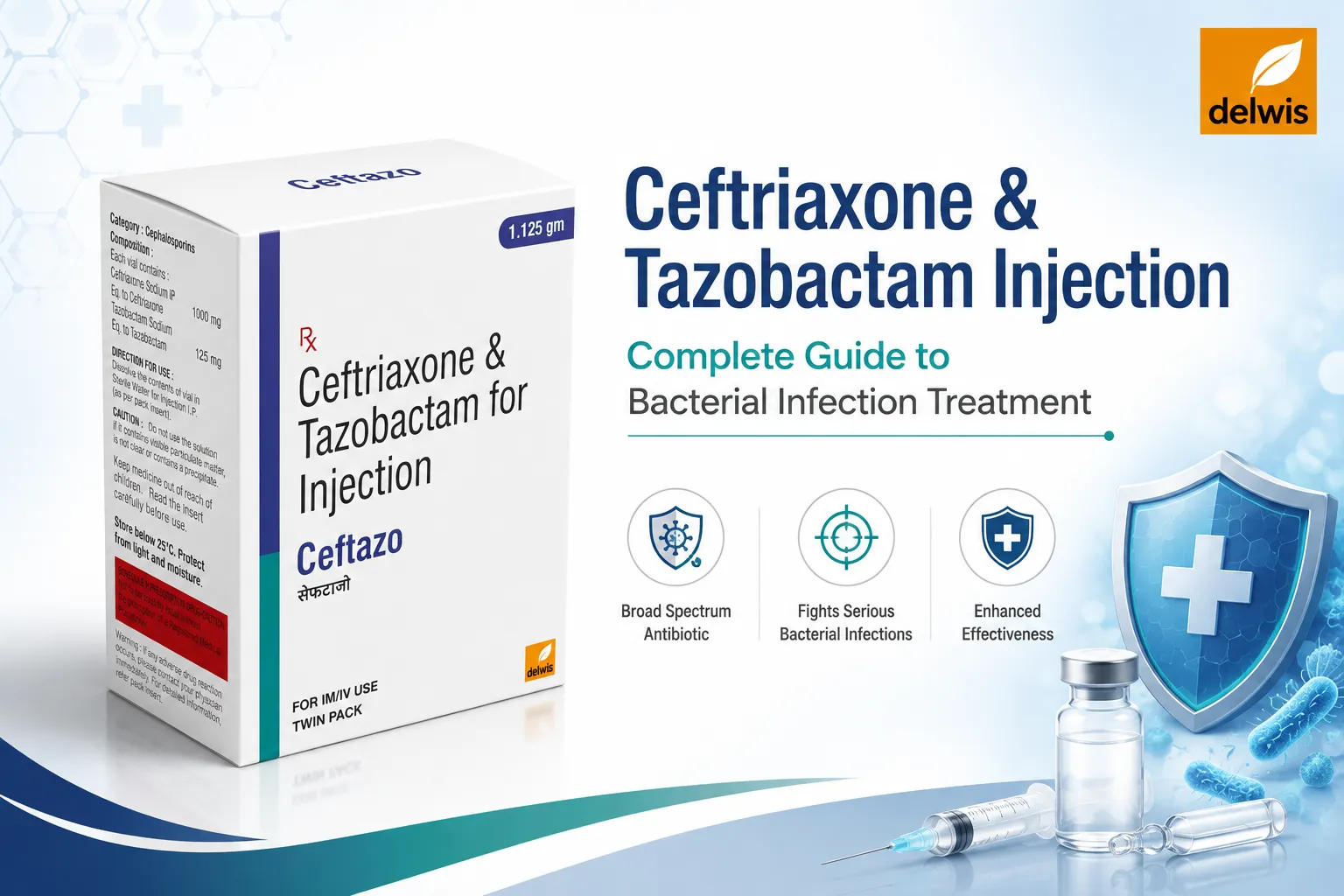
This is the clinical space that ceftriaxone and tazobactam injection was designed to fill — delivering the broad-spectrum activity of a third-generation cephalosporin while protecting it against the most common resistance mechanism with a co-administered beta-lactamase inhibitor. This complete guide covers every bacterial infection category where this combination is used, how it outperforms plain ceftriaxone for each, how to reconstitute and administer it correctly, and what the dosage and safety framework looks like for clinical practice.
For the complete product profile, visit ceftriaxone and tazobactam for injection by Delwis Healthcare.
Ceftriaxone and Tazobactam Injection Uses — Complete Infection-by-Infection Clinical Guide
1. Respiratory Tract Infections — Community-Acquired and Hospital-Acquired Pneumonia
Community-Acquired Pneumonia (CAP): CAP is one of the most common reasons for hospital admission in India — affecting all age groups with significantly higher mortality in elderly, diabetic, and immunocompromised patients. The bacterial causative organisms in moderate-to-severe CAP requiring inpatient IV antibiotic therapy include:
- Streptococcus pneumoniae — the most common CAP pathogen; well-covered by plain ceftriaxone, though penicillin-resistant strains require attention
- Haemophilus influenzae — increasingly beta-lactamase-producing in India, reducing plain ceftriaxone efficacy; tazobactam restores coverage
- Klebsiella pneumoniae — particularly in diabetic patients, alcoholics, and those with structural lung disease; community-acquired Klebsiella pneumonia can be severe; beta-lactamase-producing strains require tazobactam cover
- Moraxella catarrhalis — a beta-lactamase producer in essentially 100% of strains; requires inhibitor coverage
For CAP requiring IV antibiotic therapy — PSI class III-IV or CURB-65 score ≥2 — ceftriaxone and tazobactam injection provides empirical coverage of the full bacterial CAP pathogen spectrum including beta-lactamase-producing strains, without the need to add a separate beta-lactamase inhibitor.
Hospital-Acquired Pneumonia (HAP) and Ventilator-Associated Pneumonia (VAP): HAP occurring more than 48 hours after hospital admission — and VAP developing in mechanically ventilated ICU patients — involve a fundamentally different and more resistant pathogen profile: gram-negative organisms including Pseudomonas aeruginosa, Acinetobacter baumannii, Klebsiella pneumoniae (often ESBL or carbapenem-resistant), and Staphylococcus aureus (including MRSA). These require broader empirical coverage than community organisms.
Ceftriaxone + tazobactam covers ESBL-producing Klebsiella HAP — a critical advantage over plain ceftriaxone — but does not cover Pseudomonas (ceftriaxone has minimal anti-pseudomonal activity), carbapenem-resistant organisms, or MRSA. For HAP/VAP empirical therapy where Pseudomonas or MDR-gram negatives are likely, broader anti-pseudomonal combinations are required. Ceftriaxone + tazobactam is most appropriate for early-onset HAP (2–4 days post-admission) or HAP in settings without identified Pseudomonas risk factors.
2. Urinary Tract Infections — Complicated UTI and Pyelonephritis
Complicated urinary tract infections — including upper UTI (pyelonephritis), catheter-associated UTI, UTI with systemic features (fever, rigors), and UTI in structurally abnormal urinary tracts — are one of the most important indications for this combination in Indian inpatient practice.
Why this combination specifically for complicated UTI: The causative organisms in complicated UTI in India are predominantly gram-negative: Escherichia coli (60–70% of cases), Klebsiella pneumoniae (10–15%), Proteus mirabilis, and less commonly Pseudomonas aeruginosa and Enterococcus.
Critically, India has among the highest rates globally of community-acquired ESBL-producing E. coli UTI — with some Indian studies showing ESBL producers in 30–50% of community E. coli UTI isolates. Plain ceftriaxone fails against ESBL-producing E. coli regardless of its otherwise excellent urinary concentration profile, because the ESBL enzyme destroys the drug before it can act. Tazobactam restores ceftriaxone activity against the majority of ESBL-producing E. coli and Klebsiella strains — making this combination one of the most clinically rational empirical choices for complicated UTI in India while culture and sensitivity results are awaited.
Clinical presentations warranting IV ceftriaxone + tazobactam for UTI:
- Acute pyelonephritis with systemic features (fever >38.5°C, rigors, flank pain, elevated inflammatory markers)
- Complicated UTI with suspected bacteraemia (UTI-associated sepsis)
- UTI not responding to oral antibiotic therapy within 48–72 hours
- UTI in the context of urological obstruction, stones, or anatomical abnormality
- UTI in diabetic, immunocompromised, or pregnant patients where severity risk is elevated
Once culture and sensitivity results confirm susceptibility, de-escalation to an appropriate oral antibiotic should follow — limiting IV antibiotic exposure to the minimum necessary period.
3. Sepsis and Bacteraemia — Empirical Broad-Spectrum Cover
Sepsis — life-threatening organ dysfunction caused by a dysregulated host response to infection — is a medical emergency requiring immediate, appropriate antibiotic therapy. The "Surviving Sepsis Campaign" international guidelines and Indian infectious disease society recommendations both specify that appropriate empirical antibiotic therapy should be initiated within one hour of sepsis recognition, before the causative organism is identified.
In this setting — where the source of sepsis may be any body site and the causative organism is unknown — empirical antibiotic selection must cover the broadest range of likely pathogens without immediately escalating to last-resort carbapenems.
For sepsis of community origin or early-onset hospital sepsis (within the first 48 hours of admission) in India:
- Source is most commonly urinary tract, respiratory tract, skin, or intra-abdominal
- Causative organisms most commonly include ESBL-producing E. coli, Klebsiella pneumoniae, gram-positive organisms (S. aureus, Streptococcus), and occasionally anaerobes from abdominal sources
- Ceftriaxone + tazobactam covers the majority of these empirically — the combination's gram-positive and gram-negative spectrum, combined with tazobactam's protection against ESBL-mediated resistance, provides broad community-source sepsis coverage without carbapenem use
Important limitation: Ceftriaxone + tazobactam does not cover MRSA (methicillin-resistant S. aureus), Pseudomonas, carbapenem-resistant gram-negatives, or Enterococcus faecium. Where these are likely (late hospital-onset sepsis, known colonisation with resistant organisms, sepsis in ICU patients), escalation to appropriate broader coverage is required.
Antibiotic stewardship principle: once blood cultures and source-specific cultures return with susceptibility data (typically 48–72 hours), de-escalate to the narrowest appropriate antibiotic. Empirical broad-spectrum coverage is a bridge to targeted therapy, not a substitute for it.
4. Intra-Abdominal Infections — Peritonitis, Cholangitis, and Biliary Sepsis
Intra-abdominal infections — including bacterial peritonitis (primary, secondary, or spontaneous bacterial peritonitis in cirrhotic patients), acute cholangitis, cholecystitis requiring systemic antibiotic therapy, and infected pancreatic necrosis — involve polymicrobial flora from the gut: gram-negative enterobacteriaceae, gram-positive organisms, and anaerobes.
Ceftriaxone's biliary pharmacokinetics are a specific clinical advantage for biliary infections: Ceftriaxone undergoes significant biliary excretion — achieving bile concentrations several times higher than plasma concentrations. For acute cholangitis and biliary sepsis where bile duct organisms are the source, this biliary concentration advantage provides therapeutic drug levels at the infection site that IV antibiotics with purely renal excretion cannot match.
In the setting of acute cholangitis or biliary sepsis, ceftriaxone + tazobactam covers the predominant gram-negative biliary pathogens (E. coli, Klebsiella) including ESBL-producing strains, while providing adequate gram-positive cover. For infections with a significant anaerobic component (secondary peritonitis from bowel perforation, infected pancreatic necrosis), the addition of metronidazole is standard practice alongside ceftriaxone + tazobactam.
Spontaneous Bacterial Peritonitis (SBP) in cirrhosis: SBP — bacterial infection of ascitic fluid in cirrhotic patients without an obvious intra-abdominal source — is predominantly caused by gram-negative organisms (E. coli, Klebsiella) and, in hospital-acquired SBP, increasingly by ESBL producers. Ceftriaxone is the international guideline-recommended empirical treatment for SBP; tazobactam extends this to cover ESBL-producing SBP pathogens increasingly prevalent in Indian cirrhosis patients — making the combination a rational empirical choice for hospital-acquired or ESBL-risk SBP presentations.
5. Meningitis and Central Nervous System Infections
Ceftriaxone is one of the very few antibiotics that achieves therapeutic concentrations in the cerebrospinal fluid (CSF) — typically 2–5% of plasma concentration in uninflamed meninges and up to 15–20% when meningeal inflammation is present (as in active bacterial meningitis, where the blood-brain barrier becomes more permeable). This CSF penetration profile makes ceftriaxone the backbone of bacterial meningitis treatment globally, and explains why no other antibiotic in this class has displaced it for this indication.
For bacterial meningitis in adults — most commonly caused by Streptococcus pneumoniae and Neisseria meningitidis — plain ceftriaxone remains the primary empirical agent at high doses (2g every 12 hours). The addition of tazobactam is relevant in specific scenarios:
- Hospital-acquired gram-negative meningitis (post-neurosurgical procedures, post-cranial trauma) where gram-negative organisms including Klebsiella and E. coli are causative — tazobactam's cover of ESBL-producing gram-negatives extends the empirical spectrum appropriately
- Meningitis in neonates where gram-negative meningitis (E. coli, Klebsiella) is more common than in adults — ESBL-producing gram-negatives in neonatal ICU settings make tazobactam cover clinically relevant
- Neonatal sepsis with suspected CNS involvement — where empirical broad-spectrum coverage including ESBL-producing gram-negatives is warranted
The combination's CNS penetration follows ceftriaxone's pharmacokinetics — tazobactam achieves lower CNS concentrations but serves its enzyme-inhibitory function both at the blood-brain barrier level and within the CNS compartment.
6. Skin and Soft Tissue Infections
Complicated skin and soft tissue infections (cSSTI) — including cellulitis requiring IV therapy, necrotising fasciitis (with surgical management), infected diabetic foot, wound infections, and infected ulcers with systemic features — involve mixed flora depending on the clinical context.
Diabetic foot infections are particularly relevant in India's context of high diabetes prevalence. Diabetic foot infections involve polymicrobial flora including S. aureus, streptococci, gram-negative enterobacteriaceae, and anaerobes — and in chronic or previously treated infections, ESBL-producing gram-negatives are common. Ceftriaxone + tazobactam covers the gram-negative and gram-positive (non-MRSA) component of diabetic foot infections requiring IV therapy.
For severe cSSTI with suspected MRSA (previous MRSA colonisation, failed beta-lactam therapy, rapid progression), the addition of vancomycin or teicoplanin alongside ceftriaxone + tazobactam is appropriate to cover the MRSA gap.
7. Bone and Joint Infections — Osteomyelitis and Septic Arthritis
Bacterial osteomyelitis — bone infection — and septic arthritis require prolonged IV antibiotic therapy followed by oral step-down, typically over 4–6 weeks total. The causative organisms are most commonly Staphylococcus aureus, streptococci, and in certain patient populations — particularly those with underlying diabetes, urinary tract abnormalities, or recent healthcare exposure — gram-negative organisms including E. coli and Klebsiella.
Ceftriaxone's once-daily IV dosing — a consequence of its long 6–8 hour half-life — is specifically advantageous in bone and joint infections that require prolonged parenteral therapy. In outpatient parenteral antibiotic therapy (OPAT) programmes, where patients receive IV antibiotics at home or in outpatient clinics, once-daily ceftriaxone + tazobactam significantly simplifies the logistics compared to antibiotics requiring three or four daily doses.
For gram-negative osteomyelitis where ESBL-producing organisms are suspected or confirmed, tazobactam's enzyme-inhibitory cover allows the continuation of ceftriaxone-based therapy rather than requiring escalation to a carbapenem for the full 4–6 week duration.
8. Gonorrhoea — Uncomplicated and Disseminated
Neisseria gonorrhoeae infection — the causative organism of gonorrhoea — is increasingly resistant to fluoroquinolones (ciprofloxacin) and even to extended-spectrum cephalosporins in some settings. Ceftriaxone — at higher doses than those used for other infections — remains the antibiotic of choice for uncomplicated gonorrhoea in most international guidelines, including WHO recommendations. For penicillinase-producing N. gonorrhoeae (PPNG) strains, tazobactam's inhibitory cover is an additional protective layer against plasmid-mediated penicillinase activity.
Disseminated gonococcal infection (DGI) — systemic gonorrhoea producing arthritis-dermatitis syndrome, endocarditis, or meningitis — requires IV ceftriaxone for the penetration and systemic bactericidal activity needed to clear the organism from joint, blood, and CNS compartments.
9. Peri-operative Surgical Prophylaxis
Single-dose perioperative antibiotic prophylaxis — given 30–60 minutes before incision — reduces surgical site infection (SSI) rates in contaminated or clean-contaminated surgical procedures. Ceftriaxone's long half-life (enabling single-dose prophylaxis to cover the full duration of most surgical procedures without additional intraoperative dosing) and broad gram-negative spectrum make it a practical and evidence-supported prophylactic antibiotic.
In healthcare settings where the resident SSI pathogen profile includes beta-lactamase-producing gram-negatives — as is increasingly the case in Indian hospitals — the addition of tazobactam in the prophylactic dose extends coverage against resistant SSI pathogens without requiring more complex prophylaxis regimens.
Reconstitution and Administration — Step-by-Step Guide
Correct reconstitution and administration technique directly impacts drug stability, dose accuracy, and patient safety. Here is the complete clinical guide:
Step 1 — Gather materials Remove the ceftriaxone + tazobactam powder vial and the separate Water for Injection (WFI) ampoule from the pack. Also prepare the IV infusion set, appropriate IV bag (0.9% sodium chloride or 5% dextrose — see compatibility note below), alcohol swabs, and gloves.
Step 2 — Reconstitution of the vial Using aseptic technique, add the full volume of WFI from the ampoule (typically 10ml for the 1g + 125mg combination) into the powder vial via a sterile needle and syringe. Swirl gently (do not shake vigorously) until all powder is fully dissolved and the solution appears clear to pale yellow.
Step 3 — Transfer to IV bag Withdraw the reconstituted solution and add to the IV infusion bag — typically 100ml of 0.9% sodium chloride. Gently invert the bag several times to mix.
Step 4 — Administration Administer the reconstituted infusion by IV drip over 30 minutes as standard practice. For centres using slow IV injection rather than infusion, administer over at least 5 minutes. The 30-minute infusion is preferred as it reduces the peak plasma concentration-related administration reactions and ensures adequate tissue distribution time.
Calcium compatibility warning — critical patient safety point: Ceftriaxone must never be administered simultaneously with calcium-containing IV fluids through the same IV line — including Ringer's Lactate and Hartmann's solution. The combination can form calcium-ceftriaxone precipitates that have caused fatal pulmonary and renal adverse events, particularly in neonates. This interaction is absolute — use separate IV lines for calcium-containing fluids and administer ceftriaxone only through lines flushed with 0.9% NaCl or 5% dextrose.
Stability of reconstituted solution: Once reconstituted and diluted in 0.9% NaCl, the solution should be used within 6 hours at room temperature or within 24 hours if refrigerated at 2–8°C. Do not use if the solution appears cloudy, precipitated, or discoloured.
Dosage — Complete Reference by Indication
Standard adult dosing (confirm with prescribing physician — individualise for renal/hepatic status):
Indication | Dose | Frequency | Route | Duration |
|---|
Community-acquired pneumonia (moderate-severe) | 1g ceftriaxone + 125mg tazobactam | Once daily (OD) or BD | IV infusion | 5–7 days |
Hospital-acquired pneumonia (early onset) | 2g ceftriaxone + 250mg tazobactam | Once daily | IV infusion | 7–10 days |
Complicated UTI / Pyelonephritis | 1g + 125mg | Once daily | IV infusion | 7–14 days (step down to oral when feasible) |
Sepsis (community origin) | 1–2g + 125–250mg | Once or twice daily | IV infusion | Per clinical response — minimum 7 days |
Bacterial meningitis | 2g + 250mg | Every 12 hours | IV infusion | 10–14 days |
Intra-abdominal infection | 1–2g + 125–250mg | Once daily | IV infusion | 5–10 days (after source control) |
Skin / soft tissue infection | 1g + 125mg | Once or twice daily | IV infusion | 5–10 days |
Osteomyelitis / septic arthritis | 1–2g + 125–250mg | Once daily | IV infusion | 4–6 weeks (OPAT-suitable) |
Surgical prophylaxis | 1g + 125mg | Single pre-operative dose | IV bolus/infusion | Single dose 30–60min before incision |
Gonorrhoea (uncomplicated) | 250mg ceftriaxone component | Single dose | IM/IV | Single dose |
Renal impairment: Ceftriaxone is primarily (40–65%) hepatically/biliary eliminated — making it one of the few cephalosporins that does not require significant dose adjustment in renal impairment. Tazobactam is predominantly renally eliminated — dose adjustment of the tazobactam component may be required in severe renal impairment (GFR <20ml/min). Consult the prescribing physician for individualised guidance.
Hepatic impairment: In patients with concurrent severe renal AND hepatic impairment, ceftriaxone accumulation can occur — dose reduction and monitoring are required.
Paediatric dosing: Ceftriaxone in children: 50–100mg/kg/day in one or two daily doses. The paediatric dose and frequency should always be confirmed by a paediatric infectious disease specialist or clinical pharmacist. Note: ceftriaxone is contraindicated in neonates with hyperbilirubinaemia due to its bilirubin-displacing effect.
Ceftriaxone Alone vs Ceftriaxone + Tazobactam — When to Choose Each
This is the most clinically relevant decision point for prescribers:
Clinical Scenario | Plain Ceftriaxone | Ceftriaxone + Tazobactam |
|---|
CAP — no prior antibiotics, no risk factors for resistance | ✅ Appropriate first choice | Reasonable alternative |
CAP — prior antibiotic use, diabetic, or recurrent | ⚠️ Resistance risk | ✅ Preferred |
Community UTI — no prior antibiotics, young, low-risk | ✅ May suffice | Reasonable if local ESBL prevalence high |
Complicated UTI / Pyelonephritis in India | ⚠️ High ESBL failure rate | ✅ Preferred empirically |
Community-origin sepsis, source unknown | ⚠️ Increasing failure with ESBL pathogens | ✅ Preferred — broader protection |
Meningitis — S. pneumoniae / N. meningitidis | ✅ Standard of care | Additive when gram-negative meningitis suspected |
Biliary sepsis / SBP in cirrhosis | ✅ Guideline-supported | ✅ Preferred where ESBL risk present |
Surgical prophylaxis in beta-lactamase endemic settings | ⚠️ May be insufficient | ✅ Better empirical SSI protection |
Pseudomonas suspected | ❌ No anti-pseudomonal activity | ❌ Same limitation — different agent needed |
MRSA suspected | ❌ No MRSA activity | ❌ Same limitation — add vancomycin |
Carbapenem-resistant organisms | ❌ | ❌ — escalate to CPO therapy |
The decision framework in one sentence: Use ceftriaxone + tazobactam whenever the clinical setting, patient risk profile, or local resistance data suggest a meaningful probability of beta-lactamase-producing gram-negative organisms as the causative pathogen — and reserve plain ceftriaxone for settings where this probability is low and stewardship principles support the narrower spectrum agent.
Side Effects and Safety Profile
The safety profile of ceftriaxone + tazobactam injection reflects the combined profiles of both components:
Common (mild, usually transient):
- Injection-site reactions — Phlebitis, pain, or inflammation at the IV infusion site, particularly with higher concentrations or faster infusion rates. Adequately diluting the reconstituted dose in 100ml IV fluid and infusing over 30 minutes minimises this.
- Diarrhoea — Antibiotic-associated diarrhoea from disruption of intestinal flora. Usually mild and self-limiting; persists in a small proportion beyond the antibiotic course.
- Nausea — More common with rapid IV administration; 30-minute infusion significantly reduces nausea incidence.
- Raised liver enzymes (transaminases) — Asymptomatic transaminase elevation occurs in a minority of patients on ceftriaxone-based therapy; clinically significant hepatotoxicity is rare.
- Eosinophilia — Mild blood eosinophil count elevation; self-resolving, not clinically significant in most patients.
Less common but clinically relevant:
- Hypersensitivity reactions — Rash, urticaria, and rarely anaphylaxis in patients with cephalosporin or penicillin allergy. A detailed allergy history must be taken before initiation; emergency resuscitation equipment must be available during the first infusion.
- Biliary sludge and gallstones — Ceftriaxone precipitates as a calcium salt in bile at high biliary concentrations, forming reversible biliary sludge or, rarely, true gallstones with prolonged high-dose use (>2g/day for >10 days). Usually asymptomatic; resolves after discontinuation.
- Clostridioides difficile colitis — Rare but possible with any broad-spectrum antibiotic. Suspect if severe, persistent, or bloody diarrhoea develops during or after antibiotic therapy.
- Haematological effects — Leucopenia, thrombocytopenia, or haemolytic anaemia — rare and more associated with prolonged high-dose regimens.
Contraindications:
- Known severe hypersensitivity to ceftriaxone, any cephalosporin, or tazobactam
- Neonates with hyperbilirubinaemia — ceftriaxone displaces bilirubin from albumin binding sites
- Premature neonates — increased risk of bilirubin encephalopathy
- Concurrent use of calcium-containing IV solutions through the same IV line
Antimicrobial Stewardship — Using This Combination Correctly
Ceftriaxone and tazobactam injection is a broad-spectrum antibiotic combination that should always be used within a stewardship-conscious framework:
Start appropriately: Initiate based on clinical severity, infection source identification, and local/institutional resistance data — not as an automatic default for all hospitalised patients.
Culture before you cover: Blood cultures, urine cultures, or appropriate microbiological samples should be taken before the first antibiotic dose whenever possible. Culture results allow de-escalation to targeted therapy once available.
De-escalate when possible: Once culture and sensitivity results return (typically 48–72 hours), assess whether a narrower-spectrum antibiotic can replace the empirical combination. If the cultured organism is susceptible to plain ceftriaxone, step down from the combination.
Define the duration: Antibiotic treatment duration should be the minimum required for clinical cure — guided by clinical response markers (fever resolution, inflammatory marker normalisation, source control). Open-ended antibiotic courses contribute to resistance and adverse events.
Review at 48–72 hours: Every patient on empirical ceftriaxone + tazobactam should have a formal antibiotic review at 48–72 hours incorporating culture results, clinical response, and whether de-escalation or escalation is warranted.
For the complete clinical reference on mechanism, dosing protocols, administration, and stewardship-aligned prescribing guidance, read the complete clinical guide to ceftriaxone and tazobactam for injection published by Delwis Healthcare for healthcare professionals.
Conclusion
Ceftriaxone and tazobactam injection addresses one of the most clinically challenging realities of antibiotic prescribing in modern Indian hospitals: the need to provide broad-spectrum empirical coverage against common bacterial infections — including infections caused by beta-lactamase-producing resistant strains — without immediately escalating to carbapenem antibiotics that should be held in reserve for the most resistant organisms.
By combining ceftriaxone's established third-generation cephalosporin activity with tazobactam's enzyme-inhibitory protection, this injection extends effective coverage across respiratory, urinary, abdominal, CNS, skin, and bone infections — with a pharmacokinetic profile (once-daily dosing, excellent tissue penetration, biliary excretion advantage) that makes it both clinically effective and practically convenient for both ICU and ward-level inpatient antibiotic management.
For pharmaceutical professionals, hospital formulary committees, and procurement managers evaluating this formulation's product specifications, manufacturing quality standards, and supply capabilities, visit the ceftriaxone and tazobactam for injection product page. To explore the full injection manufacturing range, visit the Delwis Healthcare sterile injectable portfolio.
Frequently Asked Questions
Q: What is ceftriaxone and tazobactam injection used for?
Ceftriaxone and tazobactam injection is used for moderate-to-severe bacterial infections where beta-lactamase-producing organisms are suspected or confirmed — including community-acquired and hospital-acquired pneumonia, complicated UTI and pyelonephritis, sepsis of community origin, intra-abdominal infections (peritonitis, cholangitis, biliary sepsis), bacterial meningitis, skin and soft tissue infections, osteomyelitis, and surgical prophylaxis in beta-lactamase-endemic hospital environments.
Q: How is ceftriaxone and tazobactam different from plain ceftriaxone injection?
Plain ceftriaxone is inactivated by beta-lactamase enzymes produced by many resistant gram-negative organisms, including ESBL-producing E. coli and Klebsiella which are prevalent in India. Tazobactam irreversibly inhibits these enzymes, protecting ceftriaxone from degradation and restoring its antibacterial activity against resistant organisms. The combination covers the same pathogens as plain ceftriaxone plus the beta-lactamase-producing strains that would otherwise cause treatment failure.
Q: What is the dosage of ceftriaxone and tazobactam injection for adults?
The standard adult dose is ceftriaxone 1g + tazobactam 125mg, given once or twice daily by IV infusion over 30 minutes. For severe infections such as meningitis or hospital-acquired pneumonia, the dose is escalated to 2g + 250mg per dose under specialist direction. Dosage must always be prescribed and individualised by the treating physician based on infection type, severity, and patient renal and hepatic function.
Q: Can ceftriaxone and tazobactam injection be given with Ringer's Lactate?
No. Ceftriaxone must not be mixed with or co-administered through the same IV line as any calcium-containing solution, including Ringer's Lactate and Hartmann's solution. This combination can form calcium-ceftriaxone precipitates that are potentially fatal, particularly in neonates. Use only 0.9% sodium chloride or 5% dextrose for reconstitution and infusion.
Q: Is ceftriaxone and tazobactam injection safe in pregnancy?
Ceftriaxone is a Pregnancy Category B antibiotic — animal studies have not shown fetal harm. Tazobactam is similarly classified. Use during pregnancy should be under the specific guidance of the treating physician, who will evaluate whether the benefit of treating the bacterial infection outweighs any theoretical risk.
Q: How long does ceftriaxone and tazobactam take to work?
Clinical improvement — reduction in fever, improved inflammatory markers, symptom improvement — typically begins within 24–48 hours of initiating effective antibiotic therapy in appropriately selected infections. Full clinical resolution follows the natural course of each infection type (pneumonia: 3–5 days; UTI: 3–7 days; osteomyelitis: weeks). If there is no improvement after 48–72 hours, clinical reassessment and review of microbiological results are indicated.
Q: Does ceftriaxone and tazobactam injection cover Pseudomonas?
No. Ceftriaxone has no meaningful anti-pseudomonal activity, and tazobactam does not extend ceftriaxone's spectrum to include Pseudomonas aeruginosa. For infections where Pseudomonas is suspected (hospital-acquired pneumonia in ventilated patients, infections in structurally abnormal lungs, ICU-acquired infections), anti-pseudomonal coverage is required with appropriate agents (piperacillin-tazobactam, ceftazidime, meropenem, or others based on local resistance data).
Q: What side effects should I watch for with ceftriaxone and tazobactam injection?
The most common side effects are injection-site phlebitis, mild diarrhoea, and nausea — all minimised by proper infusion technique and adequate dilution. Important reactions requiring immediate attention include hypersensitivity (rash, urticaria, anaphylaxis — particularly in patients with cephalosporin or penicillin allergy), severe or bloody diarrhoea (which may indicate C. difficile colitis), and biliary sludge with prolonged high-dose use.
This article is written for informational and educational purposes only. It does not constitute prescribing advice, a clinical recommendation, or a substitute for professional medical assessment. All antibiotic prescribing decisions should be made by qualified physicians or infectious disease specialists based on individual patient evaluation, microbiological data, local resistance patterns, and current clinical guidelines.