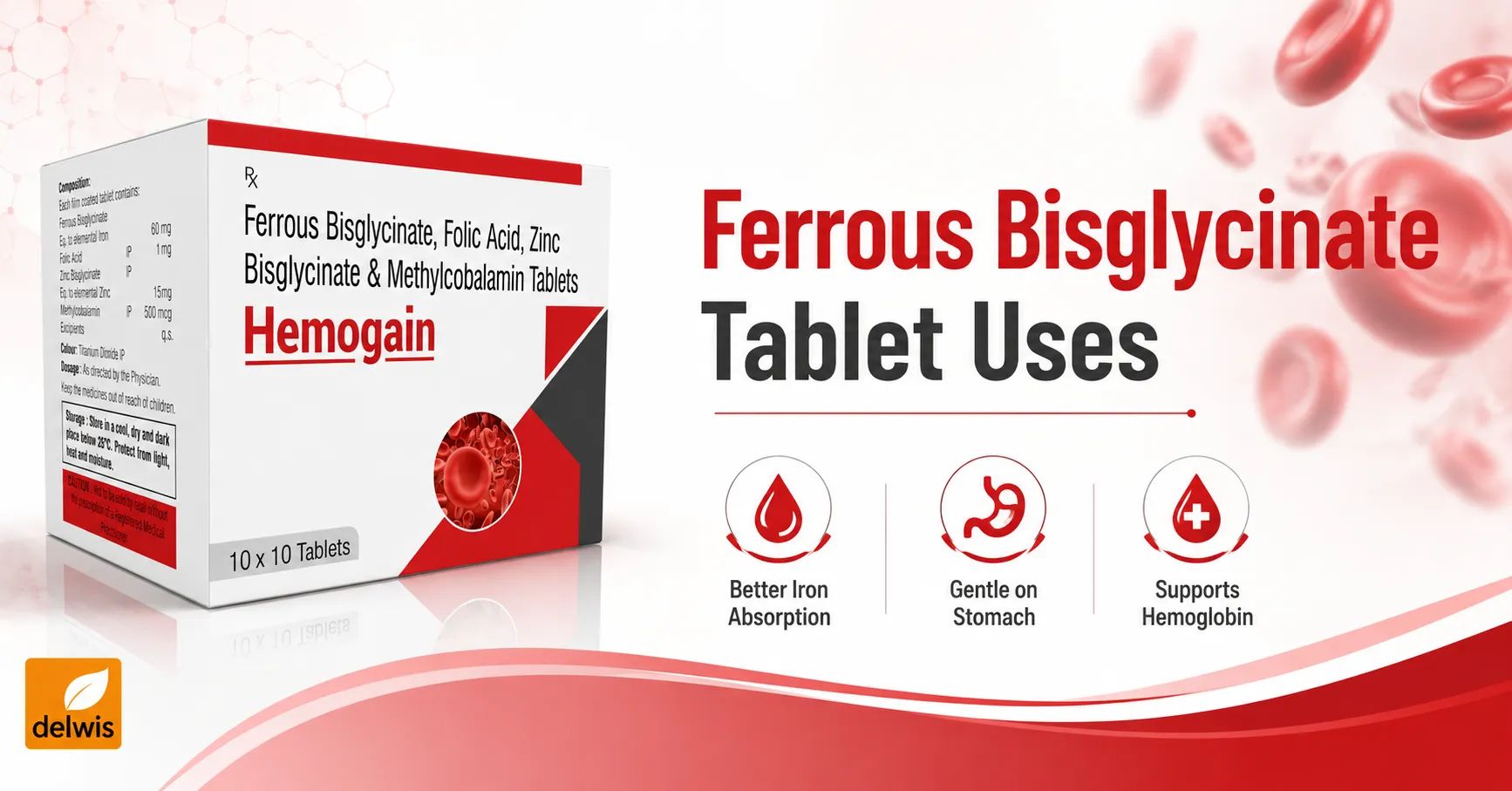
Iron deficiency remains one of the most common nutritional gaps worldwide, and not all iron supplements are built the same. Among the newer generation of iron formulations, the ferrous bisglycinate tablet has become a preferred option for patients and prescribers alike — largely because of how it's absorbed and how well it's tolerated. This guide walks through what a ferrous bisglycinate tablet is used for, how it's typically dosed, and what patients should know before starting one.
What Is a Ferrous Bisglycinate Tablet?
Ferrous bisglycinate is a chelated form of iron — meaning the iron ion is bonded to two glycine molecules, which protects it from interacting with other compounds in the digestive tract until it's absorbed. This chelation is what sets it apart from older iron salts like ferrous sulfate or ferrous fumarate.
Many formulations combine ferrous bisglycinate with other complementary nutrients — most commonly zinc bisglycinate, folic acid, and methylcobalamin (active Vitamin B12) — into a single ferrous bisglycinate zinc bisglycinate folic acid methylcobalamin tablet. This combination is designed to address several overlapping nutritional gaps at once, rather than treating iron deficiency in isolation.
Ferrous Bisglycinate Tablet Uses
The core ferrous bisglycinate tablet uses fall into a few clinical categories:
1. Iron Deficiency Anemia The primary use of ferrous bisglycinate is correcting iron deficiency anemia — replenishing depleted iron stores and supporting hemoglobin synthesis. Because of its higher bioavailability compared to non-chelated iron salts, it's often used when patients need effective repletion without the GI burden of conventional iron therapy.
2. Iron Supplementation During Pregnancy
Pregnancy significantly increases iron requirements, and combination tablets that pair ferrous bisglycinate with folic acid serve a dual purpose — correcting maternal anemia while folic acid supports fetal neural tube development. This makes the combination formulation a common choice in antenatal care, always under medical supervision.
3. Low Hemoglobin and General Fatigue Low hemoglobin levels — often presenting as fatigue, breathlessness, dizziness, or pallor — are frequently linked to iron deficiency, particularly in women of reproductive age. Ferrous bisglycinate tablets are commonly prescribed to correct these levels over a defined treatment period.
4. Supporting B12 and Zinc Status
When formulated alongside methylcobalamin and zinc bisglycinate, the tablet also addresses Vitamin B12 deficiency (supporting nerve function and red blood cell formation) and zinc deficiency (supporting immune function and wound healing) — which often coexist with iron deficiency in real-world patients.
5. An Alternative for Patients Who Can't Tolerate Standard Iron
A significant share of patients discontinue conventional iron supplements due to constipation, nausea, or stomach cramping. Ferrous bisglycinate is frequently recommended specifically for this group, as its chelated structure tends to cause substantially less gastrointestinal irritation.
Recommended Dosage
Dosage should always be determined by a physician based on the severity of deficiency, age, and clinical history — this is general educational information, not a prescription. That said, typical adult combination formulations (ferrous bisglycinate 60mg + zinc bisglycinate 15mg + folic acid 1mg + methylcobalamin 500mcg) are usually taken once daily, generally with food to further reduce the already-low likelihood of GI discomfort.
Duration of therapy depends on the indication:
- Iron deficiency anemia typically requires 3–6 months of continuous supplementation, even after hemoglobin normalizes, to rebuild iron stores (ferritin).
- Pregnancy-related supplementation is usually continued for the duration recommended by the treating obstetrician, often through the full antenatal period.
- Maintenance dosing for milder deficiency may be shorter, based on follow-up lab values.
Patients should never adjust dosage or stop therapy early without medical guidance, even if symptoms improve quickly.
How Long Does It Take to Work?
Because chelated iron absorbs more efficiently across the intestinal lining, many patients notice improvements in energy and fatigue within 2–3 weeks, though measurable hemoglobin changes typically take 4–8 weeks to show up on lab tests. Full correction of iron stores (not just hemoglobin) takes considerably longer — which is why treatment courses often continue for months even after a patient starts feeling better.
Side Effects and Tolerability
Every iron supplement carries some potential for GI side effects, but ferrous bisglycinate is specifically valued for causing less constipation, less nausea, and less stomach cramping than conventional ferrous sulfate. This is a key reason it's often chosen for patients with a history of poor tolerance to standard iron therapy, or for long-duration use where compliance is a concern. For a closer look at how the two forms compare, see Ferrous Bisglycinate vs Ferrous Sulfate: Which Iron Supplement Is Easier on Your Stomach?
As with any supplement, patients with a known allergy to any of the active ingredients, or specific existing conditions, should consult their doctor before starting therapy.
Who Should Take a Ferrous Bisglycinate Tablet?
This formulation is commonly recommended for:
- Patients diagnosed with iron deficiency anemia
- Pregnant individuals with elevated iron and folate requirements (under medical supervision)
- Women with low hemoglobin linked to menstrual blood loss
- Patients who have previously discontinued iron therapy due to GI side effects
- Individuals with combined iron, B12, and zinc deficiencies
It is not a substitute for diagnosis — anyone experiencing symptoms of anemia or nutrient deficiency should get appropriate blood work before starting supplementation.
Conclusion
Ferrous bisglycinate has become a go-to option in modern iron therapy for a simple reason: it delivers the absorption patients need without the gastrointestinal burden that causes so many people to abandon conventional iron supplements. Combined with zinc bisglycinate, folic acid, and methylcobalamin, the ferrous bisglycinate tablet addresses iron deficiency anemia, pregnancy-related nutrient gaps, low hemoglobin, and B12/zinc deficiency in a single, well-tolerated daily dose. As with any supplement, the right dosage and duration should always be confirmed with a treating physician based on individual lab values and clinical history.
For pharmaceutical brands and distributors interested in sourcing this formulation, Delwis Healthcare is a WHO-GMP certified tablet manufacturer offering third-party and contract manufacturing support. Full composition, certification, and sourcing details for this formulation are available on Delwis Healthcare's nutraceuticals and dietary health supplements range.
Frequently Asked Questions
Is ferrous bisglycinate better than ferrous sulfate?
Ferrous bisglycinate generally offers higher bioavailability and significantly better gastrointestinal tolerability than ferrous sulfate, making it a preferred option for patients needing an iron supplement without constipation.
Can this tablet be taken long-term?
Yes, under medical guidance — iron deficiency anemia often requires several months of therapy, and the improved tolerability of ferrous bisglycinate makes longer courses easier for patients to complete.
Can pregnant women take ferrous bisglycinate folic acid tablets?
This combination is commonly used in pregnancy specifically because it addresses both iron and folate needs, but dosage and duration should always be determined by the treating physician.
What does the ferrous bisglycinate tablet combination typically contain?
Most combination formulations pair ferrous bisglycinate with zinc bisglycinate, folic acid, and methylcobalamin to address iron, zinc, and B-vitamin gaps in a single daily dose.