Introduction: Why Most Dry Cough Syrups Fail — and What This Combination Does Differently
Walk into any pharmacy in India with a dry, scratchy cough and you will likely be offered one of two things: an expectorant (to "loosen" mucus) or a basic antihistamine-based syrup. But here is the clinical problem — if your dry cough is being driven by an allergic trigger, post-nasal drip, or airway nerve hypersensitivity, neither of those options addresses what is actually happening.
Expectorants work on productive coughs with mucus to expel. A dry, non-productive cough driven by allergic irritation, dust, pollen, or post-viral airway sensitisation does not benefit from an expectorant — there is no mucus to thin or expel. The cough is a false alarm triggered by hypersensitised nerve endings, not a productive clearing mechanism.
This is exactly the clinical gap that levodropropizine and chlorpheniramine maleate syrup is designed to fill. By combining two drugs that attack the allergic dry cough problem from two different but complementary angles, it addresses what single-agent cough syrups consistently fail to resolve — and does so without the sedation and dependence risk that have made narcotic cough suppressants increasingly problematic in modern prescribing.
This complete guide explains how both ingredients work, what conditions this syrup is prescribed for, how to use it correctly, and what patients and doctors need to know about safety, dosage, and side effects.
For product composition and manufacturing information, visit the levodropropizine syrup product page at Delwis Healthcare.
What Is Levodropropizine and Chlorpheniramine Maleate Syrup?
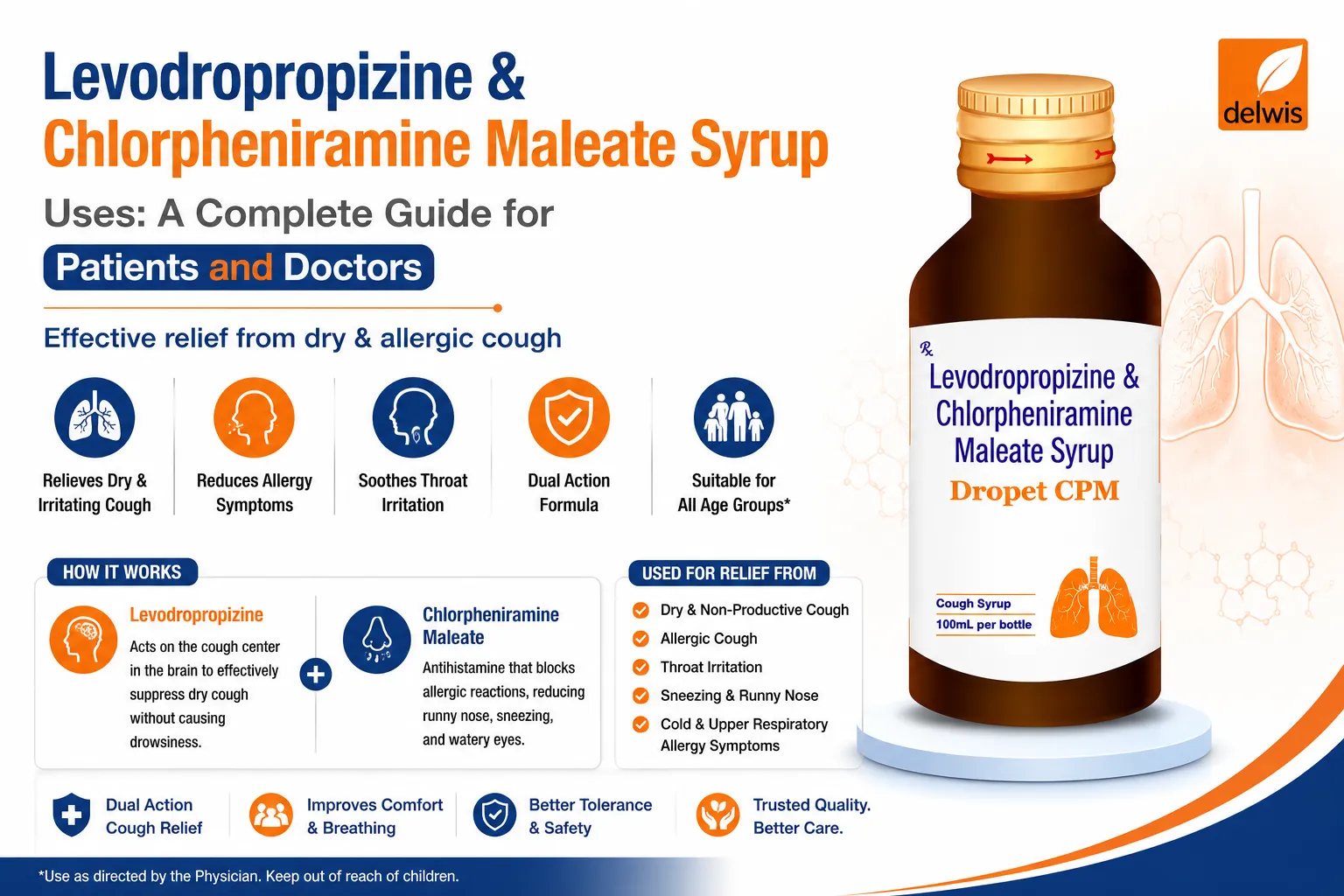
Levodropropizine and chlorpheniramine maleate syrup is a fixed-dose combination oral liquid formulation containing two pharmacologically distinct active ingredients delivered in a single measured dose:
- Levodropropizine 30mg per 5ml — a peripherally acting, non-narcotic antitussive that suppresses the cough reflex at the bronchial sensory nerve level without entering or acting on the central nervous system
- Chlorpheniramine Maleate 2mg per 5ml — a first-generation H1 antihistamine that blocks the histamine-mediated allergic mucosal response driving the chronic irritation that triggers and sustains dry cough
Each 5ml dose (one standard measuring spoon) delivers both active ingredients at clinically validated concentrations — 30mg of the antitussive and 2mg of the antihistamine — in a stable oral liquid syrup formulation designed for twice or three-times-daily dosing.
The combination is available in 100ml bottles, covering a complete treatment course for most acute allergic cough presentations, with sufficient volume for extended treatment in chronic or recurrent allergic respiratory conditions under physician guidance.
Understanding the Dry Cough Problem in India — Why It Is Different from Other Coughs
Before understanding how this syrup works, it helps to understand why dry cough driven by allergic and irritant triggers is such a distinct and challenging clinical problem across India.
India's respiratory disease burden is shaped by several converging factors that do not exist at the same scale in other countries:
Year-round allergen exposure: Unlike temperate climates with distinct allergen seasons, India's climate in most regions means patients are exposed to dust mites, cockroach allergens, mould spores, and animal dander continuously — with spikes during the monsoon season (mould) and the dry winter months (particulate matter, pollen).
Urban air pollution: Particulate matter (PM2.5 and PM10) concentrations in Indian cities regularly exceed WHO recommended levels by 5–10 times, and fine particulate matter triggers airway sensory nerve hypersensitivity independently of allergen exposure — producing chronic dry cough that is not fully antiallergic in origin but requires the same antitussive approach.
Post-monsoon respiratory allergies: The period from September through January — India's peak season for upper respiratory infections, post-viral airway sensitisation, and allergy-season overlap — drives the highest volume of dry cough prescriptions across the country.
Post-nasal drip as a sustained cough driver: Allergic rhinitis affecting a significant portion of the Indian adult population produces continuous post-nasal drip — mucus drainage from the nasal cavity to the posterior pharynx — that mechanically irritates the throat and pharyngeal sensory nerves, producing a chronic dry cough that persists for weeks and does not respond to antibiotics or expectorants.
Understanding this epidemiological context explains why a combination of a peripheral cough suppressant and an antihistamine is so clinically rational for India's dry cough presentations — and why plain antitussive monotherapy or antihistamine monotherapy frequently underperforms.
How Each Ingredient Works — The Two-Mechanism Approach
Levodropropizine — The Peripheral Cough Suppressant
This is where levodropropizine is genuinely different from most cough suppressants, and the difference matters enormously for safety and tolerability.
The conventional cough suppressant problem: Most well-known antitussives — codeine, pholcodine, and to some extent dextromethorphan — act on the cough centre in the brain's medulla. By suppressing the central neural circuit responsible for the cough reflex, they reduce coughing effectively. But acting centrally comes with unavoidable collateral effects: sedation, dizziness, risk of respiratory depression at higher doses, constipation from opioid receptor activity (codeine and pholcodine), and with narcotic agents — dependence potential. These limitations are why narcotic antitussives are increasingly restricted and why even dextromethorphan carries central nervous system side effects that limit daytime use.
What levodropropizine does instead: Levodropropizine is a peripherally acting antitussive — it never needs to reach the brain to suppress coughing. Instead, it acts directly at the level of bronchial sensory C-fibre nerve endings — the peripheral nerve fibres in the airway mucosa that detect irritant stimuli and send the signal upstream to trigger the cough reflex.
The specific mechanism involves inhibition of neuropeptide release from these sensory nerve endings — particularly substance P, which is the primary chemical mediator responsible for sensitising C-fibres to cough-triggering stimuli. In allergic, post-nasal drip, and post-viral cough, these C-fibres become chronically hypersensitised — generating cough signals in response to stimuli (cold air, talking, perfume, deep breath) that a normal airway would not register. By reducing substance P release and desensitising these peripheral nerve endings, levodropropizine raises the cough reflex threshold back toward normal without touching the central nervous system.
The clinical result is effective cough suppression with:
- No sedation — because the brain is not the site of action
- No respiratory depression — no CNS suppression of breathing drive
- No dependence potential — no opioid receptor activity
- No constipation — no gastrointestinal opioid effects
- Safe for repeated and extended use — in both adults and children above 2 years under medical guidance
Chlorpheniramine Maleate — The Antihistamine Component
Chlorpheniramine maleate is a first-generation H1 antihistamine — one of the longest-established and most clinically documented antihistamines in the world. It works by competitively blocking histamine H1 receptors in the nasal mucosa, upper respiratory tract, conjunctiva, and bronchial tissue.
Here is why antihistamine action is essential in allergic dry cough, not just a bonus ingredient:
When an allergen — dust, pollen, animal dander, cold air, or chemical irritant — contacts the respiratory mucosa of a sensitised patient, it triggers mast cell degranulation. Mast cells in the mucosal tissue release histamine, leukotrienes, and other inflammatory mediators in a cascade reaction. Histamine then:
- Causes mucosal oedema — swelling of the nasal and upper airway lining that narrows the airway and increases mucus production
- Stimulates goblet cells to produce excess mucus — creating the post-nasal drip that physically drips onto the posterior pharynx and mechanically triggers the cough reflex
- Directly sensitises airway sensory nerves — amplifying the cough-triggering sensitivity of the very C-fibres that levodropropizine is simultaneously trying to desensitise
Without blocking this histamine signal, the allergic mucosal response continues to generate mechanical and chemical cough triggers faster than levodropropizine can suppress them. Chlorpheniramine cuts off this upstream signal — reducing mucosal oedema, decreasing secretion production, and reducing the histamine-mediated amplification of airway nerve sensitivity. This is why the combination addresses allergic dry cough more effectively than either agent alone.
The sedation question: Chlorpheniramine at 2mg per 5ml carries mild antihistamine sedation — a known class effect of first-generation H1 blockers, which cross the blood-brain barrier more readily than second-generation antihistamines like cetirizine or fexofenadine. This is genuinely mild at the prescribed dose, and the chlorpheniramine component is the reason patients should exercise caution before driving or operating heavy machinery after taking this syrup, particularly early in treatment. However, the mild sedation of chlorpheniramine at this dose can be clinically useful for night-time dosing — where reducing alertness facilitates restful sleep interrupted by chronic nocturnal allergic cough.
Levodropropizine and Chlorpheniramine Maleate Syrup Uses
1. Dry Cough from Allergic Rhinitis
Allergic rhinitis — an IgE-mediated inflammatory response of the nasal mucosa to inhaled allergens — is the single most common underlying cause of chronic dry cough in India, and the primary indication for this combination syrup.
The pathway from rhinitis to cough is well-established: allergen exposure triggers histamine release and mucosal inflammation in the nasal cavity, producing congestion and hypersecretion. These secretions drain posteriorly into the throat (post-nasal drip), where they irritate the posterior pharyngeal sensory nerves and create a persistent mechanical cough trigger. Simultaneously, histamine's direct effect on airway sensory C-fibres amplifies the cough sensitivity — turning even minor irritants into significant cough triggers in the sensitised patient.
In this clinical scenario, using only a cough suppressant without addressing the histamine-driven mucosal component means the upstream cough trigger is never eliminated — producing partial and temporary relief. The dual action of levodropropizine (suppressing peripheral C-fibre sensitisation) and chlorpheniramine (blocking histamine's mucosal effects and reducing post-nasal drip production) delivers sustained relief by addressing both the symptom and its driver simultaneously.
Patients with allergic rhinitis-related dry cough typically notice improvement in both cough frequency and post-nasal drip sensation within 1–2 days of consistent twice-daily dosing, with more complete relief over 5–7 days as mucosal inflammation subsides.
2. Post-Nasal Drip Cough
Post-nasal drip cough — sometimes called upper airway cough syndrome (UACS) — is one of the three most common causes of chronic cough in adults (alongside gastroesophageal reflux and cough-variant asthma). It occurs when excessive nasal and sinus secretions drain down the posterior pharynx, triggering the pharyngeal cough reflex with every drip of fluid contact.
Patients with post-nasal drip cough typically describe a sensation of mucus in the back of the throat, frequent throat-clearing, and a cough that worsens when lying down (where gravity increases drainage to the posterior pharynx). It frequently occurs at night — explaining why these patients have disrupted sleep from nocturnal coughing episodes.
For post-nasal drip cough, both components of this combination play essential roles: chlorpheniramine reduces histamine-driven hypersecretion that produces the excess nasal mucus creating the drip; levodropropizine raises the cough reflex threshold at the pharyngeal sensory nerves being stimulated by the drainage. The combination treats both the volume of secretions and the sensitivity of the nerves they irritate.
3. Allergic Bronchitis
Allergic bronchitis is a reversible inflammatory condition of the bronchial tubes triggered by allergen exposure — distinct from infectious bacterial bronchitis in that it is not caused by a pathogen but by an IgE-mediated inflammatory response in the bronchial mucosa. It presents with dry, irritating cough, airway tightness, and wheeze in some cases — without the fever and productive sputum of bacterial bronchitis.
The bronchial sensory C-fibres are particularly hypersensitised in allergic bronchitis — meaning even minor stimuli (cold air, exercise, perfume, smoke) trigger repeated coughing episodes. This is precisely the peripheral nerve sensitisation pathway that levodropropizine targets. By reducing substance P release from bronchial C-fibres, it calms the bronchial hypersensitivity directly — while chlorpheniramine addresses the histamine-driven bronchial mucosal inflammation that sustains it.
A key advantage of levodropropizine in allergic bronchitis over centrally acting antitussives is that its peripheral action does not suppress the bronchial protective mechanisms or compromise the respiratory drive — maintaining airway protection while reducing the excessive cough frequency.
4. Post-Viral Dry Cough — Cough After URTI
One of the most clinically common and frustrating dry cough presentations in Indian general practice is the persistent dry cough that follows an upper respiratory tract infection (cold, flu, or viral pharyngitis) — continuing for 3–8 weeks after all other symptoms have completely resolved. This post-infectious cough occurs because the viral infection produces inflammatory changes in the airway epithelium and sensitises bronchial C-fibres — creating a state of peripheral nerve hypersensitivity that persists long after the virus is cleared.
Antibiotics do not help this cough (the infection has resolved), expectorants do not help (there is no mucus), and antihistamines alone may provide partial relief if there is a secondary allergic component. The most targeted intervention for post-infectious airway hypersensitivity is a peripheral antitussive — specifically levodropropizine — to directly reduce C-fibre sensitisation and allow the irritated nerve endings to return to their normal cough threshold over the 1–2 week treatment course.
Chlorpheniramine contributes by addressing any secondary allergic component that may be co-existing with the post-viral state and reducing mucosal secretion that could be compounding the cough.
5. Night-Time Allergic Cough
Nocturnal dry cough from allergic and irritant causes is one of the most disruptive and quality-of-life-impairing respiratory symptoms for patients across India — particularly during the winter months when indoor allergen concentrations peak and temperature drops increase airway sensitivity.
In the supine sleeping position, post-nasal drip increases (mucus drains to the posterior pharynx more readily than when upright), airway tone changes, and gastric acid reflux may contribute to airway irritation. These combined nocturnal factors create the predictable pattern of cough worsening that disrupts sleep and leaves patients exhausted.
The evening dose of levodropropizine and chlorpheniramine maleate syrup is particularly effective in this context: levodropropizine reduces peripheral cough reflex sensitivity for the 6–8 hours of sleep, while chlorpheniramine's mild sedative effect at the 2mg dose facilitates the restful sleep that severe nocturnal cough has been preventing. The combination effectively converts a sleepless, cough-broken night into manageable, restorative rest — which is the outcome patients most urgently need during an acute allergy-related cough episode.
6. Dust Allergy and Chronic Dry Cough
Chronic dry cough driven by dust allergy — sensitisation to house dust mites (Dermatophagoides pteronyssinus and D. farinae), dust particulates, animal dander, and cockroach antigens — is a year-round problem for a significant proportion of Indian patients, particularly in urban apartment settings where dust mite concentrations are highest.
Unlike seasonal pollen allergies, dust allergy cough is not seasonal — it is persistent, recurring with each exposure cycle and sustaining chronic airway C-fibre sensitisation that does not resolve between episodes. Patients with dust allergy-driven chronic dry cough frequently require repeated or extended treatment courses and benefit from allergen avoidance measures (dust-proof mattress covers, frequent vacuuming with HEPA filters, reducing soft furnishings) alongside pharmacological management.
For the pharmacological component of dust allergy chronic dry cough management, levodropropizine and chlorpheniramine maleate syrup provides both immediate symptom relief and anti-allergic mucosal control — making it one of the most frequently prescribed cough syrups for this patient group in Indian respiratory and ENT practice.
7. Cough from Cold Air and Environmental Irritants
Airway hypersensitivity to cold air, dry air, chemical fumes, perfume, and smoke is a common but underrecognised cough phenotype — sometimes called "sensory hyperreactive airway disease" — in which the bronchial C-fibres have a markedly lowered threshold for irritant stimulation. This is not a true allergy (no IgE involvement) but shares the same peripheral nerve sensitisation mechanism that levodropropizine directly addresses.
Patients with this presentation frequently describe coughing during air-conditioned environments, on cold mornings, when walking into kitchens or areas with cooking fumes, or in perfumed environments — situations that do not trigger cough in the general population. A course of levodropropizine and chlorpheniramine maleate syrup, by reducing peripheral nerve sensitisation and managing any associated allergic mucosal component, provides clinically meaningful relief and can reset the airway cough threshold toward normal.
Levodropropizine vs Dextromethorphan vs Codeine — Why the Difference Matters
This is one of the most important clinical education points for patients and prescribers:
Feature | Levodropropizine | Dextromethorphan (DM) | Codeine |
|---|
Mechanism | Peripheral (bronchial C-fibres) | Central (medullary cough centre) | Central (opioid receptor, medullary) |
Narcotic? | No | No | Yes |
Sedation | None (from levodropropizine itself) | Mild-moderate | Moderate-significant |
Dependence risk | None | Very low | Real risk with extended use |
Respiratory depression | Not at therapeutic doses | Possible at high doses | Yes — significant risk |
Constipation | No | Mild | Common |
Safe for children | Yes, above 2 years | Limited; age restrictions | Not recommended under 12 in most guidelines |
Driving safety | No effect from levodropropizine | Caution advised | Not safe |
Mode of action specificity | Direct peripheral cough mechanism | Broad CNS effect | Broad opioid receptor effect |
Efficacy in allergic cough | High — targets the sensitisation mechanism | Moderate | Moderate |
The clinical takeaway for prescribers: levodropropizine's peripheral mechanism makes it the preferred antitussive for patients requiring extended therapy (chronic allergic cough), patients who must remain alert during the day, children above 2 years, elderly patients where CNS side effects are a particular concern, and patients where the cough is peripheral in origin (allergic, post-viral, irritant) rather than centrally mediated.
Dosage — A Complete Reference for Adults and Children
Always follow the specific dose prescribed by your doctor. The guidance below is a standard clinical framework — your physician will adjust based on your age, weight, and clinical severity.
Adults (above 18 years)
- Standard dose: 10ml (two 5ml measures) taken three times daily
- Mild-to-moderate cough: 5ml (one 5ml measure) two to three times daily
- Maximum daily dose: As directed by physician — do not exceed prescribed dose
- Duration: Typically 5–7 days for acute allergic cough; up to 14 days under physician guidance for persistent post-nasal drip or post-viral cough
Children (above 2 years — under physician supervision)
- 2–6 years: 2.5ml two to three times daily (weight-based; paediatrician to confirm)
- 6–12 years: 5ml two to three times daily
- 12–18 years: 5–10ml two to three times daily as prescribed
- Children below 2 years: Only under direct specialist guidance; not recommended for self-initiation
Elderly Patients
The levodropropizine component does not require dose adjustment in the elderly based on its peripheral mechanism. However, the chlorpheniramine component's mild sedative effect may be more pronounced in elderly patients — consider starting at the lower end of the dose range and assessing tolerance before escalating.
Before or After Food? The Clinical Guidance
Levodropropizine and chlorpheniramine maleate syrup can be taken with or without food — food co-administration does not significantly alter the pharmacokinetics of either active ingredient.
However, the practical recommendation is to take it after food for two reasons:
Reason 1 — Reduces gastric discomfort: Chlorpheniramine maleate can cause mild epigastric discomfort in some patients, particularly on an empty stomach. Taking after food reduces this.
Reason 2 — Manages the timing of chlorpheniramine sedation: Taking the daytime doses with meals provides a natural timing anchor — and the mild sedation that follows can be timed away from activities requiring alertness if the patient eats meals at predictable times. The evening dose taken after dinner allows the mild sedative effect to peak during sleep onset.
If you experience no gastric discomfort, taking the syrup on an empty stomach before a meal is also acceptable and does not significantly alter efficacy.
Side Effects of Levodropropizine and Chlorpheniramine Maleate Syrup
This combination has a well-established safety and tolerability profile across both adult and paediatric populations in India. The side effects are primarily attributable to the chlorpheniramine component — levodropropizine itself, by virtue of its peripheral mechanism, has a very minimal systemic side effect profile.
Common (usually mild and dose-dependent):
- Drowsiness or sedation — The most frequent side effect, attributable to chlorpheniramine's blood-brain barrier penetration. Most pronounced in the first few doses and tends to reduce as tolerance develops over 2–3 days. More marked in elderly patients and in those taking higher doses. Clinically useful at the evening dose; a practical inconvenience at daytime doses.
- Dry mouth — Chlorpheniramine's anticholinergic activity reduces salivary secretion. Staying well hydrated and using sugar-free lozenges or gum reduces discomfort. Usually mild at the 2mg/5ml dose.
- Mild dizziness or light-headedness — More common at the start of treatment and in elderly patients. Sit up slowly from lying down to minimise postural dizziness if it occurs.
- Mild gastric discomfort or nausea — Uncommon; taking after food reduces frequency significantly.
- Urinary hesitancy — Chlorpheniramine's anticholinergic effect on bladder tone can cause difficulty initiating urination, particularly in elderly men with benign prostatic hyperplasia (BPH). Men with known BPH should discuss this with their prescriber before starting.
Less common:
- Blurred vision — Transient; more likely at higher doses or in patients sensitive to anticholinergic effects.
- Constipation — Mild; related to chlorpheniramine's anticholinergic gut motility effects. Adequate fluid and fibre intake minimises this.
- Palpitations or increased heart rate — Rare at therapeutic doses; report to your doctor if it occurs.
- Difficulty sleeping (paradoxical stimulation) — Rare and more likely in children than adults; some children respond to antihistamines with paradoxical hyperactivity rather than sedation. If this occurs in a child, contact the paediatrician.
What levodropropizine does NOT cause:
- Respiratory depression
- Opioid-type sedation or euphoria
- Constipation from opioid receptor activity
- Dependence or withdrawal on discontinuation
- The CNS side effects of centrally acting antitussives
Important Precautions and Contraindications
Driving and machinery: The chlorpheniramine component impairs alertness and psychomotor performance. Do not drive, operate heavy machinery, or perform activities requiring full alertness after taking this syrup — particularly in the first few days of treatment. Evening dosing where the sedation is welcome is a practical strategy; morning and midday doses require assessment of individual tolerability before resuming activities requiring sustained attention.
Alcohol: Alcohol significantly amplifies the sedative effect of chlorpheniramine. Do not consume alcohol during treatment.
Pregnancy: Use only under specific physician guidance. Limited safety data are available for both levodropropizine and chlorpheniramine in pregnancy, particularly in the first trimester. The clinical need for cough suppression must be weighed against theoretical risks — always discuss with your obstetrician or attending physician.
Breastfeeding: Chlorpheniramine passes into breast milk and may cause sedation in a nursing infant. Levodropropizine has limited data on breastmilk transfer. Use with caution during breastfeeding — physician guidance is required.
Glaucoma: Chlorpheniramine's anticholinergic effect can increase intraocular pressure, worsening narrow-angle glaucoma. This syrup is generally contraindicated in patients with narrow-angle glaucoma — inform your doctor of any eye conditions before starting.
Enlarged prostate (BPH): As noted above, anticholinergic effects on bladder tone can worsen urinary retention in men with BPH.
Concurrent sedative medications: The sedative effects of chlorpheniramine are additive with benzodiazepines, sleeping tablets, muscle relaxants, anxiolytics, and other sedating antihistamines. Report all current medications to your prescriber.
Hypersensitivity: Do not use if you have a known allergy to levodropropizine, chlorpheniramine maleate, or any antihistamine in the same drug class.
Drug Interactions to Know
Monoamine oxidase inhibitors (MAOIs): Chlorpheniramine's interactions with MAOIs can produce severe adverse effects including hypertensive crisis. This syrup is contraindicated in patients currently taking or who have taken any MAOI within the past 14 days.
Sedatives, hypnotics, and anxiolytics: Additive CNS depression with all centrally sedating drugs — diazepam, alprazolam, zolpidem, phenobarbital. Use combination with extreme caution and only under physician guidance.
Other antihistamines: Concurrent use of two antihistamines (e.g., taking chlorpheniramine syrup alongside cetirizine or loratadine for allergy) doubles anticholinergic and sedative effects without proportional benefit. Avoid unless specifically directed by a physician.
Tricyclic antidepressants (TCAs) and certain antipsychotics: Additive anticholinergic effects — dry mouth, constipation, and urinary retention can be significantly worsened.
Anticholinergic medications: Any drug with anticholinergic properties (certain bladder medications, antiparkinson drugs, some antispasmodics) will have additive effects with chlorpheniramine's anticholinergic activity.
Storage and Handling
Store below 30°C in a cool, dry place away from direct sunlight. Do not refrigerate or freeze unless the product label specifically instructs refrigeration — this can cause syrup precipitation. Keep the bottle tightly capped between doses. Keep out of the reach of children.
Always shake the bottle well before measuring each dose if the product label indicates — some suspension-type oral liquids settle on standing. Check the expiry date before starting a new bottle.
Conclusion
Levodropropizine and chlorpheniramine maleate syrup fills a specific and important clinical niche in the management of dry cough across India — addressing the two simultaneous drivers of allergic and irritant-triggered cough that single-agent therapies consistently leave partially treated. By suppressing peripheral bronchial C-fibre sensitisation via levodropropizine and blocking histamine's mucosal inflammatory effects via chlorpheniramine, this combination delivers sustained, safe, and non-narcotic relief for the full spectrum of dry cough presentations that represent the majority of cough prescriptions in Indian clinical practice.
For patients, understanding how this syrup works, why it is different from narcotic cough suppressants, and how to use it correctly makes a meaningful difference to both compliance and outcomes. For doctors, the combination's non-narcotic, peripherally targeted antitussive action paired with antihistamine mucosal control represents a clinically rational and well-tolerated option for allergic and post-viral dry cough that remains safe across age groups from children to elderly patients.
To explore the full product composition, formulation details, and manufacturing information behind this combination, visit the levodropropizine syrup product page at Delwis Healthcare. To explore the complete antiasthmatic and antiallergic range of respiratory formulations manufactured at our WHO-GMP certified Ahmedabad facility, visit the Delwis Healthcare respiratory portfolio.
Frequently Asked Questions
Q: What is levodropropizine and chlorpheniramine maleate syrup used for?
It is used for dry, non-productive cough caused by allergic triggers — including allergic rhinitis, post-nasal drip, dust and pollen allergy, allergic bronchitis, and post-viral airway hypersensitivity. The combination suppresses the peripheral cough reflex via levodropropizine while chlorpheniramine controls the histamine-driven mucosal inflammation that generates and sustains the allergic cough cycle.
Q: Is levodropropizine a narcotic cough suppressant?
No. Levodropropizine is a non-narcotic, peripherally acting antitussive. It has no opioid activity, no central nervous system effects, no respiratory depression risk, and no dependence potential. This makes it significantly safer than codeine-based cough syrups for extended use and for use in children above 2 years.
Q: Can this syrup cause drowsiness?
The levodropropizine component does not cause drowsiness. The chlorpheniramine maleate component does carry mild antihistamine sedation, which is more likely to be noticeable in the first few doses and in the evening. Avoid driving or operating machinery until you know how this syrup affects your alertness. The mild sedation of the evening dose can be a practical benefit for patients whose nocturnal allergic cough disrupts sleep.
Q: What is the dosage for adults and children?
The standard adult dose is 10ml (two 5ml measures) three times daily, or as prescribed by the physician. For children above 6 years, 5ml two to three times daily is typical, with weight-based adjustment for younger children. Children below 2 years should only receive this syrup under direct specialist supervision. Always follow the prescribing physician's specific dose instructions.
Q: Should this syrup be taken before or after food?
It can be taken with or without food. After-food administration is recommended for patients who experience mild gastric discomfort, and it helps manage the timing of chlorpheniramine's mild sedative effect relative to daily activities.
Q: How quickly does levodropropizine and chlorpheniramine syrup reduce dry cough?
Most patients notice a reduction in cough frequency within the first 24–48 hours of consistent dosing — particularly the suppression of acute cough episodes by levodropropizine's peripheral action. Full relief of the underlying allergic mucosal response driven by chlorpheniramine's antihistamine action typically builds over 3–5 days of consistent dosing as histamine-mediated mucosal inflammation progressively subsides.
Q: What is the difference between levodropropizine and dextromethorphan?
Both are non-narcotic antitussives but with fundamentally different mechanisms. Dextromethorphan acts centrally — it suppresses the brain's cough centre, producing some sedation and CNS effects, particularly at higher doses. Levodropropizine acts peripherally — directly at bronchial sensory nerve endings — without any central nervous system involvement. This makes levodropropizine the preferred choice when daytime alertness is a priority, for children, and for cough driven by peripheral airway sensitisation rather than central cough centre overactivity.
Q: Is it safe for children?
Levodropropizine syrup is used in children above 2 years under medical supervision with weight-appropriate dosing. Its peripheral mechanism makes it considerably safer than narcotic antitussives in children. Use in children below 2 years requires direct specialist guidance. Some children may experience paradoxical hyperactivity from the chlorpheniramine component rather than sedation — if this occurs, contact the prescribing paediatrician.
Q: Can I take this syrup with other cold medicines?
Caution is needed with combination products. Many commercially available "cold and flu" combination syrups already contain antihistamines — taking this syrup alongside such products can result in double dosing of antihistamines, significantly increasing drowsiness and anticholinergic side effects. Always inform your doctor or pharmacist of all medications you are currently taking, including over-the-counter cough and cold preparations, before adding this syrup.
This article is written for informational and educational purposes only. It does not constitute medical advice, a clinical recommendation, or a substitute for professional medical assessment. Always consult a qualified physician or pharmacist before starting, changing, or stopping any medication.