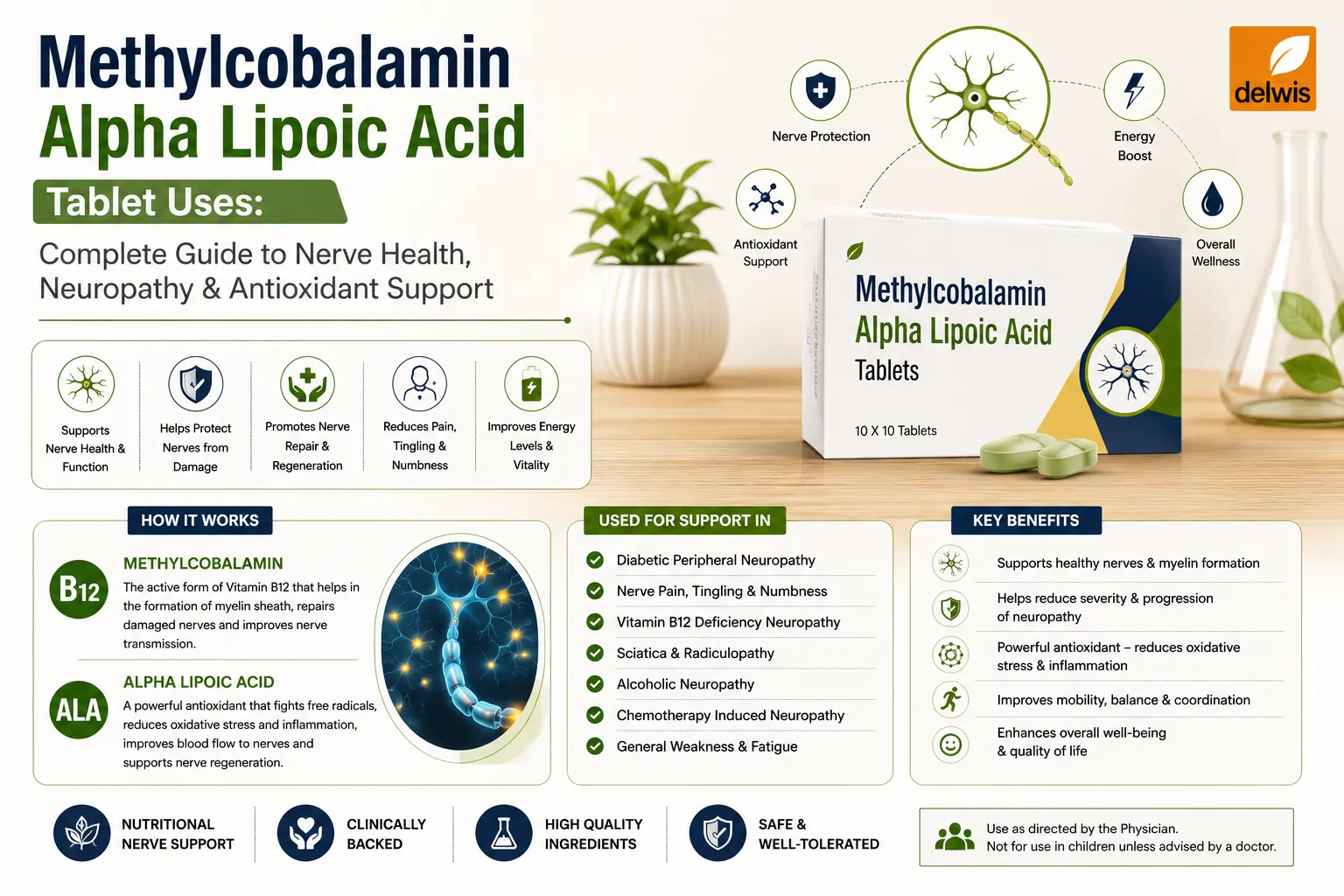
Introduction: Why Single-Nutrient Supplements Fall Short for Nerve Health
In any major city in India, the pharmacy shelves for nerve health and B12 supplements have expanded significantly over the past decade. Plain methylcobalamin tablets, basic B-complex supplements, individual alpha lipoic acid capsules, standalone vitamin D3 drops — all available, widely used, and only partially effective for most patients with genuine neuropathic or nerve health concerns.
The reason they fall short is not a problem with any individual ingredient. Each of these nutrients has documented, clinically significant effects on nerve function. The problem is that nerve damage — whether from diabetes, B12 deficiency, oxidative stress, or homocysteine accumulation — rarely happens through just one pathway. It happens through several simultaneously, each reinforcing the others. Addressing one without the others is like repairing three walls of a leaking room and ignoring the fourth.
A five-nutrient combination tablet — methylcobalamin 1500mcg + alpha lipoic acid 100mg + vitamin D3 1000IU + pyridoxine hydrochloride 3mg + folic acid 1.5mg — was specifically formulated around the neuroscience of how multiple deficiency and damage pathways converge in the same patient. Each ingredient targets a different, documented mechanism of nerve damage or neurological insufficiency. Together, they address the actual clinical complexity of peripheral neuropathy and nerve health in India.
This guide explains exactly what each ingredient does, what conditions this methylcobalamin alpha lipoic acid tablet combination is used for, how to take it correctly, and what patients and healthcare professionals need to know about benefits, dosage, side effects, and safety.
What Is This Five-Nutrient Combination Tablet?
This is a fixed-dose nutraceutical tablet containing five active nutritional ingredients in a single, film-coated oral tablet:
Ingredient | Dose | Primary Role |
|---|
Methylcobalamin | 1500mcg | Active B12 — myelin synthesis and repair, methionine cycle |
Alpha Lipoic Acid USP | 100mg | Universal antioxidant — oxidative nerve damage protection |
Vitamin D3 | 1000 IU | Neurological support — nerve conduction, pain modulation |
Pyridoxine Hydrochloride | 3mg | Vitamin B6 — neurotransmitter synthesis, homocysteine conversion |
Folic Acid | 1.5mg | Methylation — homocysteine reduction, DNA synthesis |
Each of these nutrients is present at a dose chosen for its specific clinical contribution to nerve health — not simply as a trace-amount "inclusion" for label appeal. The formulation is packed in 10×10 Alu-Alu blisters that protect both the moisture-sensitive B vitamins and the light- and oxidation-sensitive alpha lipoic acid throughout the product's shelf life.
Why Five Nutrients Are Needed — The Interconnected Pathways of Nerve Damage
Understanding why this combination makes clinical sense requires stepping back to look at how peripheral nerve damage actually occurs — specifically in the context of diabetes (India's most common driver of neuropathy), B12 deficiency, and chronic ageing-related nerve health decline.
A healthy peripheral nerve depends on four things:
1. An intact myelin sheath — the fatty insulating layer around the nerve axon that allows electrical signals to travel at normal speed. Myelin is continuously synthesised and repaired using methylcobalamin as a direct substrate. Without adequate B12 in its active methylcobalamin form, myelin degrades — reducing nerve conduction velocity and producing the characteristic numbness, tingling, and weakness of B12 deficiency neuropathy.
2. Freedom from oxidative damage — Peripheral nerve cells are particularly vulnerable to oxidative stress because of their high metabolic activity and the extensive lipid content of myelin (a prime target for reactive oxygen species). In diabetic patients, chronic hyperglycaemia generates reactive oxygen species at a rate that overwhelms the nerve's endogenous antioxidant defences, progressively damaging axons and the blood-nerve barrier. Alpha lipoic acid is uniquely positioned to counter this because it functions in both aqueous (nerve cytoplasm) and lipid (myelin) environments — something no other single antioxidant can do.
3. Normal homocysteine levels — Homocysteine is a sulphur-containing amino acid that is a natural metabolic intermediate in the methionine cycle. When the enzymes that convert homocysteine forward (to methionine, requiring methylcobalamin) or backward (to cystathionine, requiring pyridoxine B6) or around (via remethylation, requiring folate) are insufficiently supported by their nutrient cofactors, homocysteine accumulates. Elevated homocysteine is directly neurotoxic — it damages endothelial cells lining the blood-nerve barrier, promotes neuronal apoptosis, and is independently associated with accelerated cognitive and peripheral nerve decline. Normalising homocysteine requires all three: methylcobalamin, pyridoxine, and folic acid — which is why all three are included in this combination.
4. Vitamin D receptor activity in neural tissue — Vitamin D receptors are expressed throughout the nervous system — in sensory neurons, Schwann cells (which produce myelin in the peripheral nervous system), and dorsal root ganglia. Vitamin D insufficiency independently reduces nerve conduction velocity, increases neuropathic pain severity, and impairs the neuroimmune regulation that protects nerve tissue from inflammatory damage. Given that approximately 70–80% of Indian adults are vitamin D deficient or insufficient (driven by indoor work patterns, dark skin with higher melanin sun-blocking, and low dietary D3 intake), supplementing this nutrient in a neuropathy-focused formulation is not incidental — it addresses a near-universal deficiency in the patient population most likely to be using this tablet.
These four pathways do not occur independently — they interact and amplify each other. In a diabetic patient taking metformin (which depletes B12), with elevated homocysteine (from B12 and folate insufficiency), with oxidative stress from hyperglycaemia (not countered by ALA), and with vitamin D deficiency (impairing Schwann cell function) — all four impairments are simultaneously active. Supplementing only B12 without ALA, folate, B6, and D3 leaves three of the four pathways unaddressed. This is why the five-nutrient combination was developed and why it outperforms any single-nutrient supplementation strategy for neuropathic nerve health support.
How Each Ingredient Works — Explained for Patients and Healthcare Professionals
Methylcobalamin 1500mcg — The Neurologically Active Form of B12
The first question patients often ask is: why methylcobalamin rather than the far less expensive cyanocobalamin found in most standard B12 supplements?
The difference is biologically fundamental. Cyanocobalamin is a synthetic, stable form of B12 that must undergo two sequential conversion steps in the liver — first to hydroxocobalamin, then to methylcobalamin or adenosylcobalamin — before it can participate in any intracellular reaction. This conversion requires functional hepatic enzymes and adequate reducing capacity, and is less efficient in elderly patients, in those with liver conditions, and in patients under metabolic stress.
Methylcobalamin is the biologically active coenzyme form — it participates directly in two critical cellular reactions without requiring conversion:
Reaction 1: Methionine synthase — Methylcobalamin donates its methyl group to convert homocysteine back to methionine, in a reaction that simultaneously requires folate as methyl group donor. This is the primary route by which dietary folate and B12 together control homocysteine levels. When methylcobalamin is adequate, homocysteine is efficiently recycled to methionine; when it is depleted, homocysteine accumulates to neurotoxic levels.
Reaction 2: Myelin synthesis — Methionine produced in the above reaction is the precursor for S-adenosylmethionine (SAM), the body's universal methyl group donor. SAM is essential for the synthesis of phosphatidylcholine, the dominant phospholipid in myelin sheaths. In practical terms: without methylcobalamin, myelin sheath maintenance and repair is impaired at a biochemical level — even when the neurologist prescribes the right dose. This is why methylcobalamin, not cyanocobalamin, is specified at 1500mcg in neuropathy-focused formulations — the dose reflects not just supplementation but active therapeutic substrate provision for myelin repair.
At 1500mcg, this formulation goes substantially above the Recommended Daily Intake for B12 (2.4mcg) — by design. Neuropathy patients, B12-deficient patients, and patients on metformin require replenishment rather than simply maintenance, and the substantially higher dose provides the substrate levels that tissue-level myelin repair demands.
Alpha Lipoic Acid 100mg — The Universal Antioxidant for Nerves
Alpha lipoic acid (ALA) occupies a unique position in the antioxidant hierarchy that no other dietary antioxidant can fill. Understanding what makes it unique requires understanding what "universal antioxidant" actually means in biological terms.
Most antioxidants are either water-soluble (like vitamin C, glutathione) and function only in the aqueous compartments of cells, or fat-soluble (like vitamin E, CoQ10) and function only in lipid membranes. A nerve cell has both types of compartments — the aqueous cytoplasm and the lipid-rich myelin sheath. Water-soluble antioxidants cannot protect the myelin membrane; fat-soluble antioxidants cannot protect the aqueous nerve cytoplasm where many metabolic reactions occur.
Alpha lipoic acid is simultaneously both — it is an amphipathic molecule that freely penetrates both aqueous and lipid environments, making it the only antioxidant that can provide oxidative protection across the entire nerve cell. This biological uniqueness is the pharmacological rationale for its specific role in diabetic neuropathy management.
In diabetic patients, the biochemical sequence driving nerve damage through oxidative stress is well-characterised: chronic hyperglycaemia → activation of polyol, hexosamine, PKC, and AGE pathways → generation of reactive oxygen species (superoxide, hydrogen peroxide, hydroxyl radicals) at the mitochondrial level → oxidative damage to nerve axons, myelin lipids, blood-nerve barrier endothelial cells, and mitochondrial DNA → progressive nerve fibre loss.
ALA counters this cascade through multiple mechanisms simultaneously:
- Direct free radical scavenging — neutralising reactive oxygen species in both myelin and nerve cytoplasm
- Regeneration of other antioxidants — ALA in its reduced form (DHLA) regenerates oxidised vitamin C and vitamin E back to their active forms, effectively multiplying the antioxidant capacity of the entire system
- Mitochondrial protection — ALA is a mitochondrial coenzyme that specifically protects the electron transport chain from oxidative damage — the primary site of ROS generation in hyperglycaemia
- Improved nerve glucose uptake — ALA improves insulin-mediated glucose transport in peripheral nerve tissue, reducing the local hyperglycaemic environment that drives oxidative damage
- Chelation of pro-oxidant metals — ALA chelates iron and copper ions that catalyse damaging Fenton reactions within nerve tissue
At 100mg oral dose, ALA reaches the peripheral nervous system in quantities sufficient to produce measurable antioxidant effects in clinical trial conditions. In the context of this combination tablet, ALA's coverage of the oxidative pathway to nerve damage is the complementary layer that methylcobalamin's myelin repair approach cannot provide.
Pyridoxine Hydrochloride 3mg (Vitamin B6) — The Homocysteine Converter and Neurotransmitter Builder
Pyridoxine's role in this combination operates at two distinct levels.
Level 1 — Homocysteine management: The transsulphuration pathway converts homocysteine to cystathionine using the enzyme cystathionine β-synthase, which requires pyridoxal-5'-phosphate (the active form of B6) as its essential cofactor. When B6 status is insufficient, this conversion stalls — and homocysteine accumulates despite adequate folate and B12. Pyridoxine at 3mg closes this metabolic loop, ensuring that the three-way homocysteine management system (methylcobalamin remethylation, folate methyl donation, B6 transsulphuration) is fully functional across all three routes.
Level 2 — Neurotransmitter synthesis: Pyridoxal-5'-phosphate is the cofactor for aromatic amino acid decarboxylase — the enzyme that converts 5-hydroxytryptophan to serotonin (regulating mood and sleep) and DOPA to dopamine (regulating motivation, movement, and pain modulation). B6 is similarly required for the synthesis of GABA (the primary inhibitory neurotransmitter of the CNS) and the amino acid taurine (neuroprotective). In neuropathy patients who also report sleep disturbance, depressed mood, or heightened pain sensitivity — all common comorbidities — adequate pyridoxine ensures the neurotransmitter synthesis pathways that regulate these functions are not additionally impaired by B6 insufficiency.
At the 3mg dose in this formulation, pyridoxine is provided at a therapeutically relevant level for cofactor saturation without approaching the neurotoxic doses (>200mg/day) associated with sensory neuropathy from B6 toxicity.
Folic Acid 1.5mg — The Methyl Group Donor and Neural Tube Protector
Folic acid's primary role in this combination is as the methyl group donor in the methylation cycle — the biological cycle that converts homocysteine to methionine, which then becomes SAM, which then becomes the methyl donor for myelin synthesis, DNA methylation, and hundreds of other methylation reactions throughout the body.
Without adequate folate, the methylcobalamin-dependent conversion of homocysteine to methionine cannot proceed efficiently — even when methylcobalamin itself is adequate — because methylcobalamin can only accept a methyl group from folate-derived 5-methyltetrahydrofolate (5-MTHF) to regenerate itself and perform the conversion. The two nutrients are biochemically codependent in this reaction: B12 without folate stalls the methionine cycle; folate without B12 similarly stalls it.
At 1.5mg, this formulation provides folic acid at the upper end of standard supplementation — which is appropriate given the elevated demand for methylation cycle capacity in patients with active neuropathy, elevated homocysteine, or increased cellular repair requirements.
Pregnancy relevance: Folic acid 1.5mg combined with methylcobalamin 1500mcg provides significantly superior neural tube protection compared to standard folic acid 0.4mg supplementation alone — which is why this combination is frequently prescribed for women in the pre-conception and first-trimester window, where neural tube closure between days 21–28 post-conception demands reliable, high folate availability.
Vitamin D3 1000 IU — The Neural Modulator India's Population Needs Most
Vitamin D's role extends far beyond bone health — a recognition that has grown significantly in neurology and neuropathic pain medicine over the past decade. Vitamin D receptors (VDRs) are expressed in:
- Peripheral sensory neurons — including those in the dorsal root ganglia that transmit pain signals from the periphery
- Schwann cells — the myelin-producing cells of the peripheral nervous system, whose function directly affects nerve conduction velocity
- Central nervous system neurons and astrocytes — involved in pain modulation and neuroinflammatory regulation
- Immune cells — including those that regulate the neuroimmune environment in chronic neuropathy
When VD3 is insufficient, Schwann cell myelin production is impaired, pain signalling in sensory neurons is dysregulated upward (contributing to neuropathic pain hypersensitivity), and neuroinflammatory processes are inadequately suppressed.
India has one of the world's highest rates of vitamin D insufficiency and deficiency among otherwise healthy adults — estimated at 70–80% of the population — driven by a combination of:
- High melanin content in skin (reducing UV-B-mediated D3 synthesis)
- Indoor-predominant work and lifestyle patterns
- Low dietary D3 sources (fish, egg yolk, fortified foods are under-consumed)
- Atmospheric pollution blocking UV-B in urban areas
For patients with neuropathy in India — the exact population most likely to be prescribed this tablet — vitamin D insufficiency is nearly universal as a co-existing condition, and its neurological consequences (worsened neuropathic pain, impaired Schwann cell function, reduced nerve conduction velocity) are directly relevant to the therapeutic goal of neuroprotection and pain management.
At 1000 IU daily, this formulation corrects insufficiency to adequate serum 25-hydroxyvitamin D levels (generally targeting >30 ng/ml) without approaching the toxicity threshold (which requires sustained doses above 4000 IU/day for months).
Methylcobalamin Alpha Lipoic Acid Tablet Uses — Complete Condition-by-Condition Guide
1. Diabetic Peripheral Neuropathy — The Primary Indication
Diabetic peripheral neuropathy (DPN) is the most prevalent indication for this combination in India, driven by the country's diabetes epidemic. An estimated 77 million Indians have type 2 diabetes, and approximately 30–50% will develop peripheral neuropathy over their lifetime — producing numbness, tingling, burning pain, and weakness in a characteristic "stocking-glove" distribution starting at the feet.
DPN pathogenesis simultaneously involves all four of the mechanisms this combination addresses:
- Oxidative stress from chronic hyperglycaemia → ALA's universal antioxidant coverage
- B12 depletion from metformin use → methylcobalamin 1500mcg for myelin repair
- Elevated homocysteine from B12 and folate deficiency → methylcobalamin + folic acid + pyridoxine triple homocysteine management
- Vitamin D deficiency impairing Schwann cell function → D3 1000IU correcting the near-universal Indian deficiency
The metformin-B12 connection specifically: Metformin — India's most widely prescribed antidiabetic drug — reduces B12 absorption by blocking calcium-dependent intrinsic factor-B12 uptake in the terminal ileum. Long-term metformin use (>5 years at typical Indian doses of 1000–2000mg/day) is associated with B12 depletion in 10–30% of patients. Since the same population most likely to develop DPN (long-standing type 2 diabetes) is also most likely to have been on metformin for years, metformin-induced B12 deficiency compounds the diabetic neuropathy and is frequently missed unless specifically screened. Methylcobalamin supplementation at 1500mcg is directly indicated for this subgroup.
2. Peripheral Neuropathy from B12 Deficiency
B12 deficiency neuropathy occurs across multiple patient groups in India:
- Strict vegetarians and vegans (dietary B12 is found only in animal-derived foods)
- Elderly patients with reduced gastric acid and intrinsic factor production
- Patients with atrophic gastritis or post-gastrectomy states
- Patients on long-term metformin, proton pump inhibitors, or H2 blockers (all of which reduce B12 absorption)
- Patients with inflammatory bowel disease or malabsorption syndromes
The clinical presentation is characteristically subacute — bilateral tingling and numbness starting in the toes and fingertips (stocking-glove), progressing proximally with increasing B12 depletion. In severe or prolonged deficiency, subacute combined degeneration of the spinal cord (SCD) can develop — affecting the posterior and lateral spinal cord columns and producing gait disturbance, balance problems, and weakness alongside the peripheral neuropathy.
Methylcobalamin 1500mcg directly addresses the root cause — providing the active B12 substrate that myelin synthesis requires, while folic acid and pyridoxine manage the secondary homocysteine elevation that compounds nerve damage in B12-deficient patients.
3. Numbness and Tingling in Hands and Feet
Paraesthesia — the sensations of tingling, pins-and-needles, prickling, or numbness in the extremities — is one of the most common neurological complaints in Indian outpatient settings. It is the primary symptomatic presentation across multiple causes: early DPN, B12 deficiency, carpal tunnel syndrome, cervical or lumbar radiculopathy, and idiopathic small fibre neuropathy.
Regardless of the specific underlying diagnosis, peripheral paraesthesia involves some combination of impaired myelin conduction, sensory nerve hypersensitivity from oxidative damage, and/or nutritional deficiencies affecting nerve repair. The five-nutrient combination addresses the nutritional and antioxidant dimensions of paraesthesia management — providing the substrate for myelin repair (methylcobalamin), oxidative protection of sensitised nerve endings (ALA), neurotransmitter regulation (pyridoxine), homocysteine lowering (all three B vitamins), and D3 receptor support in sensory neurons.
4. Neuropathic Pain — Adjunct Nutritional Support
Neuropathic pain from diabetic, post-herpetic, or idiopathic peripheral nerve damage is primarily managed with pharmacological agents (pregabalin, duloxetine, amitriptyline). However, nutritional nerve support with this combination plays an important adjunct role:
- Addressing the B12 deficiency that, when present, can worsen neuropathic pain severity and reduce response to pharmacological treatment
- Providing ALA's antioxidant support to reduce the oxidative nerve damage that perpetuates peripheral sensitisation
- Correcting vitamin D insufficiency that independently worsens neuropathic pain sensitivity through VDR-mediated neuromodulation
Many neurologists prescribe this combination alongside pharmacological neuropathic pain agents — not as a replacement, but as a foundation-layer intervention that addresses the nutritional deficits that pharmacological agents alone cannot correct.
5. Vitamin D Deficiency with Neurological Manifestations
Vitamin D deficiency in India presents across a spectrum of neurological and musculoskeletal manifestations: bone and muscle pain, proximal muscle weakness, fatigue, mood disturbances, and in more severe deficiency — heightened pain sensitivity and nerve conduction slowing. These presentations overlap significantly with peripheral neuropathy symptoms, complicating diagnosis and often requiring both conditions to be addressed simultaneously.
For patients with confirmed vitamin D deficiency who also have neurological symptoms — or in whom the neurologist suspects vitamin D's role in worsening neuropathic pain — the D3 1000IU in this combination provides daily corrective supplementation alongside the other neuroprotective nutrients, avoiding the need for a separate vitamin D supplement prescription.
6. Elevated Homocysteine and Cardiovascular-Neurological Risk
Hyperhomocysteinaemia — chronically elevated plasma homocysteine above 15 μmol/L — is independently associated with:
- Peripheral neuropathy progression
- Cognitive decline and dementia risk
- Stroke and cardiovascular risk (homocysteine damages arterial endothelium)
- Increased blood clot formation
In India, elevated homocysteine is common — driven by high rates of B12 deficiency from vegetarian diets, folate insufficiency, and pyridoxine inadequacy in processed food-heavy urban diets. The three-way homocysteine management in this combination — methylcobalamin providing methyl groups, folic acid donating through the methylation cycle, and pyridoxine driving the transsulphuration pathway — is the standard nutritional intervention for hyperhomocysteinaemia. Treatment targets typically aim for homocysteine reduction to below 10–12 μmol/L over a 3–6 month supplementation course.
7. Pregnancy and Pre-Conception Neural Tube Protection
The folic acid 1.5mg + methylcobalamin 1500mcg component of this tablet provides comprehensive maternal nutritional nerve support relevant to pre-conception and first-trimester use:
- Neural tube protection: Adequate folate in the periconceptional window (one month before to three months after conception) reduces neural tube defect risk (spina bifida, anencephaly) by approximately 70%. The 1.5mg dose in this formulation exceeds the standard 0.4mg recommendation — appropriate for women with higher neural tube risk (family history, diabetes, epilepsy medications)
- Fetal neurological development: Methylcobalamin supports neuronal myelination during fetal brain development
- Homocysteine management: Elevated homocysteine in pregnancy is associated with increased miscarriage risk, pre-eclampsia, and fetal growth restriction — the three-way homocysteine lowering in this tablet is directly relevant
- Pyridoxine for nausea: B6 is an established first-line treatment for nausea and vomiting of pregnancy (NVP), providing an additional benefit for the significant proportion of women using this tablet in their first trimester
8. Carpal Tunnel Syndrome and Repetitive Strain Neuropathy
Carpal tunnel syndrome (CTS) — median nerve compression at the wrist — is one of the most common occupational and pregnancy-related neuropathies in India, presenting with numbness, tingling, and pain in the thumb, index, and middle fingers, worsening at night. Pyridoxine B6 supplementation has been studied in CTS management, with proposed mechanisms including reduction of median nerve inflammation and improved nerve conduction via neurotransmitter pathway normalisation. Alongside B6, the methylcobalamin component supports nerve conduction repair, and ALA's antioxidant role addresses the inflammatory-oxidative component of nerve compression injury.
Dosage and How to Take This Tablet
Standard adult dosage: One tablet daily, after a meal, as directed by the prescribing physician.
Duration:
- For diabetic peripheral neuropathy and B12 deficiency neuropathy: minimum 3–6 months of consistent daily use, with clinical reassessment. Nerve repair is a slow, sustained biological process — improvement in tingling and numbness typically becomes measurable after 6–12 weeks of daily supplementation.
- For homocysteine management: 3–6 months to achieve meaningful homocysteine reduction, followed by maintenance dosing under physician guidance.
- For vitamin D correction: Daily 1000IU over 3–4 months to correct insufficiency; maintenance dosing to prevent recurrence.
- For pregnancy: Begin pre-conception; continue through first trimester at minimum, or as directed by the obstetrician through the full pregnancy.
Before or After Food? Why It Matters for This Specific Combination
Take after meals — this is pharmacologically important for three of the five ingredients:
Vitamin D3: A fat-soluble vitamin, D3 absorption is significantly enhanced when taken with a fat-containing meal. Studies show that D3 absorption increases by 32–57% when co-administered with fat. Taking on an empty stomach means suboptimal D3 bioavailability per dose.
Alpha Lipoic Acid: ALA taken on an empty stomach is associated with gastric discomfort, nausea, and mild cramping in a proportion of patients — likely due to ALA's irritant effect on the gastric mucosa without food buffering. Food co-administration significantly reduces this GI discomfort while not materially reducing ALA absorption.
Methylcobalamin: B12 absorption in the intestine is enhanced by the presence of R-protein and intrinsic factor secretion stimulated by eating. While methylcobalamin at high doses (1500mcg) is partially absorbed passively without intrinsic factor, food co-administration still optimises the intrinsic factor-mediated absorption component.
Practical recommendation: Take one tablet during or immediately after breakfast or the main midday meal — whichever is most consistent for daily habit formation. Consistency of timing is more important than the specific meal, as nerve repair supplements require sustained, reliable daily dosing to produce measurable benefits.
Side Effects — Safety Profile of This Combination
This five-nutrient combination has an excellent safety profile established across extensive clinical use in neurology and nutritional medicine. Side effects are generally mild, rare, and reversible:
Common (mild and usually transient):
- Nausea or mild stomach discomfort — Most commonly related to alpha lipoic acid, particularly if taken on an empty stomach. Taking with food resolves this in the majority of patients.
- Loose stools or mild diarrhoea — Occasional, usually in the first few days of use as the gut flora adjusts. Resolves spontaneously.
- Mild headache — Reported by a small minority of patients in the first week, usually resolving without intervention.
- Flushing sensation — Uncommon; can occur with high-dose B vitamin supplementation; usually mild and transient.
Uncommon:
- Skin rash or itching — Rare; may indicate sensitivity to a specific ingredient. Discontinue and consult your physician if skin changes develop.
- Low blood sugar (hypoglycaemia) risk in diabetic patients on insulin or sulphonylureas: Alpha lipoic acid can improve insulin sensitivity and peripheral glucose uptake — in diabetic patients on medications that reduce blood glucose, this may enhance the glucose-lowering effect. Diabetic patients on insulin or sulphonylureas (like glibenclamide or glimepiride) should monitor blood glucose when starting ALA supplementation and discuss with their diabetologist.
What this combination does NOT cause at prescribed doses:
- B6 neurotoxicity — only occurs at sustained doses above 200mg/day (pyridoxine here is 3mg)
- Vitamin D toxicity — requires sustained intake above 4000 IU/day for months (here is 1000 IU)
- Methylcobalamin toxicity — B12 is water-soluble; excess is renally excreted; toxicity is not reported at oral supplementation doses
- ALA liver toxicity — documented only at intravenous doses far above the 100mg oral dose
Methylcobalamin vs Cyanocobalamin — Why the Form Matters for Nerve Health
This question comes up in every neuropathy patient consultation — and deserves a clear answer:
Feature | Methylcobalamin | Cyanocobalamin |
|---|
Form | Biologically active coenzyme | Synthetic precursor — requires conversion |
Liver conversion required? | No — directly usable | Yes — two conversion steps |
Myelin synthesis | Direct substrate | Indirect, after conversion |
Homocysteine conversion | Direct methyl donor | Only after conversion |
Efficacy in neuropathy | Superior — direct neural activity | Less direct; conversion efficiency variable |
Suitable for elderly / liver-impaired | Yes — no conversion needed | May be reduced if conversion impaired |
Cost | Higher | Lower |
Dose in this tablet | 1500mcg | Not applicable |
The bottom line for patients: if you are taking B12 for nerve health, neuropathy, or B12 deficiency, methylcobalamin is the clinically preferred form — particularly at the 1500mcg therapeutic dose where the goal is active myelin support rather than simple dietary supplementation.
Conclusion
The methylcobalamin alpha lipoic acid folic acid pyridoxine and vitamin D3 combination tablet addresses peripheral nerve health and neuropathy support from five simultaneous angles — myelin repair, oxidative nerve damage protection, homocysteine management through all three metabolic pathways, neurotransmitter synthesis support, and vitamin D receptor activation in neural tissue. For patients with diabetic peripheral neuropathy, B12 deficiency, elevated homocysteine, numbness and tingling, or vitamin D deficiency with neurological manifestations — and for healthcare professionals seeking a clinically rational multi-pathway nutritional nerve support option — this five-nutrient combination provides the comprehensive approach that single-nutrient supplementation cannot.
For the complete product composition, Alu-Alu packaging specifications, and manufacturing details, visit the methylcobalamin alpha lipoic acid tablet product page at Delwis Healthcare. To explore the full nutraceuticals range of neuroprotective and nutritional supplement tablets manufactured at our WHO-GMP certified Ahmedabad facility, visit the Delwis Healthcare nutraceuticals portfolio.
Frequently Asked Questions
Q: What is methylcobalamin alpha lipoic acid tablet used for? This five-nutrient combination tablet is used for diabetic peripheral neuropathy, B12 deficiency neuropathy, peripheral tingling and numbness, neuropathic pain (as adjunct nutritional support), elevated homocysteine, vitamin D deficiency with neurological manifestations, pregnancy neural tube protection, and carpal tunnel syndrome. Each ingredient targets a specific, documented pathway in nerve damage or neurological insufficiency.
Q: How is methylcobalamin different from regular vitamin B12?
Regular B12 supplements typically contain cyanocobalamin — a synthetic form that must be converted by the liver to methylcobalamin before it can be used by nerve cells. Methylcobalamin is the biologically active form — it directly participates in myelin synthesis and homocysteine conversion without requiring conversion. For neuropathy patients who need active nerve support, methylcobalamin is the clinically superior form.
Q: How long does this tablet take to work?
Nerve repair is a slow biological process. Most patients with tingling and numbness begin noticing gradual improvement after 6–12 weeks of consistent daily use. Pain reduction may occur somewhat earlier, particularly with ALA's antioxidant effects. B12 blood levels normalise faster (within 4–8 weeks), but clinical neurological improvement follows the slower timeline of myelin repair. For maximum benefit, a minimum 3–6 month course is standard.
Q: Can diabetic patients take this tablet alongside their diabetes medications?
Yes — this combination is commonly prescribed specifically for diabetic patients with neuropathy. However, diabetic patients on insulin or sulphonylureas should be aware that alpha lipoic acid can enhance insulin sensitivity and may modestly amplify glucose-lowering effects. Blood glucose monitoring is advisable when starting this supplement. Always inform your diabetologist about all supplements you are taking.
Q: Should this tablet be taken before or after food?
After food — particularly a meal containing some fat. This is pharmacokinetically important for vitamin D3 (fat-soluble, requires dietary fat for absorption) and reduces the nausea that alpha lipoic acid can cause on an empty stomach.
Q: Is this tablet safe during pregnancy?
This combination is frequently prescribed for pregnancy — the folic acid 1.5mg provides neural tube protection, methylcobalamin supports fetal neurological development, and pyridoxine addresses pregnancy nausea while supporting fetal neurotransmitter development. Vitamin D3 1000IU is safe and recommended in pregnancy. Always use under the specific guidance of your obstetrician.
Q: What is the difference between this tablet and a standard B-complex vitamin?
Standard B-complex vitamins typically contain cyanocobalamin (not methylcobalamin), low-dose folic acid, and do not contain alpha lipoic acid or vitamin D3. This combination specifically addresses neuropathy pathophysiology — with methylcobalamin for active myelin support, ALA for oxidative nerve protection, and D3 for neurological receptor activation — components absent from standard B-complex formulations.
Q: Can this combination be used alongside pregabalin or other neuropathic pain medicines?
Yes — this nutritional combination is frequently prescribed alongside pharmacological neuropathic pain agents (pregabalin, duloxetine, amitriptyline). It addresses the nutritional and antioxidant dimensions of nerve damage while the pharmacological agents manage pain signalling. Always inform your neurologist about all supplements alongside prescription medications.
This article is written for informational and educational purposes only. It does not constitute medical advice, a diagnosis, or a treatment recommendation. All supplement and medication decisions should be made in consultation with a qualified physician, neurologist, or healthcare professional based on individual clinical assessment, laboratory parameters, and medical history.