Introduction: The Two Problems That One Suspension Needs to Solve
When a gastroenterologist prescribes a suspension for peptic ulcer disease, GERD, or chronic gastritis, they're usually facing two simultaneous clinical realities in the patient sitting in front of them. The first is structural damage to the stomach or oesophageal lining — an open wound, essentially, that is being repeatedly exposed to acidic gastric contents. The second is pain — the burning, cramping epigastric discomfort that the patient is experiencing right now and that will worsen with every meal until treatment takes hold.
Most individual medicines address one of these realities. An acid suppressant reduces the acid that's worsening the damage. A mucosal agent promotes healing of the lining. A painkiller manages the discomfort. But the combination of sucralfate and oxetacaine in a single oral suspension was designed around a different clinical logic: address both the healing and the pain, at the same site, with the same dose, simultaneously.
This guide explains how that works, what conditions sucralfate & oxetacaine suspension is used for, how to take it correctly, and what patients and gastroenterologists need to know about its clinical role, side effects, and safety.
What Is Sucralfate and Oxetacaine Suspension?
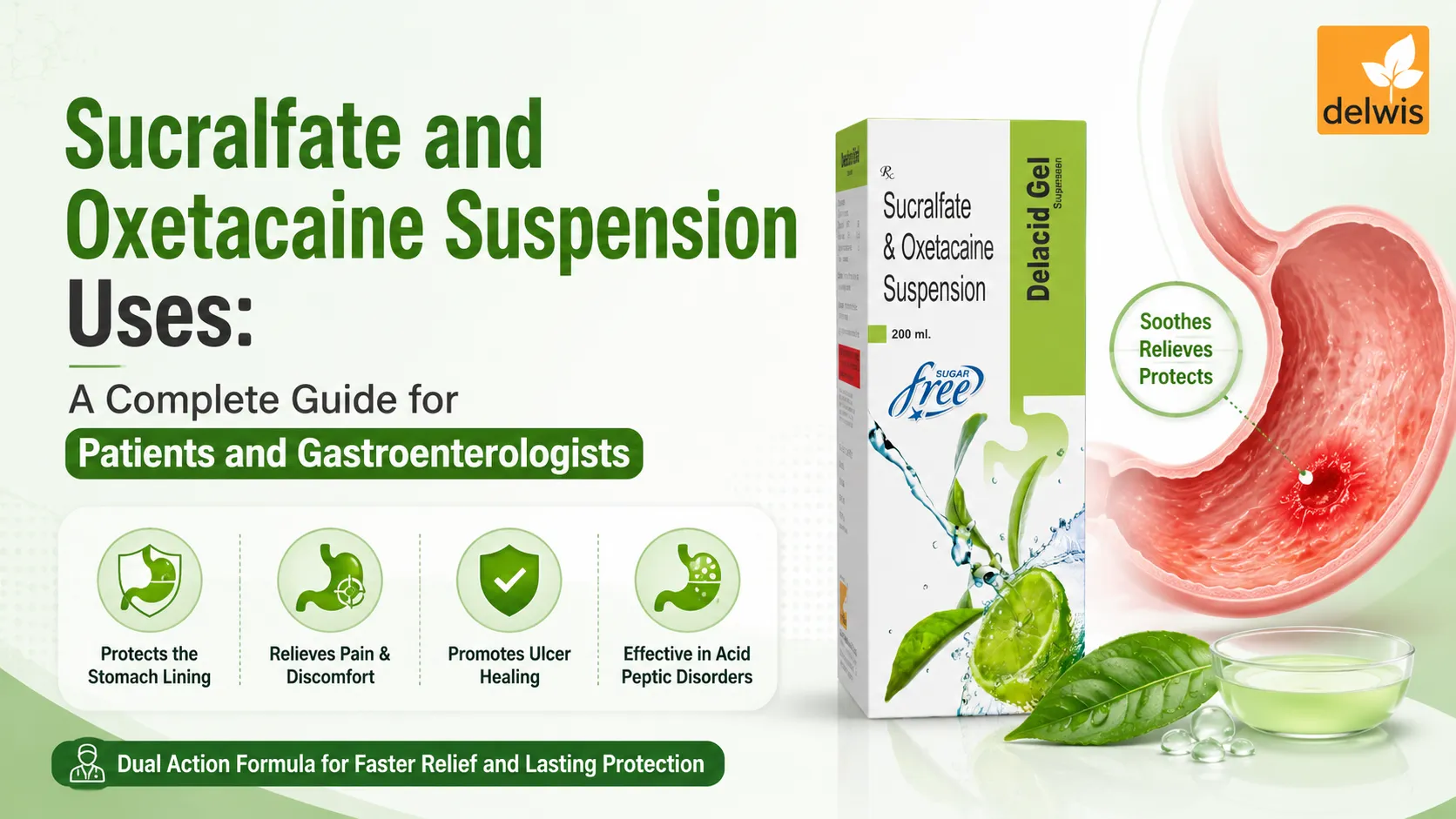
Sucralfate and oxetacaine suspension is a fixed-dose oral combination suspension containing two active pharmaceutical ingredients that work through entirely different mechanisms — yet target the same anatomical problem:
- Sucralfate 1g — a cytoprotective mucosal barrier agent that physically coats the damaged lining of the stomach, duodenum, or oesophagus, shielding it from further acid damage and promoting tissue healing
- Oxetacaine 20mg — a gastrointestinal-specific local anaesthetic that numbs the pain-sensitive nerve endings within the inflamed mucosal lining, providing fast-acting, prolonged relief from the burning and pain of active GI disease
The suspension format is clinically significant — not simply a matter of patient convenience. As a liquid, the suspension coats the gastric and oesophageal mucosal surface uniformly with every dose, distributing sucralfate's protective gel across the full area of inflammation, erosion, or ulceration rather than relying on a tablet to dissolve, settle, and make local contact by gravity and motility. This makes the oral suspension format superior to tablet formulations for conditions affecting the oesophagus and the upper stomach in particular.
The product is typically prescribed in a 100ml or 200ml bottle, taken as a measured dose before meals and at bedtime — a dosing schedule that positions it to act before food triggers the acid secretion and postprandial pain that characterise active upper GI disease.
How Does Each Component Work?
Sucralfate: Healing the Lining from the Inside
Sucralfate's mechanism of action is unlike any acid suppressant. It does not reduce stomach acid, block proton pumps, or interfere with the acid secretory axis. Instead, it works directly at the damaged mucosal surface through a chemical reaction that is actually triggered by the stomach's acidity.
In the low-pH environment of the stomach, sucralfate — a basic aluminium salt of sucrose octasulphate — polymerises and becomes strongly adhesive to damaged, denuded mucosal tissue. It binds selectively to the proteins exposed at ulcer craters and mucosal erosions, forming a viscous, gel-like protective coat that physically seals the wound surface. This gel barrier then:
- Protects the ulcer from ongoing acid and digestive enzyme (pepsin) attack
- Prevents bile salts from back-diffusing into the mucosal tissue and perpetuating damage
- Stimulates the local production of prostaglandins — the body's own chemical mediators of mucosal protection and repair
- Promotes healing by creating the stable, protected environment the tissue needs to regenerate
An important practical consequence of this mechanism is that sucralfate's protective effect is localised and sustained — it stays in contact with the damaged mucosa for several hours after each dose, providing protection through the period of highest acid exposure: during and after meals.
Oxetacaine: Stopping the Pain at Its Source
Oxetacaine (also written as oxethazaine) is not a conventional systemic pain reliever. It is a topical local anaesthetic formulated specifically for gastrointestinal use — designed to act on the mucous membrane lining of the stomach, oesophagus, and duodenum rather than being absorbed systemically like an oral painkiller.
It works by blocking sodium channels in the sensory nerve endings of the inflamed GI mucosa — the same nerve fibres that fire pain signals when acid contacts an ulcerated or eroded lining. By blocking those channels, oxetacaine produces reversible, localised mucosal anaesthesia: the burning, cramping, and epigastric pain associated with active peptic disease are reduced significantly within a short period of the dose, and the relief is sustained throughout the pre- and postprandial window.
A pharmacologically important property of oxetacaine is its pH stability — it remains active in the highly acidic stomach environment, where many local anaesthetics would be inactivated. This makes it specifically suited to GI applications in a way that other anaesthetics used topically elsewhere in the body are not.
For patients with peptic ulcer disease, this pain relief is not just symptomatic comfort — it is a compliance driver. Sucralfate requires consistent pre-meal dosing across a 4 to 8-week treatment course to achieve ulcer healing. Patients who experience meal-related pain are less likely to eat regularly and less likely to take their pre-meal suspension dose consistently. Oxetacaine's pain control helps patients maintain the dietary and dosing regularity that the sucralfate component needs to work.
Sucralfate and Oxetacaine Suspension Uses — Condition by Condition
1. Peptic Ulcer Disease — Gastric and Duodenal Ulcer
Peptic ulcer disease (PUD) remains among the most prevalent gastroenterology diagnoses in India, driven by a combination of H. pylori infection (which affects a large proportion of the adult Indian population), widespread NSAID use across multiple therapeutic areas, dietary factors, and lifestyle-related acid hypersecretion.
Gastric ulcers form in the stomach lining when the balance between acid/pepsin secretion and mucosal defence factors is disrupted. Duodenal ulcers form in the first part of the small intestine — typically in a zone where the acidic gastric contents first arrive after leaving the stomach.
Sucralfate has a four-decade evidence base for peptic ulcer healing. It is effective as monotherapy in uncomplicated duodenal ulcer management and as additive therapy alongside acid suppression in more complex peptic disease. The standard approach — take the suspension 30–60 minutes before each meal and at bedtime — is specifically designed to maximise sucralfate's mucosal contact time during the periods of peak acid activity.
Oxetacaine addresses the most debilitating symptom of active peptic ulcer disease: the pain that strikes when food or acid contacts the ulcerated mucosa. Its pre-meal anaesthetic action pre-empts the postprandial pain cycle, making mealtime manageable during the weeks when sucralfate is progressively healing the ulcer beneath it.
2. GERD and Reflux Oesophagitis — Protecting the Food Pipe
Gastroesophageal reflux disease (GERD) occurs when stomach acid repeatedly refluxes into the oesophagus — a tissue that, unlike the stomach, lacks the mucus layer and prostaglandin-mediated defences that protect the gastric mucosa. Repeated acid exposure causes oesophageal mucosal damage ranging from mild inflammation (non-erosive reflux disease) to frank ulceration and erosion (erosive oesophagitis).
The oral suspension format of sucralfate is particularly valuable here — because, as a liquid, it coats the oesophageal lining directly as it is swallowed, creating a protective barrier on the mucosal surface before the next reflux episode occurs. Sucralfate tablets, by contrast, rely on dissolution and gastric distribution, making them far less effective for oesophageal lesions.
Oxetacaine's action on the oesophageal sensory nerve endings provides meaningful relief from the retrosternal burning ("heartburn") that is GERD's defining symptom — and which many patients on PPI monotherapy continue to experience between doses. This makes the suspension a complementary and frequently additive option alongside standard PPI therapy for patients with incomplete reflux symptom control.
3. Chronic Gastritis — Treating Inflamed Stomach Lining
Chronic gastritis — persistent inflammation of the stomach lining — may be caused by long-standing H. pylori colonisation, autoimmune activity against gastric parietal cells, or chronic chemical irritation (bile reflux, NSAIDs, alcohol). It presents with variable symptoms: recurrent epigastric discomfort, nausea, fullness after small meals, and intermittent burning.
Sucralfate's prostaglandin-stimulating and mucosal barrier-forming properties are well-suited to chronic gastritis management — particularly in patients where acid suppression alone provides only partial symptom relief or where the gastritis has an erosive component that needs direct mucosal protection. Oxetacaine manages the pain and burning that accompany inflamed gastric mucosa during the healing process.
4. NSAID-Induced GI Mucosal Damage
NSAIDs — including ibuprofen, diclofenac, naproxen, and aspirin — are among the most prescribed drugs in India across rheumatology, orthopaedics, gynaecology, and general practice. Their gastroprotective risk is well-established: by inhibiting cyclo-oxygenase enzymes (COX-1 and COX-2), NSAIDs suppress the prostaglandin synthesis that maintains the stomach's endogenous mucosal defence layer — leading to gastric erosions, submucosal haemorrhages, and frank peptic ulcers in susceptible patients.
This creates a specific and clinically common scenario: a patient who needs long-term NSAID therapy for pain or inflammation, who cannot or should not discontinue the NSAID, but whose gastric lining requires simultaneous protection. Sucralfate's exogenous cytoprotection — independent of the prostaglandin pathway that NSAIDs block — provides a layer of mucosal defence that partially compensates for the loss of endogenous gastroprotection. It is prescribed prophylactically in high-risk NSAID users and therapeutically in those who have developed NSAID-related mucosal injury.
Oxetacaine manages the dyspeptic pain, epigastric burning, and GI discomfort that NSAID users frequently experience — giving patients symptomatic relief without the need to add yet another systemic analgesic.
5. Stress Ulcer Prevention in High-Risk and Critically Ill Patients
Stress ulcers are acute mucosal lesions — typically shallow gastric erosions — that develop in critically ill patients, ICU admissions, post-surgical patients, and those under severe physiological stress (burns, sepsis, head injury, respiratory failure). Impaired mucosal blood flow, elevated gastric acid secretion under stress conditions, and compromised mucosal defence mechanisms combine to create a significant risk of upper GI bleeding.
Sucralfate oral suspension has been studied as a stress ulcer prophylactic agent, with a clinical profile that is particularly relevant in mechanically ventilated patients — where evidence suggests sucralfate's non-acid-suppressive mechanism is associated with a lower risk of ventilator-associated pneumonia compared to H2 blockers or PPIs used for the same prophylactic purpose. This positions sucralfate suspension as a preferred stress ulcer prevention option in selected critical care patient subgroups.
6. Esophagitis — Including Pill-Induced and Non-GERD Oesophageal Injury
Beyond GERD-related reflux oesophagitis, oesophageal mucosal injury can result from prolonged contact with oral medications that have intrinsic mucosal irritant properties (pill-induced oesophagitis — particularly with bisphosphonates, tetracyclines, and potassium supplements), chemotherapy-related oesophageal mucositis, and radiation therapy to the chest. In these settings, sucralfate suspension's direct mucosal coating action provides a clinically rational protective and healing intervention, while oxetacaine manages the associated dysphagia and oesophageal pain.
Before or After Food? Getting the Timing Right
This is the single most common patient question — and getting the answer right significantly impacts how well the suspension works.
Sucralfate and oxetacaine suspension should be taken 30 to 60 minutes before meals and at bedtime.
The reasoning is pharmacologically straightforward. Sucralfate's binding to damaged mucosal tissue is strongest in the acidic fasting stomach — and it requires time to polymerise, adhere, and form its protective gel coat before food arrives and triggers the acid secretion surge that characterises active peptic disease. Taking it before meals means the protective barrier is already in place when the most aggressive acid stimulation of the day occurs.
Oxetacaine's pre-meal action pre-empts the postprandial pain — numbing the mucosal pain receptors before food contacts the ulcerated surface and triggers the burning wave that patients dread.
Bedtime dosing covers the overnight period — when acid secretion, while lower overall, is prolonged due to the absence of food (which acts as an acid buffer) and the supine position, which facilitates reflux of any nocturnal acid into the oesophagus.
Taking the suspension after meals significantly reduces sucralfate's mucosal binding efficiency and undermines the pre-emptive anaesthetic role of oxetacaine. Shake the bottle well before every dose, measure carefully with the provided measuring cup, and swallow without immediately drinking water or eating — to allow the suspension maximum mucosal contact time.
Side Effects to Know About
Sucralfate and oxetacaine suspension is generally well tolerated, with the vast majority of patients completing a full treatment course without significant adverse effects. Because sucralfate is minimally absorbed from the GI tract and oxetacaine has low systemic absorption from the mucosal surface, systemic side effects are uncommon.
Common, mild, and usually transient:
- Constipation — the most frequently reported side effect, attributed to sucralfate's aluminium content and its effect on GI motility. Staying adequately hydrated reduces this
- Dry mouth — mild, reported by some patients particularly at the start of therapy
- Nausea or mild gastric discomfort on first doses — usually settles within a few days as the mucosa adjusts
- Metallic taste — occasionally reported, related to the aluminium component
Less common:
- Dizziness or lightheadedness — rare at therapeutic doses
- Skin rash or hypersensitivity to suspension excipients — uncommon
- Bezoar formation — a rare risk with long-term sucralfate use in patients with gastroparesis or delayed gastric emptying, where sucralfate accumulation can form a mass in the stomach
Drug interactions to be aware of: Sucralfate can reduce the absorption of certain co-administered oral medications — including fluoroquinolone antibiotics (such as ciprofloxacin), digoxin, warfarin, phenytoin, and some tetracyclines — by binding them in the gut before they can be absorbed. To avoid this, any medications known to interact with sucralfate should be taken at least 2 hours before the sucralfate + oxetacaine suspension dose. Always inform your prescribing physician of all medications you are currently taking before starting this suspension.
Important Precautions
Duration of use: This suspension is prescribed for defined treatment courses — typically 4 to 8 weeks for peptic ulcer healing, with duration guided by the treating gastroenterologist. Long-term unsupervised use should be avoided; sucralfate delivers most of its benefit within a structured treatment period, and indefinite continuation without clinical review is not appropriate.
Renal impairment: Sucralfate contains aluminium, a small amount of which is absorbed systemically. In patients with chronic kidney disease (CKD), aluminium accumulation is a potential concern with prolonged sucralfate use. Use in patients with significant renal impairment requires medical supervision and periodic monitoring.
Children: Paediatric dosing should be recommended and supervised by a paediatrician or gastroenterologist. This is not a self-initiation product for children.
Pregnancy: Sucralfate has minimal systemic absorption and has historically been considered relatively safe under medical supervision in pregnancy for short-term GI symptom management. Oxetacaine similarly has low systemic absorption. However, use during pregnancy should always be under the specific guidance of the treating physician, who can assess clinical benefit versus risk for the individual patient.
Conclusion
Sucralfate and oxetacaine suspension occupies a distinctive and irreplaceable clinical position in gastroenterology — not as a simple acid neutraliser or symptom suppressor, but as a two-pronged therapeutic combination that physically heals the damaged gastrointestinal lining while providing meaningful, localised pain relief through the treatment process. For patients managing peptic ulcer disease, GERD, chronic gastritis, NSAID-related mucosal injury, or oesophagitis, it addresses what acid suppression alone cannot: the structural protection and direct pain management that make the difference between a tolerated, completed treatment course and a prematurely discontinued one.
For the full product profile, composition, packaging, and manufacturing quality details behind this formulation, explore sucralfate & oxetacaine suspension on the Delwis Healthcare product page. To explore the broader hyperacidity and ulcer product range — including related gastroenterology formulations manufactured at the WHO-GMP certified Ahmedabad facility — visit the Delwis Healthcare GI portfolio.
Frequently Asked Questions
Q: What is sucralfate and oxetacaine suspension used for?
It is used for the treatment of peptic ulcer disease (gastric and duodenal ulcer), GERD and reflux oesophagitis, chronic gastritis, NSAID-induced mucosal damage, stress ulcer prophylaxis, and oesophagitis. Sucralfate physically coats and protects the damaged GI lining while oxetacaine relieves the localised pain and burning.
Q: Is sucralfate and oxetacaine suspension the same as an antacid syrup?
No — these are entirely different types of medicines. Antacid syrups neutralise existing stomach acid for a short period. Sucralfate and oxetacaine suspension does not neutralise acid — instead, sucralfate coats the damaged mucosal lining and promotes healing, while oxetacaine anaesthetises the pain receptors at the mucosal surface. Their mechanisms, duration of action, and clinical roles are completely different.
Q: Can sucralfate and oxetacaine suspension be taken with a PPI (like omeprazole or pantoprazole)?
Yes — this is a common and clinically appropriate prescribing combination. PPIs suppress acid; sucralfate and oxetacaine suspension protect the mucosal lining and manage pain. The two approaches are complementary, not redundant. Patients with incomplete symptom control on PPI monotherapy frequently benefit from adding this suspension.
Q: How long does it take for the suspension to relieve pain?
Oxetacaine's local anaesthetic action at the mucosal surface typically produces noticeable pain relief within 15 to 30 minutes of a dose. Structural mucosal healing from sucralfate is progressive — most patients experience significant symptom improvement within 1 to 2 weeks of consistent treatment, with full peptic ulcer healing typically achieved over 4 to 8 weeks.
Q: What is the recommended dose of sucralfate and oxetacaine suspension?
The standard adult dose is typically 10ml to 20ml (1 to 2 measuring spoonfuls), taken 30 to 60 minutes before each meal and at bedtime — usually 3 to 4 times daily. Your prescribing gastroenterologist will determine the specific dose and duration most appropriate for your condition. Always follow the prescribed instructions rather than self-adjusting the dose.
Q: Can sucralfate and oxetacaine suspension be taken long-term?
It is generally prescribed for defined short-to-medium term treatment courses. Long-term unsupervised use is not recommended, particularly in patients with renal impairment, due to the potential for aluminium accumulation from sucralfate's aluminium content. Always have treatment duration reviewed by your gastroenterologist at each clinical appointment.
This article is written for informational and educational purposes only. It does not constitute medical advice, a clinical recommendation, or a substitute for professional gastroenterological assessment. Always consult a qualified physician or gastroenterologist before starting, modifying, or stopping any medication.