Introduction: Why Your Allergy Spray Isn't Just About Histamine
Ask most patients what they know about nasal allergy sprays and they will likely mention antihistamines — tablets that block histamine receptors and reduce sneezing, itching, and runny nose. Antihistamines work. But most patients who have tried them know they have a problem: the blocked nose. The congestion that makes breathing difficult, disrupts sleep, and makes the allergy season feel genuinely debilitating — antihistamines barely touch it.
The reason is biological. Nasal congestion in allergic rhinitis is driven primarily not by histamine but by the second, later wave of the allergic response — the eosinophilic inflammatory cascade that produces lasting mucosal swelling, increased vascular permeability, and oedema in the nasal lining. Antihistamines do not reach this cascade. Only a corticosteroid that directly suppresses the inflammatory mediators driving it can address congestion comprehensively — and when that corticosteroid is delivered directly inside the nose rather than taken orally, it achieves this with less than 1% entering the bloodstream.
This is the clinical foundation of fluticasone propionate nasal spray — one of the most prescribed intranasal corticosteroids (INCs) in the world and the first-line ENT recommendation for moderate-to-severe allergic rhinitis in India and internationally. This guide explains exactly what it is, what it does, every condition it treats, how to use it correctly, and what patients and ENT specialists need to know about safety and long-term use.
What Is Fluticasone Propionate Nasal Spray?
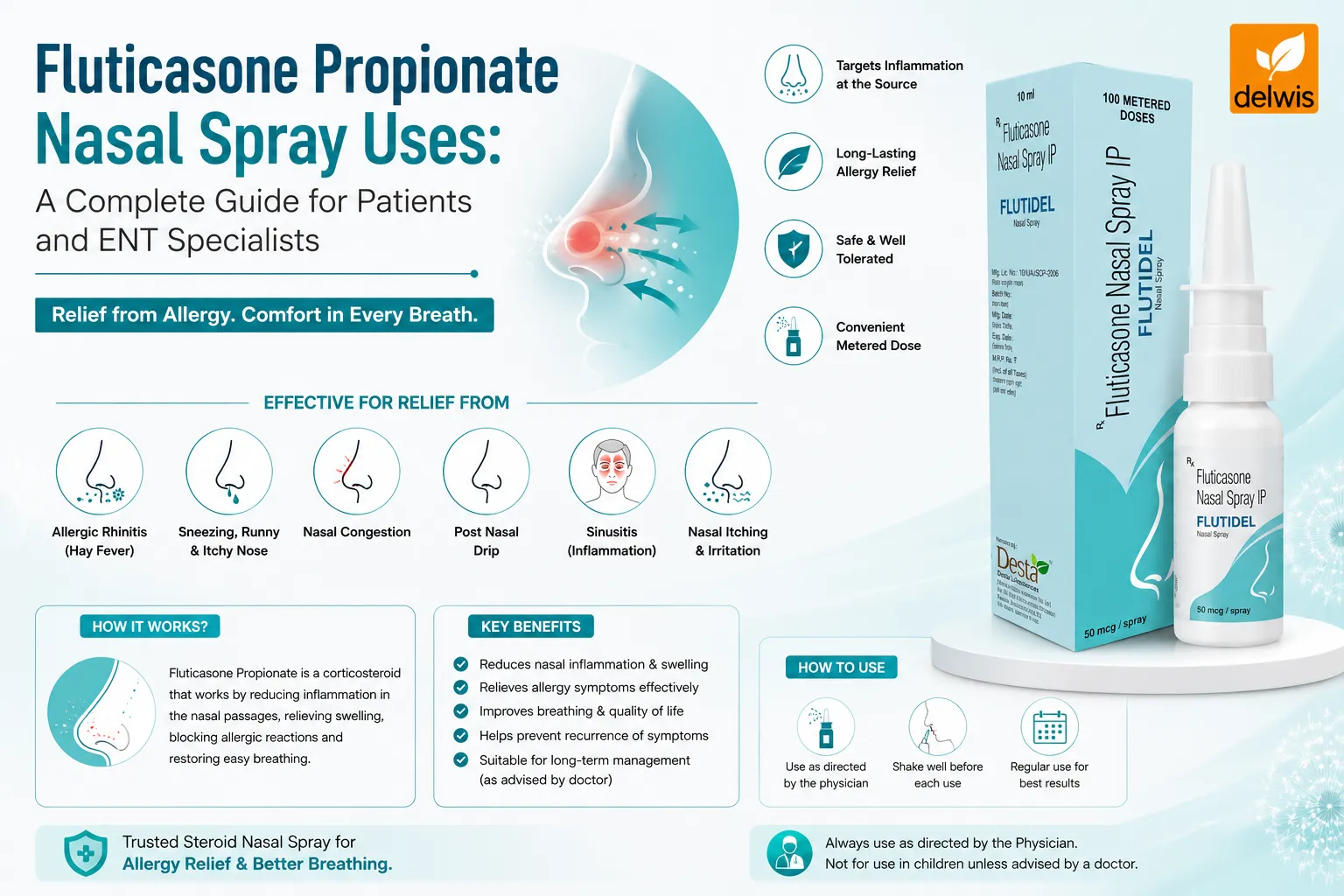
Fluticasone propionate nasal spray is a metered-dose intranasal corticosteroid formulation containing fluticasone propionate 0.05% w/v — delivering 50 micrograms (mcg) of fluticasone propionate per actuation (each spray). A standard 10ml bottle delivers 100 metered doses — sufficient for a full treatment course at standard dosing.
The active ingredient — fluticasone propionate — is a synthetic, fluorinated glucocorticoid with extremely high affinity for the glucocorticoid receptor (GCR) in nasal mucosal cells. It is the same molecule used in inhalers for asthma management (fluticasone propionate MDI) but in a completely different delivery format, formulation, and dose — designed for local nasal deposition rather than lower airway delivery.
The "propionate" designation refers to the ester form of fluticasone used in this formulation — a chemical modification that simultaneously achieves three things: enhances lipophilicity for better mucosal tissue penetration, prolongs receptor binding duration for extended activity between doses, and dramatically reduces systemic absorption after any drug that reaches the nasal vasculature. This last property is what makes fluticasone propionate among the safest of all intranasal corticosteroids for long-term daily use.
The formulation is a metered-dose aqueous suspension delivered via a specialised pump spray bottle. The pump mechanism actuates a precisely calibrated volume with each press — ensuring every spray delivers exactly 50mcg, from the first actuation to the 100th. This dose consistency is not incidental — it is a manufacturing quality parameter that separates a pharmaceutical-grade nasal spray from substandard alternatives.
How Does Fluticasone Propionate Nasal Spray Work? The Two-Phase Mechanism Explained
To understand why fluticasone propionate nasal spray works better than antihistamines for the full allergic rhinitis symptom complex — and why it takes several days to show its full effect — it helps to understand how the allergic nasal response actually unfolds in two distinct phases.
The Early Phase (0–60 Minutes After Allergen Exposure)
When an allergen — pollen, dust mite protein, pet dander — contacts the nasal mucosa of a sensitised individual, IgE antibodies attached to nasal mast cells recognise the allergen and trigger immediate mast cell degranulation. This releases pre-formed mediators — primarily histamine — within seconds to minutes. Histamine causes:
- Sneezing — through direct sensory nerve stimulation
- Nasal itch and pruritus — through H1 receptor activation in nasal sensory nerves
- Immediate rhinorrhoea — through increased glandular secretion
- Mild, brief vasodilatation — contributing to some early congestion
This early phase is what antihistamines primarily address — they block the H1 receptors that histamine activates, reducing sneezing, itching, and early watery discharge. For patients whose symptoms are predominantly early-phase, antihistamines can provide meaningful relief.
The Late Phase (4–24 Hours After Allergen Exposure) — Where Congestion Lives
What antihistamines cannot address is what happens next. The mast cell degranulation that occurs in the early phase also releases chemical signals — including histamine itself, but also prostaglandins, leukotrienes, and chemokines — that recruit eosinophils, basophils, and T-lymphocytes from the bloodstream into the nasal mucosal tissue over the following 4–24 hours.
These recruited inflammatory cells then release their own mediators — major basic protein, eosinophil cationic protein, cysteinyl leukotrienes — that produce:
- Sustained mucosal oedema — the thickening and swelling of the nasal lining that blocks airflow
- Increased vascular permeability — causing fluid accumulation in the submucosa
- Sustained mucus hypersecretion — producing the thick, persistent discharge of established rhinitis
- Sensory nerve sensitisation — lowering the threshold for sneezing and itch responses
This late-phase eosinophilic inflammatory cascade is responsible for nasal congestion — the most disabling symptom for most patients with established allergic rhinitis — and for the chronic remodelling changes that make allergic rhinitis a persistent rather than episodic condition.
Fluticasone propionate targets precisely this late-phase cascade — through a broad transcriptional suppression of the inflammatory gene expression that drives it. When fluticasone propionate binds to glucocorticoid receptors in nasal mucosal cells:
- The activated receptor complex enters the cell nucleus and binds to glucocorticoid response elements on inflammatory gene promoters
- This suppresses the transcription of cytokines and chemokines (IL-4, IL-5, IL-13, eotaxin) that recruit eosinophils
- Reduced eosinophil recruitment means less mediator release, less mucosal oedema, and less vascular permeability
- Mucosal secretion is reduced — both the volume and the viscosity of nasal discharge decrease
- Mast cell numbers within the nasal mucosa are progressively reduced with continued use
The clinical consequence of this late-phase suppression: fluticasone propionate controls all four cardinal symptoms of allergic rhinitis — sneezing, rhinorrhoea, nasal itch, and nasal congestion — in a way that antihistamine monotherapy cannot achieve for the congestion component. This is why ENT specialists and allergists consistently recommend intranasal corticosteroids as first-line treatment over antihistamines for moderate-to-severe persistent allergic rhinitis.
Why Full Effect Takes Several Days
Patients starting fluticasone nasal spray often ask why they do not feel instant relief. The mechanism explains the timeline:
- Histamine is already present and active in the nasal tissue — antihistamines work by blocking receptor access; corticosteroids work by suppressing the production of inflammatory mediators upstream
- This transcriptional suppression takes time to produce measurable downstream effects on tissue eosinophilia and mucosal oedema
- Most patients notice partial relief within 12–24 hours of the first dose as mast cell activity begins to be modulated
- Full anti-inflammatory effect — including maximal congestion control — develops over 3–7 days of consistent once-daily use
- With continuous use over 1–2 weeks, mucosal eosinophil counts measurably decrease and nasal airway resistance progressively improves
Patients should be counselled to continue use for at least 7 days before assessing the full impact of treatment.
Fluticasone Propionate Nasal Spray Uses — Complete Condition-by-Condition Clinical Guide
1. Allergic Rhinitis — Seasonal (Hay Fever) and Perennial
Allergic rhinitis is the primary and most prescribed-for indication for fluticasone propionate nasal spray, and the condition for which it has the most extensive clinical evidence base. In India, allergic rhinitis affects an estimated 20–30% of adults — driven by high exposure to dust mites (year-round in tropical and subtropical climates), cockroach allergens (common in Indian urban housing), pollen from grasses and trees (seasonal peaks in spring and autumn), and pet dander.
Seasonal Allergic Rhinitis (Hay Fever): Seasonal allergic rhinitis — driven by specific pollen seasons — produces acute bursts of sneezing, itching, runny nose, and congestion during the relevant season. Fluticasone propionate nasal spray at 100mcg (two sprays in each nostril) once daily provides 24-hour symptom control. ENT specialists increasingly recommend starting treatment 1–2 weeks before the anticipated pollen season — allowing mucosal anti-inflammatory protection to establish before allergen exposure begins, rather than fighting established inflammation reactively.
Perennial Allergic Rhinitis: Perennial rhinitis — from year-round allergens like dust mites, cockroaches, and mould — is arguably more clinically significant in India than seasonal pollen rhinitis, because the continuous exposure means continuous mucosal inflammation and progressive remodelling. For perennial rhinitis, fluticasone propionate nasal spray is used as a long-term daily maintenance therapy — taken continuously throughout the year. The spray's minimal systemic absorption profile is the specific pharmacological property that makes this extended use safe, distinguishing it from oral corticosteroids which cannot be used continuously at equivalent systemic doses.
2. Nasal Polyps — Reducing Size and Preventing Recurrence
Nasal polyps are benign, grape-like outgrowths from the nasal and sinus mucosa — products of chronic eosinophilic inflammation that gradually fills the nasal cavity, obstructing airflow and reducing or eliminating the sense of smell. They are strongly associated with:
- Chronic allergic rhinitis (particularly dust mite and aspirin-exacerbated respiratory disease)
- Adult asthma — approximately 30% of adults with moderate-to-severe asthma have nasal polyps
- Aspirin/NSAID sensitivity (the "aspirin triad" — asthma, nasal polyps, and aspirin sensitivity)
Fluticasone propionate nasal spray has two distinct roles in nasal polyp management:
Conservative management of smaller polyps: Intranasal corticosteroids reduce polyp size by suppressing the eosinophilic inflammatory matrix that drives polyp growth. For patients with early-stage or limited polyp disease, fluticasone spray can achieve meaningful polyp reduction and symptom relief without requiring surgical intervention.
Post-surgical recurrence prevention: After functional endoscopic sinus surgery (FESS) to remove nasal polyps, continued intranasal fluticasone is standard of care — suppressing the residual inflammatory milieu that, without treatment, would cause polyp regrowth in the same locations within months.
The clinical goal in nasal polyp management is long-term mucosal inflammation control — which is precisely what daily intranasal fluticasone provides. ENT specialists typically counsel polyp patients that this is a chronic management strategy requiring indefinite continuation rather than a fixed treatment course.
3. Chronic Rhinosinusitis
Chronic rhinosinusitis (CRS) — inflammation of the nasal cavity and paranasal sinuses persisting for 12 weeks or longer — is one of the most common chronic conditions in ENT practice across India. It is characterised by nasal congestion, facial pressure, mucopurulent nasal discharge, and reduced sense of smell.
CRS has two main phenotypes with different inflammatory profiles:
- CRS with nasal polyps (CRSwNP) — predominantly eosinophilic, highly responsive to intranasal corticosteroids
- CRS without nasal polyps (CRSsNP) — mixed neutrophilic/eosinophilic inflammation, also responsive to INCs particularly for mucosal oedema reduction
Fluticasone propionate nasal spray addresses CRS through two mechanisms: directly suppressing the mucosal inflammation that occludes sinus ostia (the small drainage openings connecting the sinuses to the nasal cavity), and reducing mucosal oedema that, when present, prevents adequate sinus drainage and perpetuates the infection cycle by creating a stagnant mucosal environment where bacteria can proliferate.
ENT specialists typically prescribe intranasal corticosteroids as a first-line component of CRS management — alongside nasal saline irrigation — before considering oral steroid bursts or surgical intervention. Regular use of fluticasone propionate nasal spray for CRS often requires 3–6 months of consistent treatment to achieve meaningful symptomatic improvement.
4. Dust Allergy with Perennial Nasal Symptoms
Dust mite allergy is among the most prevalent allergic sensitisations in India — affecting a disproportionately large proportion of the urban population compared to European countries, because India's warm, humid climate provides near-ideal conditions for dust mite proliferation year-round. House dust mites (Dermatophagoides pteronyssinus and D. farinae) produce allergenic proteins in their faecal particles that are found in mattresses, pillows, carpets, and upholstered furniture.
Patients with dust mite allergy characteristically experience nasal symptoms that are:
- Worst in the morning (after hours of close exposure to mattress dust mites during sleep)
- Triggered by specific activities — making a bed, vacuuming, entering air-conditioned rooms (which redistribute settled dust particles)
- Year-round and perennial rather than seasonal
For these patients, fluticasone propionate nasal spray provides continuous mucosal anti-inflammatory protection — reducing the nasal mucosal reactivity to dust mite allergen exposure such that the same level of allergen contact produces fewer and milder symptoms. This is the primary reason perennial dust allergy patients respond better to long-term intranasal corticosteroid therapy than to as-needed antihistamine use.
5. Non-Allergic Rhinitis with Eosinophilia (NARES)
NARES is a distinct clinical entity that presents identically to allergic rhinitis — persistent sneezing, profuse rhinorrhoea, nasal congestion, and loss of smell — but without demonstrable IgE-mediated allergy on skin prick testing or specific IgE measurement. The inflammatory driver is eosinophilic but non-IgE-mediated.
For NARES patients who have had negative allergy workup but respond poorly to antihistamines (expected, since the condition is not histamine-mediated), fluticasone propionate nasal spray is the most effective treatment option — directly suppressing the eosinophilic inflammation driving symptoms through its GCR-mediated anti-inflammatory mechanism, without requiring the IgE pathway it would normally protect against in classical allergic rhinitis.
6. Vasomotor Rhinitis — Supportive Role
Vasomotor rhinitis is triggered by non-allergic, non-infectious stimuli — temperature changes, humidity changes, cold air, strong smells, smoke, and alcohol. The mechanism involves dysregulated autonomic control of nasal vascular tone rather than IgE-mediated inflammation. Antihistamines are generally ineffective; decongestant sprays cause rebound congestion (rhinitis medicamentosa) with prolonged use.
While intranasal corticosteroids are less definitively effective for vasomotor rhinitis than for allergic rhinitis, they have a supportive role in patients with mixed allergic and vasomotor triggers — reducing the baseline nasal mucosal inflammatory reactivity that makes vasomotor triggers more symptomatic.
7. Adenoidal Hypertrophy in Children — Under ENT Supervision
Enlargement of the adenoid (nasopharyngeal tonsil) in children produces nasal obstruction, mouth breathing, snoring, and recurrent otitis media. Eosinophilic inflammation driven by perennial allergic rhinitis is a contributing factor in many children with adenoidal hypertrophy. Intranasal fluticasone, under ENT specialist supervision, has been shown to reduce adenoidal size in allergically driven hypertrophy — potentially avoiding or delaying the need for surgical adenoidectomy in selected children.
How to Use Fluticasone Propionate Nasal Spray Correctly — Step-by-Step Guide
Incorrect spray technique is one of the most common reasons patients experience both suboptimal efficacy and nasal side effects (particularly nosebleeds). Here is the correct technique:
Before First Use — Priming the Pump: Shake the bottle gently, then press the pump 6 times into the air until a fine mist appears. The pump is now primed and ready for use. Re-prime with 1–2 actuations if the spray has not been used for more than 1 week.
Step 1 — Blow your nose gently Clear any visible mucus from both nostrils before using the spray. This ensures the spray reaches the nasal mucosa rather than being deposited on a mucus plug.
Step 2 — Shake the bottle Shake the bottle gently (3–4 times) before each use to ensure the suspension is uniformly distributed.
Step 3 — Tilt your head slightly forward Lean your head slightly forward — not back. Tilting back causes the spray to run down the throat (where it is swallowed and absorbed systemically, increasing systemic exposure unnecessarily) rather than coating the nasal mucosa (where it needs to act).
Step 4 — Insert the nozzle correctly Insert the nozzle into your right nostril. Angle the tip slightly toward the outer wall of the nose (toward your right ear) — away from the nasal septum (the central dividing wall). This is the critical step most patients get wrong: pointing the spray toward the septum is the primary cause of septum-related nosebleeds from nasal sprays.
Step 5 — Spray while breathing in slowly Close the other nostril with a finger, then slowly breathe in through the nose while pressing the pump once. Breathe slowly and steadily — not a sharp inhalation, which can carry the spray too quickly past the target area.
Step 6 — Breathe out through your mouth After the spray, breathe out through your mouth. Do not sniff sharply or blow your nose immediately after administration.
Step 7 — Repeat for the second spray (if prescribed) and the other nostril For the standard adult dose of 2 sprays per nostril: repeat the process for a second spray in the right nostril, then switch to the left nostril (angling the tip toward your left ear this time) for both sprays.
Step 8 — Clean the nozzle after each use Remove the nozzle cap, wipe the nozzle with a clean, dry tissue, and replace the cap. This prevents blockage and microbial contamination of the spray tip.
Dosage — Adults and Children
Adults and adolescents above 12 years:
- Starting dose: 2 sprays (100mcg) into each nostril once daily — total daily dose 200mcg
- Maintenance dose (once symptoms are controlled): Reduce to 1 spray (50mcg) per nostril once daily — total 100mcg
- Maximum daily dose: 2 sprays per nostril twice daily (400mcg) — only under ENT specialist direction for severe symptoms
Children aged 4–11 years (under medical supervision):
- 1 spray (50mcg) per nostril once daily — total daily dose 100mcg
- Use the lowest effective dose that controls symptoms
- Not recommended in children below 4 years without specific specialist guidance
Seasonal rhinitis: Begin 1–2 weeks before the anticipated pollen or allergen season. Continue throughout the season. May be discontinued at the end of the season if symptoms are seasonal only.
Perennial rhinitis and nasal polyps: Continuous daily use as prescribed by the ENT specialist. Periodic reassessment (every 3–6 months) to confirm continued need and assess for any local side effects.
Important timing note: Fluticasone propionate nasal spray can be taken at any time of day — there is no pharmacokinetic requirement tied to meals, as it is locally delivered rather than orally absorbed. However, taking it at the same time each day (e.g., every morning after brushing teeth) helps build habit consistency essential for daily use.
Side Effects of Fluticasone Propionate Nasal Spray
Fluticasone propionate nasal spray has one of the best tolerability profiles among all intranasal corticosteroids — primarily because its minimal systemic absorption means most side effects are localised to the nasal application site.
Common (localised, mild, manageable):
- Nosebleed (epistaxis) — The most frequently reported side effect, occurring in approximately 5–10% of patients. This is caused primarily by the mechanical effect of the spray on the nasal mucosal blood vessels — not by the steroid component directly. It is minimised by: directing the spray away from the nasal septum (toward the outer nasal wall), using the lowest effective dose, ensuring the pump is primed before use (an unprimed pump delivers a liquid jet rather than a fine mist), and considering a few days of treatment suspension followed by resumption at one spray per nostril if epistaxis is persistent. Most mild epistaxis resolves without discontinuing treatment.
- Nasal dryness, irritation, or stinging — Particularly common at initiation; usually settles within 1–2 weeks. Nasal saline spray used 30 minutes before fluticasone application can reduce nasal dryness and improve tolerability.
- Headache — Mild, reported by a minority of patients; usually transient.
- Unpleasant nasal or throat aftertaste — Brief, related to the spray vehicle rather than the active ingredient; improves with correct technique (tilting head forward prevents post-nasal drip).
Uncommon (requiring assessment if persistent):
- Nasal crusting — Dried secretion accumulation within the nose; managed with regular saline nasal irrigation.
- Throat irritation — From spray that runs to the posterior pharynx; minimised by correct head-forward technique.
- Eye irritation or mild conjunctivitis — Rare; may indicate the spray was directed too anteriorly.
- Nasal septum perforation — Very rare with correct technique and standard doses; primarily a risk with significantly higher-than-prescribed doses or incorrect technique (spraying directly at the septum repeatedly). Report any persistent crusting on the nasal septum or any whistling sound on nasal breathing to your ENT specialist.
Systemic side effects — why the risk is negligible at prescribed doses: Fluticasone propionate achieves less than 1% systemic bioavailability after nasal administration — a consequence of both its poor absorption through the nasal mucosa at aqueous suspension concentrations and its near-complete first-pass hepatic metabolism of any fraction that does reach the circulation. This means that at 200mcg/day (the standard adult dose), the systemic fluticasone exposure is so low that:
- HPA-axis suppression: Multiple controlled studies have shown no significant cortisol suppression at prescribed nasal doses in adults or children
- Growth effects in children: Long-term studies at standard paediatric doses have not shown clinically significant effects on growth velocity — unlike oral corticosteroids
- Bone density: No clinically meaningful bone density effects at standard nasal spray doses
- Ocular effects: No significantly increased risk of glaucoma or posterior subcapsular cataract at standard nasal doses
The distinction between intranasal fluticasone (localised, minimal systemic exposure) and systemic corticosteroids (oral prednisolone, injectable dexamethasone) in terms of systemic safety cannot be overstated — and is the most important message ENT specialists convey to patients who express steroid fear about nasal sprays.
Is Fluticasone Nasal Spray a Steroid — Should Patients Be Worried?
This is one of the most common questions ENT specialists hear — and the answer deserves a direct, honest, and comprehensive response.
Yes — fluticasone propionate is a corticosteroid. It belongs to the same pharmacological class as prednisolone, hydrocortisone, and dexamethasone. It binds to the same glucocorticoid receptor and activates the same anti-inflammatory gene pathways.
No — this does not mean nasal spray patients should have the same concerns as oral steroid users. Here is why:
The concern about steroids comes from the systemic effects of oral and injected corticosteroids: HPA-axis suppression, immune suppression, osteoporosis, hyperglycaemia, weight gain, skin thinning, and growth effects in children. These effects occur because systemic corticosteroids distribute throughout the entire body at high concentrations.
Fluticasone propionate nasal spray does not do this. At the 50mcg-per-spray dose, deposited in the nasal mucosa, with less than 1% reaching the systemic circulation: the dose that reaches the rest of the body is pharmacologically insignificant. A standard daily dose of 200mcg intranasally delivers less systemic steroid than approximately 2mg of oral prednisolone — a dose so low it produces no measurable systemic effects.
The "steroid" in fluticasone nasal spray acts almost entirely within the nasal mucosa — like a topical cream on skin, which patients accept without concern. The nasal route of delivery converts a potentially systemic drug into an effective local anti-inflammatory tool.
The practical message for patients: Daily use of fluticasone propionate nasal spray at prescribed doses, for the prescribed duration — including long-term maintenance use for perennial rhinitis — has an established safety record over three decades of global clinical use. The risks of untreated persistent allergic rhinitis — sleep disruption, worsening asthma (the "one airway, one disease" connection), impact on quality of life, school and work performance — substantially outweigh the minimal and well-characterised risks of long-term intranasal fluticasone at standard doses.
Fluticasone Propionate vs Furoate vs Mometasone — A Patient-Focused Comparison
Patients and prescribers frequently encounter multiple intranasal corticosteroid options. Here is a clear comparison:
Feature | Fluticasone Propionate | Fluticasone Furoate | Mometasone Furoate |
|---|
Ester form | Propionate | Furoate | Furoate |
Dose per spray | 50mcg | 27.5mcg | 50mcg |
Standard adult dose | 100mcg BD or 200mcg OD | 110mcg OD | 200mcg OD |
GCR binding affinity | Very high | Highest available | Very high |
Systemic bioavailability | <1% | <0.5% | <0.1% |
Onset of symptom relief | 12–24h (full effect: 3–7 days) | Similar | Similar |
Nasal polyps indication | Yes | Yes | Yes |
Children (minimum age) | 4 years | 12 years (brand-dependent) | 2 years |
Approved for OTC use | Yes (some markets) | No | Yes (some markets) |
Evidence base | Extensive (30+ years) | More recent | Extensive |
India prescriber familiarity | Very high | Growing | High |
For patients asking which is better: At prescribed doses, all three are highly effective for allergic rhinitis with comparable clinical outcomes in head-to-head trials. Fluticasone propionate has the longest established evidence base and highest prescriber familiarity in India; fluticasone furoate has marginally higher GCR binding affinity; mometasone furoate has the lowest systemic bioavailability. In practice, availability, cost, and prescriber preference determine the choice more often than pharmacological differences between these closely matched options.
When a prescription says fluticasone nasal spray — whether patients find literature about "fluticasone furoate nasal spray uses" or "fluticasone propionate nasal spray uses" — the clinical information about uses, conditions, and general safety profile is applicable to both.
Combining Fluticasone Nasal Spray with Other Allergy Treatments
For patients with both nasal and non-nasal allergic symptoms — including allergic conjunctivitis, allergic cough, or urticaria alongside allergic rhinitis — fluticasone nasal spray is typically used alongside rather than instead of other treatments.
With oral or nasal antihistamines: The combination of fluticasone (controlling late-phase eosinophilic inflammation and congestion) with a non-sedating antihistamine (controlling early-phase sneezing, itch, and rhinorrhoea) provides the most complete allergic rhinitis symptom control — with each addressing the component the other does not fully cover. Antihistamine + leukotriene receptor antagonist combinations like bilastine + montelukast address multiple allergy pathways and may complement fluticasone in patients with mixed rhinitis and asthma phenotypes.
With nasal saline irrigation: Nasal saline (salt water) irrigation — using a neti pot or squeeze bottle — before fluticasone spray application clears mucus and crusts, reduces nasal mucosal inflammation through mechanical effect, and improves fluticasone deposition on the target mucosal surface. ENT specialists commonly recommend morning saline irrigation followed by fluticasone spray as a combined daily protocol for rhinitis and CRS management.
With decongestants (for short-term use): In patients with severe nasal blockage at treatment initiation where the fluticasone spray cannot reach the nasal mucosa through the blocked passage, a short course (3–5 days) of topical decongestant spray to open the nasal airway followed by the initiation of fluticasone is a practical ENT approach. Decongestants should not be used for more than 5–7 days due to the risk of rebound congestion (rhinitis medicamentosa).
Conclusion
Fluticasone propionate nasal spray occupies a uniquely important position in ENT and allergy medicine in India — as the only practical treatment option that simultaneously addresses all four cardinal symptoms of allergic rhinitis (including nasal congestion, which antihistamines cannot adequately manage), nasal polyp management, and chronic rhinosinusitis, while doing so through a route of administration that achieves minimal systemic exposure. The disconnect between its potency as a local anti-inflammatory agent and its near-zero systemic bioavailability is the pharmacological achievement that makes it safe for daily long-term use across all age groups from young children to elderly patients.
For patients, understanding how it works, why it takes a week to show full effect, how to use it correctly to minimise side effects, and why "steroid fear" should not prevent using a demonstrably safe local therapy makes the difference between adherent, effective long-term allergy management and the frustrating cycle of antihistamine trials that leaves congestion uncontrolled.
For the complete product composition, 10ml metered-dose format specifications, and manufacturing information, visit the fluticasone propionate nasal spray product page at Delwis Healthcare. To explore the full antiasthmatic and antiallergic range of respiratory and ENT formulations manufactured at our WHO-GMP certified Ahmedabad facility, visit the Delwis Healthcare portfolio.
Frequently Asked Questions
Q: What is fluticasone propionate nasal spray used for?
Fluticasone propionate nasal spray is used for allergic rhinitis (both seasonal hay fever and perennial year-round rhinitis), nasal polyps, chronic rhinosinusitis, dust allergy with persistent nasal symptoms, and non-allergic rhinitis with eosinophilia (NARES). It is the first-line prescription treatment for moderate-to-severe allergic rhinitis recommended by ENT and allergy guidelines in India and internationally.
Q: Is fluticasone nasal spray a steroid and is it safe for daily use?
Yes, fluticasone propionate is a corticosteroid — but it achieves less than 1% systemic absorption when administered intranasally, acting almost entirely as a local nasal mucosal anti-inflammatory agent. At prescribed doses, it does not cause the HPA-axis suppression, growth effects, or metabolic consequences of systemic (oral or injectable) corticosteroids. Daily long-term use at standard doses is safe and evidence-supported for perennial rhinitis management.
Q: How long does fluticasone nasal spray take to work?
Some patients notice partial symptom relief within 12–24 hours of the first dose. Full anti-inflammatory effect — including maximum nasal congestion control — develops over 3–7 days of consistent once-daily use. Patients should be counselled to continue use for at least one week before assessing the full therapeutic impact.
Q: What is the correct dosage of fluticasone nasal spray for adults and children?
Adults and those above 12 years: 2 sprays (100mcg) per nostril once daily (200mcg total), reducing to 1 spray per nostril once symptoms are controlled. Children 4–11 years: 1 spray (50mcg) per nostril once daily (100mcg total), under medical supervision. Always follow the specific prescribing instructions from your ENT specialist or physician.
Q: How do I stop getting nosebleeds from fluticasone nasal spray?
Most nosebleeds from nasal sprays are caused by incorrect technique — specifically directing the spray toward the nasal septum rather than the outer nasal wall. Angle the nozzle toward your ear (outer wall), ensure the pump is primed and delivering a fine mist rather than a liquid jet, and use the lowest effective dose. If nosebleeds persist after technique correction, take a 2–3 day break and restart at one spray per nostril. Discuss with your ENT specialist if epistaxis continues.
Q: Can fluticasone nasal spray be used during pregnancy?
Fluticasone propionate nasal spray has minimal systemic absorption and is generally considered one of the safer intranasal corticosteroid options during pregnancy. Use should be under the direct supervision of the treating obstetrician or ENT specialist, who will confirm clinical benefit outweighs any theoretical risk for the individual patient.
Q: How long can fluticasone nasal spray be used continuously?
For perennial allergic rhinitis and nasal polyps, continuous long-term use is standard practice and has an established safety record at prescribed doses. Periodic review by the ENT specialist (every 3–6 months) confirms the continued need, assesses symptom control, and checks for any local side effects. The safety profile at standard doses does not impose a maximum duration limit.
Q: Fluticasone vs mometasone nasal spray — which is better for allergic rhinitis?
Both are highly effective intranasal corticosteroids with equivalent clinical outcomes in controlled trials for allergic rhinitis. Fluticasone propionate has a longer evidence base and higher prescriber familiarity in India; mometasone furoate has marginally lower systemic bioavailability. In practice, availability, cost, and prescriber preference determine the choice rather than clinically meaningful pharmacological differences.
Q: Can fluticasone nasal spray help with loss of smell from nasal polyps?
Yes — restoration or improvement of olfactory function (sense of smell) is one of the documented benefits of intranasal corticosteroid treatment for nasal polyps, achieved through reduction of polyp size and the associated mucosal oedema that physically obstructs odorant access to the olfactory epithelium. The degree of smell restoration depends on the extent of polyp disease — more advanced disease may require surgical debridement before intranasal corticosteroid treatment achieves olfactory improvement.
This article is written for informational and educational purposes only. It does not constitute medical advice, a diagnosis, or a treatment recommendation. All prescribing decisions, dosage adjustments, and treatment durations for fluticasone propionate nasal spray should be made by a qualified ENT specialist, allergist, or physician based on individual clinical assessment.