Introduction: Why Luliconazole Cream IP Is One of the Most Prescribed Antifungals in India
Fungal skin infections are among the most common dermatological conditions across India — affecting patients of every age group and thriving in the country's warm, humid climate. From ring-shaped patches of ringworm spreading on arms and torsos to the persistent itch of jock itch in the groin, and the stubborn discolouration of pityriasis versicolor on the chest and back — these infections are uncomfortable, contagious, and frequently recurrent when treated inadequately.
In this environment, luliconazole cream IP 1% w/w has emerged as one of the most clinically effective and widely prescribed topical antifungal agents available in India today. Its potent mechanism of action, broad spectrum against multiple fungal species, convenient once-daily application, and fast visible results have made it a first-choice option for dermatologists managing superficial fungal skin infections.
This guide is your complete reference for luliconazole cream IP 1% w/w — covering exactly what it is, the science behind how it works, every condition it treats, its proven benefits over older antifungals, how to apply it correctly, and what patients need to know about safety and side effects.
What Is Luliconazole Cream IP 1% w/w?
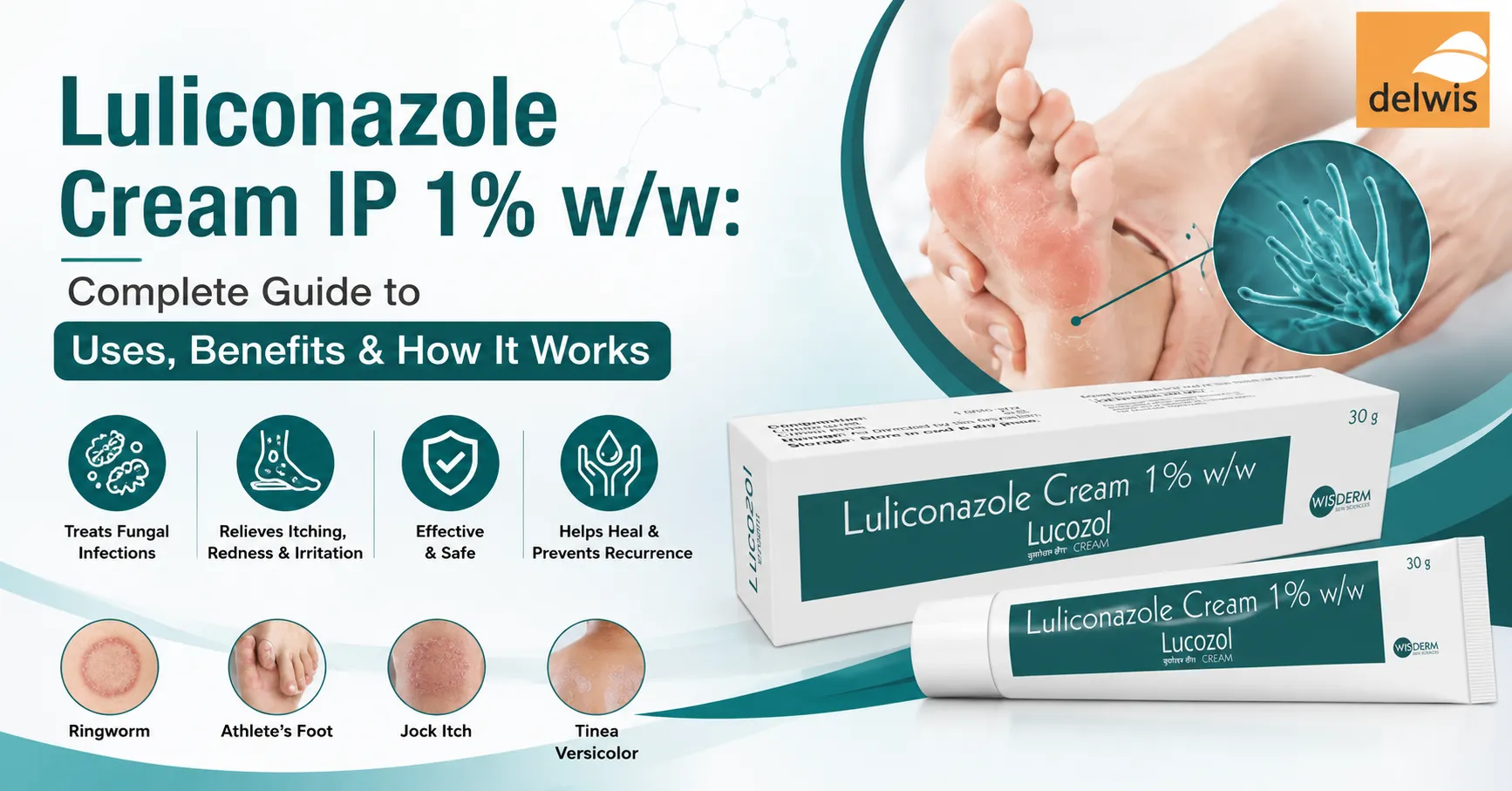
Luliconazole cream IP 1% w/w is a topical antifungal formulation containing luliconazole as the active pharmaceutical ingredient at a concentration of 1% weight-by-weight (w/w), manufactured in compliance with the Indian Pharmacopoeia (IP) — which is the significance of the "IP" designation on the label.
Breaking this down:
- Luliconazole — the active antifungal compound, a newer-generation member of the imidazole class
- 1% w/w — 1 gram of luliconazole per 100 grams of cream base
- IP — confirms the formulation meets Indian Pharmacopoeia standards for identity, purity, potency, and quality
- Cream — a semi-solid emulsion vehicle designed for topical dermal application with good skin penetration and cosmetic acceptability
The formulation is typically available in 10g and 30g laminated tubes, with a smooth, non-greasy texture that absorbs well without leaving residue — important for patient compliance in long-term dermatological conditions.
A key clinical advantage of luliconazole cream IP is its once-daily dosing schedule, which differentiates it from older antifungals like clotrimazole that typically require twice or three-times-daily application. Once-daily dosing significantly improves patient adherence to the complete treatment course — directly reducing the risk of relapse.
How Does Luliconazole Cream IP Work? The Science Explained
To understand why luliconazole cream IP is more effective than many of its predecessors, it helps to understand exactly how antifungal imidazoles attack fungal cells — and what makes luliconazole's version of this attack particularly powerful.
The Target: Ergosterol in the Fungal Cell Membrane
All fungi — including dermatophytes like Trichophyton rubrum (the most common cause of tinea infections) and yeasts like Candida albicans — depend on a molecule called ergosterol as the structural backbone of their cell membranes. Ergosterol in fungi performs the same role that cholesterol does in human cell membranes: it maintains membrane fluidity, permeability, and integrity.
Without ergosterol, the fungal cell membrane becomes unstable. It loses its ability to regulate what enters and exits the cell, begins to leak cellular contents, and the fungal cell ultimately dies. This is why ergosterol is one of the most important targets in antifungal pharmacology.
The Mechanism: Lanosterol 14α-Demethylase Inhibition
Luliconazole, like all imidazole antifungals, works by blocking the enzyme responsible for producing ergosterol. This enzyme is called lanosterol 14α-demethylase — a cytochrome P450 enzyme (CYP51) that converts lanosterol into ergosterol through a series of demethylation reactions in the fungal biosynthesis pathway.
By binding to and inhibiting this enzyme, luliconazole:
- Blocks ergosterol production at its source
- Causes lanosterol and other toxic sterol precursors to accumulate in the fungal cell membrane
- Disrupts membrane structure and function
- Triggers fungal cell death (fungicidal effect)
Why Luliconazole Is Stronger Than Older Imidazoles
What elevates luliconazole above earlier-generation imidazoles like clotrimazole and miconazole is the strength of its binding to the CYP51 enzyme. Studies referenced by drug databases including Truemeds' clinical profile for luliconazole confirm that luliconazole's binding affinity to lanosterol 14α-demethylase is significantly higher than that of older imidazoles.
This translates into:
- Lower minimum inhibitory concentrations (MICs) — luliconazole kills fungi at lower concentrations than clotrimazole or miconazole
- Faster onset of visible results — patients typically see improvement within 3–5 days
- Shorter treatment duration — most tinea infections clear completely in 1–2 weeks
- Efficacy in recalcitrant cases — infections that have not responded fully to older antifungals often respond to luliconazole
PharmEasy's molecular profile for luliconazole also notes its higher potency relative to earlier imidazoles as a key clinical differentiator, supporting its position as a preferred modern option in topical antifungal therapy.
Uses of Luliconazole Cream IP — Every Condition It Treats
The luliconazole cream IP uses span a wide range of superficial fungal skin infections. Here is the complete clinical indication list with context relevant to patients and prescribers in India:
1. Tinea Corporis — Ringworm of the Body
Tinea corporis is a dermatophytic infection of the skin of the trunk, limbs, and neck — presenting as characteristic ring-shaped, scaly, red, and intensely itchy patches with a raised, advancing border and central clearing. It is caused primarily by Trichophyton rubrum and Trichophyton mentagrophytes, and spreads through direct skin contact, shared clothing, and contaminated surfaces.
Ringworm is one of the most common presentations for which luliconazole cream IP is prescribed in Indian dermatology practice. Once-daily application for 1 to 2 weeks produces consistent clinical and mycological cure, with symptom relief — reduced itch, redness, and scaling — typically beginning within 3–5 days.
2. Tinea Cruris — Jock Itch
Tinea cruris affects the groin, inner thighs, and perianal region — producing an erythematous, well-bordered, pruritic rash that can cause significant discomfort and social distress. It is more prevalent in men, in individuals with diabetes or obesity, and in those living in hot and humid climates — making it a highly common presentation across India's tropical regions.
Luliconazole cream IP is a clinically preferred choice for tinea cruris management, with once-daily application for 1 to 2 weeks producing reliable clearance. Its potent fungicidal action at the infection site and low systemic absorption make it safe for use in the sensitive groin area.
3. Tinea Pedis — Athlete's Foot
Tinea pedis is a fungal infection of the feet — particularly the inter-digital spaces between the toes — causing scaling, maceration, intense itching, fissuring, and sometimes a secondary offensive odour. It is common in individuals who wear enclosed shoes for long durations, use public locker rooms, gyms, or swimming pools, or those with hyperhidrosis.
Luliconazole cream IP applied once daily to clean, dried feet for 2 weeks effectively clears most cases of tinea pedis — including those where older antifungals like clotrimazole have given incomplete results. Careful application between each toe and along the infected margins of the soles is important for full coverage.
4. Tinea Versicolor — Pityriasis Versicolor
Tinea versicolor — more accurately called pityriasis versicolor — is caused by Malassezia species, a yeast that is a normal part of skin flora but overgrows under conditions of heat, humidity, oiliness, and immune changes. The overgrowth disrupts melanin production, producing characteristic patches of lighter or darker skin on the chest, neck, upper back, and shoulders.
This condition is particularly prevalent in India's tropical and humid regions, and presents year-round — though it worsens in summer and monsoon seasons. Luliconazole cream IP demonstrates good antifungal activity against Malassezia species and is a recognised topical option for pityriasis versicolor, applied once daily until clinical resolution.
5. Tinea Unguium — Nail Fungal Infection
Luliconazole's molecular characteristics give it the ability to penetrate nail plate structures — making it a clinically relevant option for adjunctive topical therapy in superficial white onychomycosis and mild-to-moderate distal subungual nail fungal infections, particularly where systemic antifungal therapy is contraindicated or not desired.
6. Cutaneous Candidiasis
Beyond dermatophytic infections, luliconazole cream IP is effective against Candida albicans and select non-albicans Candida species responsible for cutaneous candidiasis — infections of moist skin fold areas (intertriginous zones) such as the underarms, beneath the breasts, in the groin, and between fingers or toes. These presentations are especially common in diabetic patients, those on prolonged antibiotics, and immunocompromised individuals.
Key Benefits of Luliconazole Cream IP 1% w/w
Beyond its broad indication coverage, luliconazole cream IP offers a set of clinical and practical advantages that explain why it has become a leading antifungal choice among dermatologists in India:
Once-Daily Dosing Unlike clotrimazole (twice daily) or older antifungals requiring three-times-daily application, luliconazole's potency allows full therapeutic activity with a single daily application — improving patient adherence and reducing the risk of missed doses that cause recurrence.
Faster Visible Results Its higher binding affinity to the target enzyme produces a faster fungicidal effect than earlier imidazoles. Most patients notice measurable symptom improvement — reduced itch and redness — within 3 to 5 days of starting treatment.
Shorter Treatment Duration Complete clinical cure for the most common tinea infections (corporis and cruris) is typically achieved in just 1 to 2 weeks with luliconazole, compared to 2–4 weeks required by many older topical antifungals. This shorter course means better patient compliance and cost-effectiveness.
Effective Against Resistant Strains Luliconazole's superior enzyme binding affinity makes it active even against some dermatophyte strains that have developed reduced sensitivity to older imidazoles — an increasingly important characteristic given India's rising prevalence of recalcitrant tinea infections.
Low Systemic Absorption The 1% w/w topical formulation is designed for local action at the skin surface, with minimal percutaneous absorption — making systemic side effects uncommon and the overall safety profile excellent for most patient groups.
Broad Spectrum A single formulation covering dermatophytes (Trichophyton, Microsporum, Epidermophyton), Malassezia species, and select Candida species — reducing the need for different antifungals for different infection types.
How to Apply Luliconazole Cream IP Correctly
Correct application technique maximises efficacy and minimises the risk of recurrence. Follow these steps every time:
Step 1 — Clean the affected area Wash the infected skin with mild soap and water. Pat dry thoroughly — fungi proliferate in moisture, and applying cream to damp skin reduces its effectiveness and can worsen maceration.
Step 2 — Apply once daily at a consistent time Apply the cream once daily, at the same time each day — morning or evening, whichever fits your routine. Consistency in timing helps maintain steady drug concentration at the skin surface.
Step 3 — Thin layer, extended margins Use a small amount — a pea-sized quantity for an area roughly the size of your palm. Spread a thin, even layer over the entire visible rash and extend approximately 1 to 2 centimetres beyond the visible border of the infection into surrounding healthy skin. The fungal infection extends beyond the visible edge — treating only what you can see risks leaving viable fungal elements that cause regrowth.
Step 4 — Do not cover with occlusive dressings Do not cover the treated area with bandages, tight wrappings, or occlusive dressings unless specifically directed by your dermatologist. Occlusion increases absorption and can cause skin irritation.
Step 5 — Wash hands after application Unless your hands are the affected area, wash them thoroughly after applying the cream.
Step 6 — Complete the full course without exception This is the most clinically important step. Even when your symptoms resolve — and with luliconazole they often resolve quickly — continue applying the cream for the full duration prescribed by your doctor. Stopping early leaves sub-clinical fungal elements alive on the skin, which are the primary driver of relapse and recurrent infection.
Side Effects of Luliconazole Cream IP
Luliconazole cream IP has an excellent tolerability profile. Because of its targeted topical application and low systemic absorption, the vast majority of patients complete a full treatment course without significant adverse effects.
Common (mild, localised, usually transient):
- Application-site burning or stinging — particularly in the first 2–3 applications on inflamed skin; typically resolves as inflammation subsides
- Mild redness at the application site
- Skin dryness or mild flaking
- Occasional itching at the site of application (distinct from the underlying fungal itch, which should progressively reduce)
Uncommon:
- Contact dermatitis (allergic reaction to the cream base or preservative system) — rare
- Skin discolouration at the application site — very rare
When to stop and consult your dermatologist:
- If irritation, redness, or swelling significantly worsens after starting the cream
- If you develop hives, rash, or swelling beyond the application area (may suggest allergic reaction)
- If symptoms do not improve after 5–7 days of consistent use (may indicate wrong diagnosis or resistant organism)
Safety, Contraindications & Special Populations
Hypersensitivity: Luliconazole cream IP should not be used by individuals with a known allergy to luliconazole or any other imidazole antifungal.
Eyes and mucous membranes: Keep away from eyes, mouth, nose, and mucous membranes. If accidental contact occurs, flush with water immediately.
Facial application: The face has a thinner skin barrier with higher percutaneous absorption potential. Facial use should only proceed under dermatologist guidance and for a confirmed fungal diagnosis — self-treatment of undiagnosed facial skin conditions with luliconazole cream is not recommended.
Pregnancy: Systemic absorption from topical luliconazole is minimal, but use during pregnancy should only proceed under qualified medical supervision. There are currently insufficient safety data from human trials to give unconditional reassurance.
Breastfeeding: Use with caution; avoid application to the breast area if breastfeeding.
Children: Paediatric use should be recommended and supervised by a physician. Application to large body surface areas in young children warrants additional caution.
Drug interactions: Given the negligible systemic absorption of luliconazole at 1% w/w topical concentration, clinically significant systemic drug interactions are unlikely. No major interactions are currently documented at therapeutic topical doses.
Conclusion
Luliconazole cream IP 1% w/w represents a genuine advance in topical antifungal therapy for patients and dermatologists in India. Its potent lanosterol 14α-demethylase inhibition, broad spectrum of antifungal coverage, once-daily dosing convenience, fast clinical onset, and short treatment duration make it one of the most practically effective and patient-friendly antifungal creams currently available.
Whether managing a straightforward case of tinea corporis or a recalcitrant jock itch that has not responded fully to older antifungals, luliconazole cream IP 1% w/w offers the clinical tools to achieve consistent, durable fungal clearance when used correctly and for the full prescribed duration.
To explore more pharmaceutical-grade topical formulations in our cream range, or to enquire about manufacturing capabilities, visit Delwis Healthcare.
Frequently Asked Questions About Luliconazole Cream IP
Q: What is luliconazole cream IP used for?
Luliconazole cream IP 1% w/w is prescribed for the topical treatment of superficial fungal skin infections — including tinea corporis (ringworm), tinea pedis (athlete's foot), tinea cruris (jock itch), tinea versicolor (pityriasis versicolor), and cutaneous candidiasis. It is applied once daily to the affected skin area and surrounding margin.
Q: What does IP mean on luliconazole cream?
IP stands for Indian Pharmacopoeia — the official compendium of pharmaceutical standards in India published by the Indian Pharmacopoeia Commission. The IP designation on luliconazole cream confirms the formulation has been manufactured to meet government-defined quality standards for API content, purity, sterility, and stability.
Q: How quickly does luliconazole cream IP show results?
Most patients experience a noticeable reduction in itching, redness, and scaling within 3 to 5 days of once-daily application. Complete resolution of tinea corporis and tinea cruris typically occurs within 1 to 2 weeks. Tinea pedis may require up to 2 weeks. The full course must always be completed even when symptoms improve early, to prevent recurrence.
Q: Is luliconazole cream IP safe for long-term use?
Luliconazole cream IP is intended for defined short-term courses — typically 1 to 2 weeks for most tinea infections. Extended use beyond the prescribed duration should only proceed under dermatologist supervision. Prolonged application without medical oversight is not recommended.
Q: Can luliconazole cream IP be used for ringworm on children?
Paediatric use should be specifically recommended and overseen by a physician. While systemic absorption is low, dosing and treatment duration for children must be guided by the treating dermatologist based on the child's age, weight, and extent of infection.
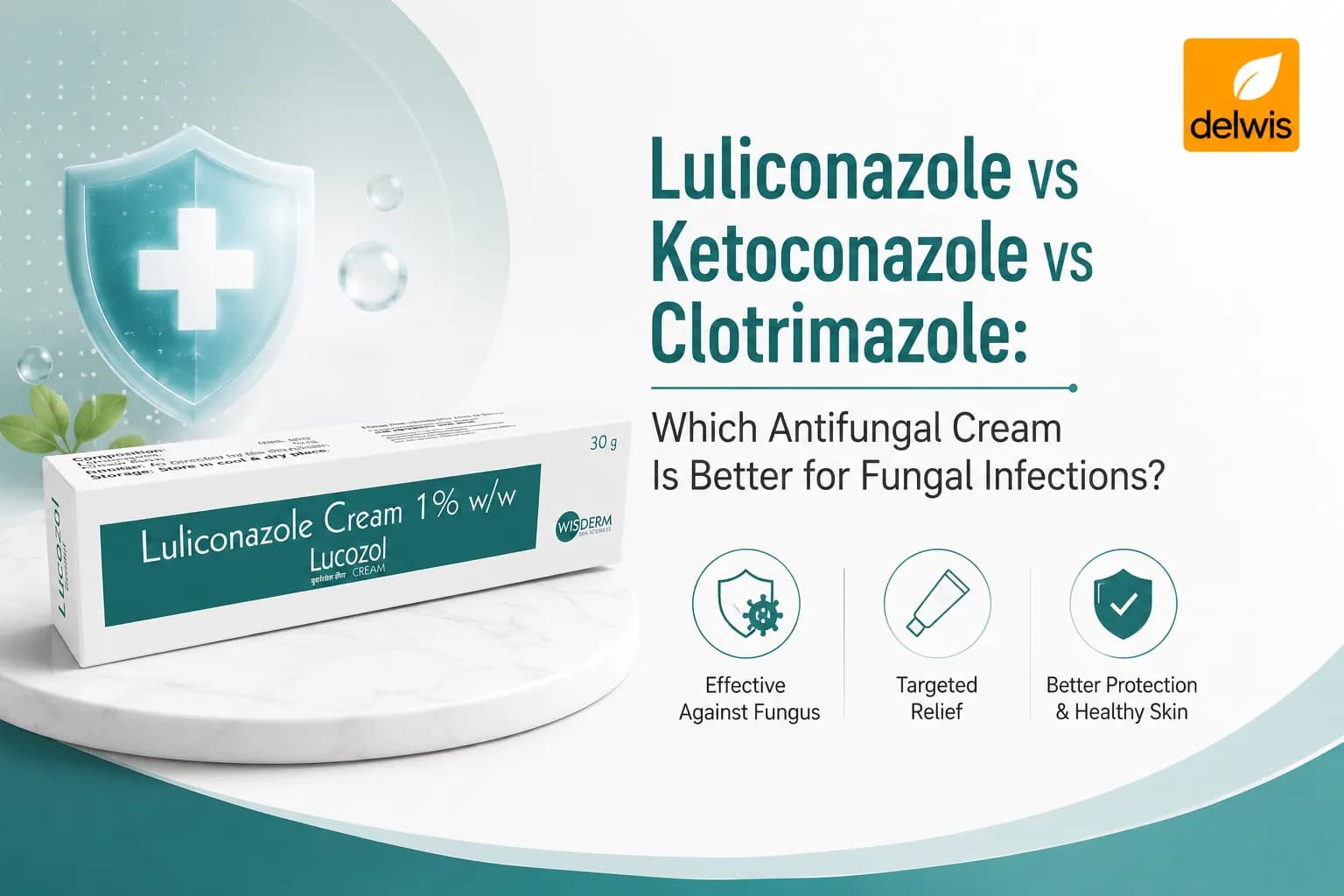
Q: Is luliconazole cream better than clotrimazole for fungal infections?
In clinical comparisons, luliconazole demonstrates superior minimum inhibitory concentrations (MICs) against common dermatophyte species, a higher binding affinity to the target enzyme, and faster clinical cure rates — particularly for tinea corporis and tinea pedis. It also requires only once-daily application versus the twice-daily dosing typical of clotrimazole, which improves patient adherence to the full course.
This article is intended for informational and educational purposes only. It does not constitute medical advice, diagnosis, or treatment. Always consult a qualified dermatologist or healthcare professional before starting, changing, or stopping any medication.