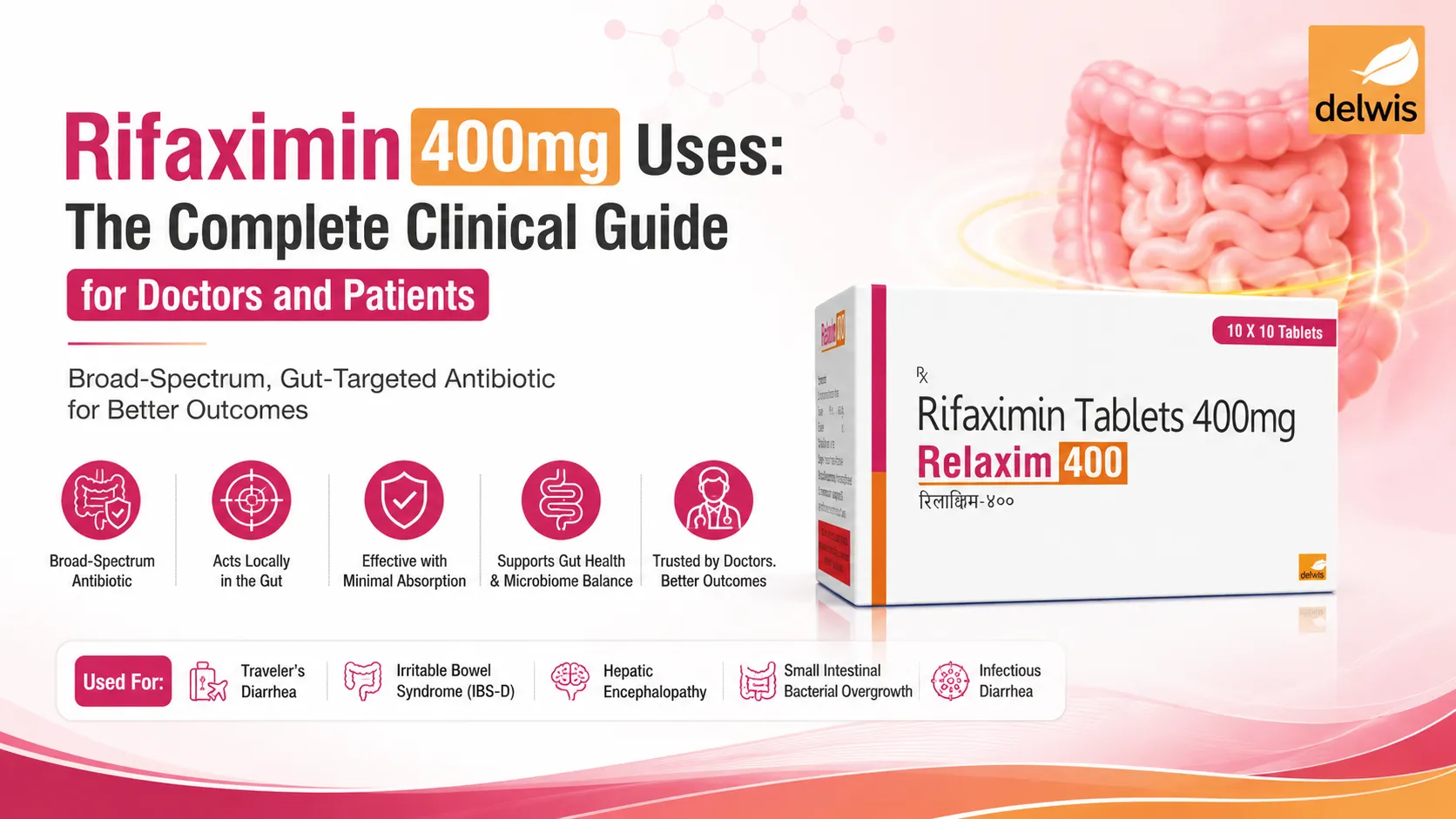
Introduction: Why Rifaximin Occupies a Unique Category in Antibiotic Prescribing
Not all antibiotics work the same way — and rifaximin is a case study in how a targeted pharmacological approach can solve problems that broad-spectrum systemic antibiotics either cannot address effectively or should not be deployed for.
Rifaximin is prescribed across a surprisingly wide range of gastrointestinal conditions in India — from the acute, self-limiting gastric distress of traveler's diarrhea to the complex, chronic challenges of irritable bowel syndrome with diarrhea, small intestinal bacterial overgrowth, and the neurological consequences of liver disease in hepatic encephalopathy. Each of these conditions involves gut bacteria as a central driver of disease, and rifaximin addresses each by delivering concentrated antibacterial action precisely where the problem is — inside the intestinal tract — without entering the bloodstream in clinically meaningful amounts.
This is the guide that explains exactly what rifaximin 400mg is used for, how it works across different conditions, what dose applies to each indication, and what doctors and patients need to know before prescribing or taking it. For the complete product, composition, and manufacturing profile, visit the rifaximin 400mg tablet page on the Delwis Healthcare website.
What Is Rifaximin 400mg? The Short Clinical Summary
Rifaximin is a semi-synthetic, non-absorbable antibiotic derived from rifamycin SV — a member of the rifamycin antibiotic family that also includes rifampicin. It is formulated as an oral solid dosage form under Delwis Healthcare's tablets manufacturing capability, packed in 10×10 Alu-Alu blister to ensure API stability over shelf life.
The critical pharmacological feature of rifaximin is its near-zero systemic absorption after oral dosing. When a patient takes a rifaximin 400mg tablet, the drug passes through the stomach and into the small and large intestine, where it reaches very high intraluminal concentrations — far higher than any systemically absorbed antibiotic could safely deliver to the gut. Less than 0.4% of the oral dose is absorbed into the bloodstream in healthy individuals. This confinement to the gut lumen is not a limitation — it is precisely the therapeutic advantage. It means:
- High antibacterial concentrations exactly where gut pathogens reside
- No significant systemic drug exposure, so minimal systemic side effects
- Negligible impact on skin, respiratory, or urogenital flora (which systemic antibiotics disrupt)
- Lower risk of Clostridioides difficile colitis compared to broad-spectrum systemic antibiotics
- Greatly reduced systemic antibiotic resistance selection pressure
These properties explain why rifaximin 400mg has become one of the most prescribed gut-targeted antibiotics in India across gastroenterology, internal medicine, and hepatology practice.
Rifaximin 400mg Uses — A Complete Indication-by-Indication Clinical Guide
1. Traveler's Diarrhea — The Original and Highest-Volume Indication
Traveler's diarrhea is acute diarrheal illness occurring in individuals visiting regions with different enteric pathogen profiles than their country of origin — a clinically significant concern both for international tourists visiting India and for Indian travelers venturing abroad. The predominant causative organism is enterotoxigenic Escherichia coli (ETEC), which produces enterotoxins that stimulate fluid secretion from intestinal epithelial cells, causing the profuse, watery diarrhea characteristic of the condition.
Rifaximin 400mg is the first-line antibiotic for traveler's diarrhea caused by non-invasive enteric pathogens — meaning presentations without bloody stool, high fever, or signs of invasive bacterial infection. It is highly effective, well-tolerated, and — critically — it does not contribute to the growing fluoroquinolone-resistant E. coli problem that makes conventional antibiotic choices for traveler's diarrhea increasingly problematic in India.
Standard dosage for traveler's diarrhea: Rifaximin 400mg three times daily (TID) for 3 days. Most patients experience significant symptom improvement within 24–48 hours of the first dose, with clinical cure by day 3 in the majority of cases.
Important clinical note: Rifaximin should NOT be used for traveler's diarrhea with bloody stools, high fever, or suspected invasive bacterial infection (Shigella, Salmonella, or Campylobacter) — as it is not effective against invasive enteric pathogens. These presentations require systemic antibiotic management.
2. Irritable Bowel Syndrome with Diarrhea (IBS-D) — A Paradigm Shift in Treatment
The role of rifaximin in IBS with predominant diarrhea (IBS-D) represents one of the most significant therapeutic advances in gastroenterology practice over the past decade. IBS-D is a chronic, relapsing functional gut disorder characterised by abdominal pain, bloating, and frequent loose or urgent stools — affecting an estimated 4–6% of the Indian adult population and generating some of the highest volumes of outpatient gastroenterology consultations in the country.
Traditional IBS management has focused on symptom suppression — antispasmodics for pain, loperamide for diarrhea, dietary modification. Rifaximin represents a fundamentally different therapeutic approach, targeting the gut bacterial dysbiosis and small intestinal bacterial overgrowth that are increasingly recognised as contributing to IBS-D pathophysiology. By reducing pathogenic bacterial populations in the small intestine while preserving beneficial flora — a property referred to as a "eubiotic" rather than dysbiotic effect — rifaximin breaks the cycle of bacterial-driven intestinal inflammation, altered motility, and visceral hypersensitivity.
Clinical evidence shows meaningful reduction in bloating, abdominal discomfort, and diarrheal frequency with a rifaximin course in IBS-D, with benefits that persist beyond the treatment period — a unique property not seen with symptomatic IBS medications.
Standard dosage for IBS-D: Rifaximin 400mg three times daily (TID) for 14 days. The extended course compared to traveler's diarrhea reflects the need to reduce chronically elevated small intestinal bacterial populations rather than simply clearing an acute enteric infection. Retreatment for recurring IBS-D episodes is evidence-supported.
3. Hepatic Encephalopathy (HE) — Protecting the Brain in Liver Disease
Hepatic encephalopathy is a neuropsychiatric complication of advanced liver disease (cirrhosis) in which the liver's reduced capacity to clear ammonia from portal blood allows ammonia — primarily produced by intestinal bacteria — to accumulate in the systemic circulation and cross the blood-brain barrier. The clinical result ranges from subtle cognitive impairment and personality changes (minimal HE) through to confusion, stupor, and frank coma (overt HE).
The gut's ammonia-producing bacteria are the primary upstream driver — and this is precisely where rifaximin acts. By reducing the intestinal bacterial load responsible for ammonia generation, rifaximin decreases the ammonia burden reaching the liver and subsequently the brain — without the systemic antibiotic exposure that cirrhotic patients, with their compromised immune function and altered drug metabolism, are particularly ill-equipped to tolerate.
Rifaximin's use in hepatic encephalopathy is established in published clinical literature and international hepatology guidelines. In India, rifaximin 400mg is widely used for HE prophylaxis — particularly in patients who have experienced a prior episode of overt HE — given the drug's excellent tolerability profile and the cost-accessibility of the 400mg formulation.
Dosage for hepatic encephalopathy: Rifaximin 400mg two to three times daily (BID/TID), with dosing duration and schedule determined by the treating hepatologist based on disease severity and episode history. For secondary HE prophylaxis, longer-duration or maintenance dosing under specialist supervision is the standard approach.
4. Small Intestinal Bacterial Overgrowth (SIBO)
SIBO occurs when bacterial species normally resident in the colon proliferate within the small intestine — a region that is normally relatively free of bacteria due to the coordinated actions of gastric acid, intestinal motility, bile acids, and immunological factors. When these defences are compromised — through motility disorders, anatomical abnormalities, acid suppression, or immune dysfunction — colonic bacteria colonise the small intestine and ferment dietary carbohydrates before they can be properly digested and absorbed.
The clinical consequence is a constellation of symptoms that can closely mimic both IBS and malabsorption: bloating (often severe, occurring shortly after eating), flatulence, abdominal distension, loose stools or alternating bowel habits, and nutrient malabsorption leading to deficiencies of fat-soluble vitamins, B12, and iron over time.
Rifaximin is the preferred antibiotic for SIBO because its non-absorbed pharmacokinetics deliver therapeutic concentrations specifically within the small intestine — the site of overgrowth — in a way that systemic antibiotics, which distribute throughout the body at much lower intraluminal concentrations, simply cannot replicate. Hydrogen and methane breath tests — which measure gas produced by bacterial fermentation — are used to diagnose SIBO and to confirm treatment response.
Dosage for SIBO: Rifaximin 400mg three times daily (TID) for 7 to 14 days, with duration guided by symptom response and, ideally, breath test normalisation. SIBO frequently recurs if the underlying predisposing condition is not addressed, and repeat rifaximin courses are clinically well-supported.
5. Bacterial Diarrhea and Acute Enteric Infections
Beyond the specific traveler's diarrhea indication, rifaximin is widely prescribed in India for acute bacterial diarrhea caused by a range of non-invasive enteric pathogens — including enteropathogenic and enterotoxigenic E. coli, Vibrio cholerae (in some settings), and other gut-confined bacterial species producing secretory diarrheal illness.
The broad-spectrum antibacterial activity of rifaximin against gram-positive and gram-negative enteric organisms — combined with the high intraluminal drug concentrations achieved with oral dosing — makes it one of the most effective antibacterial tablets for diarrhea available in Indian clinical practice. It is increasingly preferred over fluoroquinolones for uncomplicated acute diarrhea as antibiotic stewardship awareness grows among Indian clinicians.
Dosage for acute bacterial diarrhea: Rifaximin 400mg three times daily (TID) for 3 to 5 days, adjusted based on symptom severity and clinical response.
6. E. coli Diarrhea — Targeted Action Against the Most Common Gut Pathogen
Escherichia coli — in its enterotoxigenic (ETEC) and enteropathogenic (EPEC) forms — is the single most common identifiable cause of infectious diarrhea across India in both urban and rural populations. Rifaximin's excellent in vitro activity against non-invasive E. coli strains, combined with its documented clinical efficacy in ETEC-driven traveler's diarrhea, positions it as a rational first-line antibiotic treatment for presumed E. coli diarrhea in non-bloody, non-febrile adult presentations.
The important clinical boundary remains: if bloody stool, high fever, or signs of systemic infection are present, the diarrheal illness may be caused by an invasive pathogen (Shigella, Salmonella, invasive E. coli) for which systemic antibiotic therapy is required. Rifaximin is not appropriate for invasive or febrile diarrheal illness.
7. Gut Microbiome Modulation — The Emerging Frontier
Beyond its established indications, a growing body of clinical evidence supports rifaximin's role as an eubiotic antibiotic — one that shifts gut microbial ecology toward a more favourable composition rather than simply depleting bacterial populations broadly. Unlike conventional antibiotics, which indiscriminately reduce the diversity and abundance of gut flora, rifaximin appears to selectively reduce pathogenic and gas-producing bacterial populations while relatively preserving or even enhancing populations of beneficial Lactobacillus and Bifidobacterium species.
This eubiotic profile has implications beyond its existing indications — with emerging research exploring rifaximin's role in the management of non-alcoholic fatty liver disease (NAFLD), Crohn's disease management, and chronic gut dysbiosis conditions. While these remain off-label or investigational areas, they reflect why gastroenterologists view rifaximin as a pharmacologically unique tool rather than simply another antibiotic.
Rifaximin 400mg Dosage — By Indication at a Glance
Condition | Dose | Frequency | Duration |
|---|
Traveler's Diarrhea (non-invasive) | 400mg | 3× daily (TID) | 3 days |
Acute Bacterial Diarrhea | 400mg | 3× daily (TID) | 3–5 days |
IBS with Diarrhea (IBS-D) | 400mg | 3× daily (TID) | 14 days |
SIBO | 400mg | 3× daily (TID) | 7–14 days |
Hepatic Encephalopathy | 400mg | 2–3× daily (BID/TID) | Specialist-directed; may be long-term |
All dosages are indicative and must be confirmed by the treating physician based on individual clinical assessment, severity of disease, renal and hepatic function, and co-medication profile.
How to Take Rifaximin 400mg Correctly
With or without food: Rifaximin can be taken with or without food. Because it acts within the intestinal lumen rather than requiring systemic absorption, food co-administration does not significantly alter its antibacterial activity or gut drug concentrations. Taking it with food may be preferred by patients who experience mild nausea at the start of therapy.
Consistent timing: Take each dose at evenly spaced intervals throughout the day — for example, morning, afternoon, and evening for three-times-daily dosing — to maintain consistent intraluminal drug concentrations throughout the treatment course.
Swallow whole: Swallow the tablet whole with a glass of water. Do not crush or break the tablet.
Complete the full course: As with all antibiotics, the complete prescribed course must be finished even if symptoms resolve before the course ends. Early discontinuation leaves residual bacterial populations that may regrow, cause relapse, or develop reduced susceptibility to rifaximin.
Storage: Store below 30°C in a dry place away from direct sunlight. The Alu-Alu blister format protects the tablet from light and moisture — keep tablets in the original packaging until the moment of use.
Side Effects of Rifaximin 400mg
Rifaximin 400mg has one of the most favourable tolerability profiles among all antibiotics prescribed for gastrointestinal conditions. Its minimal systemic absorption means systemic adverse effects are uncommon, and the pattern of reported side effects is limited almost entirely to mild gastrointestinal symptoms:
Common (mild and usually transient):
- Flatulence and abdominal bloating — often pre-existing due to the underlying GI condition; may temporarily worsen in the first 1–2 days of treatment
- Nausea — mild, typically settles within a few days
- Abdominal discomfort or cramps
- Headache — reported by a minority of patients, not clearly causally linked in all cases
Uncommon:
- Diarrhoea — paradoxical worsening in a small number of patients; if diarrhoea significantly worsens rather than improving after 2–3 days of treatment, medical review is warranted
- Hypersensitivity reactions — rare; rash, urticaria, or angioedema may occur in patients sensitive to rifaximin or rifamycin class antibiotics
What rifaximin notably does NOT cause at therapeutic doses:
- Hepatotoxicity — the significant hepatotoxicity of systemic rifampicin is not a concern with non-absorbed rifaximin
- Systemic drug interactions at typical antibiotic severity — minimal CYP3A4 induction at gut-confined exposure levels
- Clostridioides difficile colitis — rare with rifaximin compared to broad-spectrum systemic antibiotics, due to the limited disruption of colonic flora
- Discolouration of urine, tears, or body fluids — unlike rifampicin, rifaximin does not produce the characteristic orange discolouration
Important Precautions
Invasive diarrhea — do not use: Rifaximin is not appropriate for diarrheal illness with bloody stools, high fever (>38.5°C), signs of systemic infection, or suspected invasive enteric pathogens (Shigella, Salmonella, invasive E. coli). These presentations require systemic antibiotics. If in doubt, seek medical assessment before starting rifaximin.
Pregnancy: Safety data in pregnant women is limited. Use only under the explicit guidance of the treating physician, who can assess the clinical benefit-risk balance for the individual patient.
Hepatic impairment: While rifaximin is not absorbed systemically to a meaningful extent, patients with severe hepatic impairment (the same population it is often used to treat in HE management) should have treatment duration and dose monitored by a hepatologist.
Paediatric use: Rifaximin 400mg has been studied in children aged 12 years and above for traveler's diarrhea. Use in younger children should be specifically directed by a paediatric gastroenterologist.
Rifamycin hypersensitivity: Patients with known allergy to any rifamycin antibiotic (rifampicin, rifabutin, rifapentine) should avoid rifaximin unless the prescribing physician has specifically assessed and accepted the risk.
Why Rifaximin Is Different from Conventional Antibiotics
For both doctors and patients, it helps to understand explicitly what makes rifaximin pharmacologically distinct — because this distinction explains both its therapeutic advantages and its prescribing boundaries:
Non-systemic — stays in the gut: The single most important differentiator. Systemic antibiotics like fluoroquinolones, amoxicillin, or metronidazole distribute throughout the body to reach their targets — exposing every tissue and microbiome niche to antibacterial activity. Rifaximin stays confined to the intestinal lumen, delivering maximal concentrations at the target site without systemic drug exposure.
Eubiotic rather than dysbiotic: Unlike systemic antibiotics that broadly disrupt gut flora — often causing secondary dysbiosis, yeast overgrowth, and C. difficile risk — rifaximin's selective pressure appears to favour a more balanced post-treatment microbiome composition.
Faster response in acute indications: The high intraluminal concentrations achieved with oral rifaximin dosing produce bactericidal effects at the infection site that translate into rapid clinical response — most traveler's diarrhea patients experience meaningful improvement within 24 hours.
Lower antibiotic resistance contribution: Because its antibacterial effect is confined to the gut lumen, rifaximin has significantly less impact on systemic antibiotic resistance selection than equivalent doses of absorbed antibiotics — an important consideration in India's antimicrobial stewardship landscape.
Conclusion
Rifaximin 400mg occupies a genuinely unique position in the Indian antibiotic prescribing landscape — not as simply another antibacterial, but as a pharmacologically targeted gut antibiotic whose mechanism of action, clinical indication range, and safety profile are fundamentally different from conventional systemic antibiotics. From the three-day cure of traveler's diarrhea to the two-week gut microbiome reset for IBS-D, and from the targeted SIBO treatment that systemic antibiotics cannot replicate to the ammonia-reduction strategy in hepatic encephalopathy — rifaximin's non-absorbable gut-confined action is the common thread that makes it effective across all of these conditions.
For pharmaceutical professionals, brand partners, and procurement teams evaluating this molecule, the complete composition, packaging, manufacturing quality standards, and third-party manufacturing capabilities for rifaximin 400mg tablet are detailed on the Delwis Healthcare product page. To explore the full antibacterial range of tablets and formulations manufactured at the WHO-GMP certified Ahmedabad facility, visit the Delwis Healthcare antibacterial portfolio.
Frequently Asked Questions
Q: What is rifaximin 400mg used for?
Rifaximin 400mg is used for traveler's diarrhea (non-invasive), IBS with diarrhea (IBS-D), small intestinal bacterial overgrowth (SIBO), hepatic encephalopathy in liver disease, acute bacterial diarrhea, and intestinal bacterial infections. Its defining characteristic is that it acts entirely within the gut — providing high local antibacterial concentrations without entering the bloodstream in meaningful amounts.
Q: How long does rifaximin 400mg take to work?
For traveler's diarrhea and acute bacterial diarrhea, most patients notice significant symptom improvement within 24–48 hours of starting treatment. For IBS-D, symptom relief builds progressively over the 14-day course. For SIBO, response is assessed by symptom improvement and ideally confirmed by repeat breath testing after treatment completion.
Q: Is rifaximin the same as rifampicin?
No. Both belong to the rifamycin antibiotic family but are completely different drugs for completely different conditions. Rifampicin is a systemic antibiotic used for tuberculosis, leprosy, and serious systemic infections — it enters the bloodstream and causes characteristic orange discolouration of body fluids. Rifaximin is non-absorbed, gut-confined, and used only for gastrointestinal conditions.
Q: Can rifaximin 400mg be taken with other medicines?
Because rifaximin is not absorbed systemically to any significant degree, major systemic drug-drug interactions are uncommon. However, always inform your prescribing doctor of all current medications — particularly if you are taking immunosuppressants, anticoagulants, or have complex multi-drug regimens for chronic liver disease.
Q: What are the side effects of rifaximin 400mg?
The most commonly reported side effects are mild and gastrointestinal — including flatulence, nausea, mild abdominal discomfort, and headache. Serious side effects are uncommon. Rifaximin does not cause the systemic toxicity, hepatotoxicity, or significant drug interactions associated with absorbed antibiotics. Its tolerability profile is one of the key clinical reasons for its widespread prescriber preference in India.
Q: Is rifaximin 400mg safe for long-term use?
Rifaximin has an established safety record for long-term use in hepatic encephalopathy prophylaxis — where it is used continuously or in repeated cycles under specialist hepatological supervision. For IBS-D, repeated courses are evidence-supported. Long-term continuous use outside of specific clinical indications and specialist supervision is not a standard recommendation.
Q: Can children take rifaximin 400mg?
Rifaximin 400mg has been studied for traveler's diarrhea in patients aged 12 years and above. Use in younger children should be directed by a paediatric gastroenterologist based on weight-appropriate dosing and confirmed indication.
This article is written for informational and educational purposes only. It does not constitute medical advice, a clinical recommendation, or a substitute for professional medical assessment. All prescribing decisions should be made by a qualified physician or gastroenterologist based on individual patient evaluation, microbiological data where available, and applicable clinical guidelines.